Latest Cisco, PMP, AWS, CompTIA, Microsoft Materials on SALE Get Now Get Now
Home/
Blog/
Why ISACA CGEIT is the Ultimate Executive Milestone?
SPOTO 2 2026-06-24 10:23:01
Why ISACA CGEIT is the Ultimate Executive Milestone?

Think about the most spectacular enterprise technology failures you have seen over the last few years. More often than not, those disasters didn't happen because an engineer wrote bad code or a firewall failed to block a packet. They happened because an organization spent tens of millions of dollars on a massive digital transformation project that had absolutely no alignment with its actual business objectives. They built a brilliant technical solution for a problem the company didn't actually have.

When you operate at the upper echelons of corporate technology—as a CIO, CTO, enterprise architect, or governance director—your value isn't measured by your ability to manage day-to-day operations. It is measured by your ability to ensure that every single dollar invested in technology actively drives enterprise value, manages systemic risk, and optimizes corporate resources.

While certifications like CISM or CISSP prove you can defend an infrastructure, ISACA's Certified in the Governance of Enterprise IT (CGEIT) proves you can steer the entire corporate ship. It is a highly specialized, framework-agnostic credential designed exclusively for those who advise, manage, and oversee the strategic direction of enterprise IT.


1. The Mechanical Blueprint: Inside the CGEIT Testing Sandbox

Passing the CGEIT examination requires a highly disciplined approach to managing both your time and your executive perspective. Because this exam targets seasoned professionals who already possess significant advisory and management experience, the testing parameters are designed to evaluate strategic endurance.

The formal examination structure consists of 150 multiple-choice questions, and you are given exactly 4 hours (240 minutes) to complete the session. The testing environment is computer-based, available through authorized physical testing facilities or via secure online remote proctoring.

The primary trick of the CGEIT exam isn't technical complexity; it is situational nuance. You will face scenario-heavy questions where an enterprise is navigating a complex corporate merger, experiencing structural friction between the board and the IT department, or struggling to prioritize a portfolio of competing tech investments. Your goal is to select the answer that represents optimal governance framework logic, rather than a quick operational fix.


2. Deconstructing the Four Governance Pillars

To achieve a passing score, you must align your preparation with ISACA's four core job practice domains. Each domain evaluates your capacity to set direction, define decision rights, manage assets, and measure real-world performance.

Domain 1: Governance of Enterprise IT

This domain forms the absolute baseline of the certification. It focuses entirely on defining, establishing, and maintaining a robust, sustainable governance framework that aligns seamlessly with the enterprise's broader mission and vision. Testing within this space evaluates your knowledge of major governance structures, organizational culture, business ethics, and legal or regulatory compliance rules. You must demonstrate a clear understanding of how to set up decision-making hierarchies, assign clear accountability patterns, and map out information architectures that ensure transparent data ownership throughout the entire corporate asset lifecycle.

Domain 2: IT Resources

An enterprise cannot execute its strategy without resources, but managing those resources effectively at scale is incredibly difficult. This pillar focuses on both resource planning and resource optimization. The curriculum tests your ability to design smart sourcing strategies (such as balancing insourcing vs. cloud outsourcing options), execute resource capacity planning, and manage asset lifecycles from acquisition to retirement. It also places a strong emphasis on the human element, requiring you to understand how to assess human resource competencies and effectively manage contracted service relationships and vendor service-level agreements (SLAs).

Domain 3: Benefits Realization

Technology investments are fundamentally business cases that promise future value. This domain evaluates how an enterprise systematically tracks and confirms that those promises are actually fulfilled. The testing criteria place a high premium on performance management, continuous governance monitoring, and reporting metrics. You must prove you can construct comprehensive business cases, evaluate IT-enabled investments using strict benefit evaluation methods, and deploy balanced scorecards or performance metrics that communicate actual value to executive leadership rather than just tracking superficial technical activities.

Domain 4: Risk Optimization

Every strategic technical leap introduces corporate exposure. This final domain tests your capacity to identify, analyze, mitigate, and monitor IT-related risks within a broader Enterprise Risk Management (ERM) framework. The exam requires deep familiarity with risk strategy mechanics—such as establishing an organization's precise risk appetite and risk tolerance boundaries. You will face questions designed to test your mastery of risk management lifecycles, risk assessment methodologies, and continuous operational monitoring to ensure that the controls protecting your infrastructure do not create unnecessary operational friction.


3. The Core Philosophy: Developing the CGEIT Mindset

The secret to conquering the CGEIT on your first attempt lies in understanding what the exam rewards. This is not a delivery or implementation certification. It rewards three foundational architectural principles:

Traceability: Every technical control, investment portfolio, and performance measure must link directly backward to a corporate strategic goal. If a project cannot trace its lineage to business value, it shouldn't exist in the enterprise ecosystem.

Separation of Duties: Governance demands clear boundaries. The exam strictly enforces the concept that the person or team responsible for building or executing a system should not be the same entity that approves or audits it.

Evidence Over Intent: Policies written down in a corporate employee manual mean absolutely nothing unless there are verifiable decision logs, regular portfolio reviews, and clear operational outcomes that prove those policies are active.

When answering questions, always view the problem through the lens of a board member or an external strategic consultant. The correct choice is never the one that suggests a temporary patch or an isolated engineering workaround; it is the choice that establishes systemic oversight, clarifies accountability, and protects long-term enterprise value.


4. Streamlining Your Path to Executive Validation

Because the CGEIT deals almost entirely with abstract governance concepts, framework mapping (such as aligning COBIT 2019, ISO/IEC 38500, and ITIL principles), and complex situational judgment, studying by simply memorizing definitions is an easy way to experience exam failure. You need to practice dissecting high-level corporate scenarios, identifying the hidden business constraints in the questions, and refining your executive pacing under a strict four-hour clock.

When you are ready to eliminate the ambiguity from your study routine and ensure your preparation mirrors the active testing environment, utilizing targeted, professional educational frameworks can completely transform your preparation trajectory. SPOTO offers highly accurate exam practice simulations, up-to-date review architectures, and verified evaluation questions designed specifically to align with ISACA's rigorous testing criteria. By leveraging these real-world preparation tools to test your domain endurance and validate your strategic governance logic before your official test date, you can approach the testing center with complete clarity, clear the 150-question matrix smoothly, and claim your globally recognized expert CGEIT status on your very first try.
 

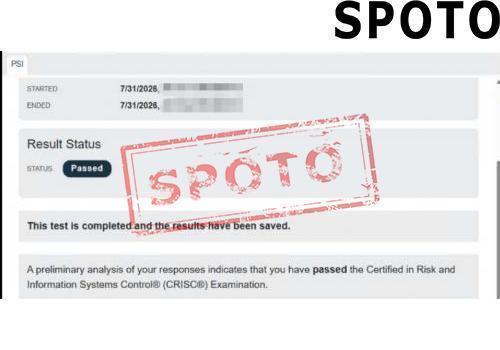
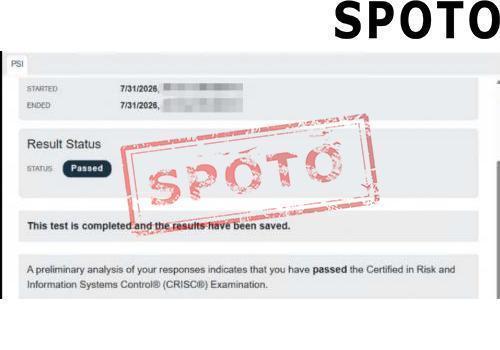
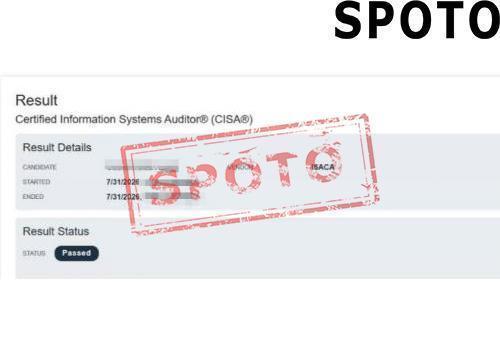
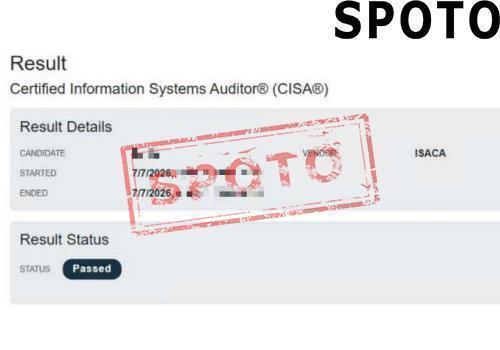
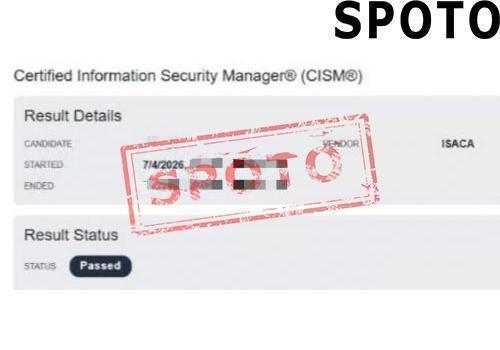
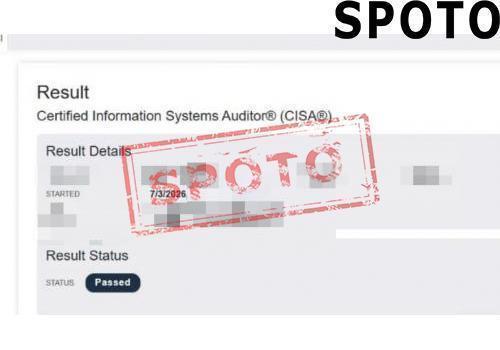
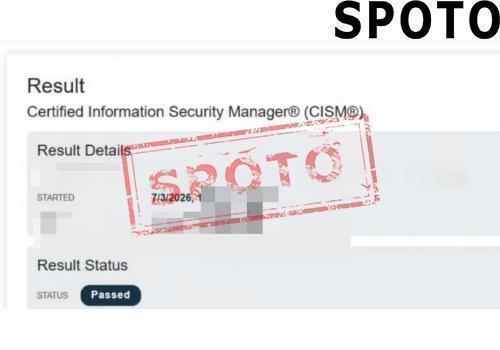
Latest Passing Reports from SPOTO Candidates
ISACA-CGEIT-P

ISACA-CGEIT-P

ISACA-CISM-P

ISACA-CISM-P

ISACA-CISM-P

ISACA-CISM-P

ISACA-CISM-P

ISACA-CISM-P

ISACA-CISM-P

ISACA-CISM-P

ISACA-CISA-P

ISACA-CISA-P

ISACA-CISM-P

ISACA-CISM-P

ISACA-CISA-P

ISACA-CISA-P

ISACA-CISA-P

ISACA-CISA-P

ISACA-CISM-P

ISACA-CISM-P

Write a Reply or Comment
Home/Blog/Why ISACA CGEIT is the Ultimate Executive Milestone?
Why ISACA CGEIT is the Ultimate Executive Milestone?
SPOTO 2 2026-06-24 10:23:01
Why ISACA CGEIT is the Ultimate Executive Milestone?

Think about the most spectacular enterprise technology failures you have seen over the last few years. More often than not, those disasters didn't happen because an engineer wrote bad code or a firewall failed to block a packet. They happened because an organization spent tens of millions of dollars on a massive digital transformation project that had absolutely no alignment with its actual business objectives. They built a brilliant technical solution for a problem the company didn't actually have.

When you operate at the upper echelons of corporate technology—as a CIO, CTO, enterprise architect, or governance director—your value isn't measured by your ability to manage day-to-day operations. It is measured by your ability to ensure that every single dollar invested in technology actively drives enterprise value, manages systemic risk, and optimizes corporate resources.

While certifications like CISM or CISSP prove you can defend an infrastructure, ISACA's Certified in the Governance of Enterprise IT (CGEIT) proves you can steer the entire corporate ship. It is a highly specialized, framework-agnostic credential designed exclusively for those who advise, manage, and oversee the strategic direction of enterprise IT.


1. The Mechanical Blueprint: Inside the CGEIT Testing Sandbox

Passing the CGEIT examination requires a highly disciplined approach to managing both your time and your executive perspective. Because this exam targets seasoned professionals who already possess significant advisory and management experience, the testing parameters are designed to evaluate strategic endurance.

The formal examination structure consists of 150 multiple-choice questions, and you are given exactly 4 hours (240 minutes) to complete the session. The testing environment is computer-based, available through authorized physical testing facilities or via secure online remote proctoring.

The primary trick of the CGEIT exam isn't technical complexity; it is situational nuance. You will face scenario-heavy questions where an enterprise is navigating a complex corporate merger, experiencing structural friction between the board and the IT department, or struggling to prioritize a portfolio of competing tech investments. Your goal is to select the answer that represents optimal governance framework logic, rather than a quick operational fix.


2. Deconstructing the Four Governance Pillars

To achieve a passing score, you must align your preparation with ISACA's four core job practice domains. Each domain evaluates your capacity to set direction, define decision rights, manage assets, and measure real-world performance.

Domain 1: Governance of Enterprise IT

This domain forms the absolute baseline of the certification. It focuses entirely on defining, establishing, and maintaining a robust, sustainable governance framework that aligns seamlessly with the enterprise's broader mission and vision. Testing within this space evaluates your knowledge of major governance structures, organizational culture, business ethics, and legal or regulatory compliance rules. You must demonstrate a clear understanding of how to set up decision-making hierarchies, assign clear accountability patterns, and map out information architectures that ensure transparent data ownership throughout the entire corporate asset lifecycle.

Domain 2: IT Resources

An enterprise cannot execute its strategy without resources, but managing those resources effectively at scale is incredibly difficult. This pillar focuses on both resource planning and resource optimization. The curriculum tests your ability to design smart sourcing strategies (such as balancing insourcing vs. cloud outsourcing options), execute resource capacity planning, and manage asset lifecycles from acquisition to retirement. It also places a strong emphasis on the human element, requiring you to understand how to assess human resource competencies and effectively manage contracted service relationships and vendor service-level agreements (SLAs).

Domain 3: Benefits Realization

Technology investments are fundamentally business cases that promise future value. This domain evaluates how an enterprise systematically tracks and confirms that those promises are actually fulfilled. The testing criteria place a high premium on performance management, continuous governance monitoring, and reporting metrics. You must prove you can construct comprehensive business cases, evaluate IT-enabled investments using strict benefit evaluation methods, and deploy balanced scorecards or performance metrics that communicate actual value to executive leadership rather than just tracking superficial technical activities.

Domain 4: Risk Optimization

Every strategic technical leap introduces corporate exposure. This final domain tests your capacity to identify, analyze, mitigate, and monitor IT-related risks within a broader Enterprise Risk Management (ERM) framework. The exam requires deep familiarity with risk strategy mechanics—such as establishing an organization's precise risk appetite and risk tolerance boundaries. You will face questions designed to test your mastery of risk management lifecycles, risk assessment methodologies, and continuous operational monitoring to ensure that the controls protecting your infrastructure do not create unnecessary operational friction.


3. The Core Philosophy: Developing the CGEIT Mindset

The secret to conquering the CGEIT on your first attempt lies in understanding what the exam rewards. This is not a delivery or implementation certification. It rewards three foundational architectural principles:

Traceability: Every technical control, investment portfolio, and performance measure must link directly backward to a corporate strategic goal. If a project cannot trace its lineage to business value, it shouldn't exist in the enterprise ecosystem.

Separation of Duties: Governance demands clear boundaries. The exam strictly enforces the concept that the person or team responsible for building or executing a system should not be the same entity that approves or audits it.

Evidence Over Intent: Policies written down in a corporate employee manual mean absolutely nothing unless there are verifiable decision logs, regular portfolio reviews, and clear operational outcomes that prove those policies are active.

When answering questions, always view the problem through the lens of a board member or an external strategic consultant. The correct choice is never the one that suggests a temporary patch or an isolated engineering workaround; it is the choice that establishes systemic oversight, clarifies accountability, and protects long-term enterprise value.


4. Streamlining Your Path to Executive Validation

Because the CGEIT deals almost entirely with abstract governance concepts, framework mapping (such as aligning COBIT 2019, ISO/IEC 38500, and ITIL principles), and complex situational judgment, studying by simply memorizing definitions is an easy way to experience exam failure. You need to practice dissecting high-level corporate scenarios, identifying the hidden business constraints in the questions, and refining your executive pacing under a strict four-hour clock.

When you are ready to eliminate the ambiguity from your study routine and ensure your preparation mirrors the active testing environment, utilizing targeted, professional educational frameworks can completely transform your preparation trajectory. SPOTO offers highly accurate exam practice simulations, up-to-date review architectures, and verified evaluation questions designed specifically to align with ISACA's rigorous testing criteria. By leveraging these real-world preparation tools to test your domain endurance and validate your strategic governance logic before your official test date, you can approach the testing center with complete clarity, clear the 150-question matrix smoothly, and claim your globally recognized expert CGEIT status on your very first try.
 

Latest Passing Reports from SPOTO Candidates
ISACA-CGEIT-P
ISACA-CISM-P
ISACA-CISM-P
ISACA-CISM-P
ISACA-CISM-P
ISACA-CISA-P
ISACA-CISM-P
ISACA-CISA-P
ISACA-CISA-P
ISACA-CISM-P
Write a Reply or Comment
Don't Risk Your Certification Exam Success – Take Real Exam Questions
Eligible to sit for Exam? 100% Exam Pass GuaranteeEligible to sit for Exam? 100% Exam Pass Guarantee
SPOTO Ebooks
Recent Posts
Privacy by Design Certifications: An Overview of the Modern ISACA CDPSE Certification
Why ISACA CGEIT is the Ultimate Executive Milestone?
Why CRISC is the Smartest Tech Bet in 2026?
The Ultimate Guide to CCIE Data Center Lab Preparation: Pass on the First Attempt
CompTIA A+ vs. CompTIA Security+: Which certification should I get?
Beyond the Multiple Choice: Mastering the Real-World Grit of Red Hat Certifications
Demystifying the Google Professional Machine Learning Engineer Blueprint
Decoding the 2026 CCIE Data Center v3.1 Evolution and the EI Pivot
Architecting the Intelligent Network: The Top 10 Cisco Certifications Delivering Real Enterprise Value in 2026
Decoding the Expert Lab: CCIE Enterprise Infrastructure 2026 Blueprints and the Automation Divergence
Excellent
5.0
Based on 5236 reviews
Request more information
I would like to receive email communications about product & offerings from SPOTO & its Affiliates.
I understand I can unsubscribe at any time.