Latest Cisco, PMP, AWS, CompTIA, Microsoft Materials on SALE Get Now Get Now
Home/
Blog/
The Latest CCNA 2026 Exam Success Guide (What Real-World Network Engineers Need in 2026)
SPOTO 2 2026-07-31 10:38:24
The Latest CCNA 2026 Exam Success Guide (What Real-World Network Engineers Need in 2026)

A decade ago, breaking into networking meant racking physical switches, running Cat6 cables, and memorizing CLI commands line by line. While those core mechanics still matter, the daily job of a network engineer has completely shifted. Today, networks are mostly cloud-managed, configurations run through automated scripts, and telemetry tools use AI to spot anomalies before a ticket even opens.

Cisco updated the CCNA (200-301 v1.1) blueprint to match this reality. It is no longer just a hardware test—it bridges foundational routing with modern cloud operations and automation.

If you are planning to take the exam, here is a practical, ground-level breakdown of the latest blueprint changes, market value, domain topics, salary expectations, and study strategies.


1. Why the CCNA Still Holds Weight

Even with dozens of niche cloud and security certs floating around, the CCNA remains the go-to benchmark for entry and mid-level networking roles.

Employers keep asking for it because it tests real troubleshooting ability rather than simple definition lookup. Even though you learn Cisco syntax, the core concepts—like IPv4/IPv6 subnetting, VLAN trunking, OSPF routing, and spanning tree—are the exact same principles used on Juniper, Arista, or virtual cloud networks.

Passing it proves you understand how data actually moves across a wire, making it much easier to transition into cloud engineering, cybersecurity, or enterprise wireless down the line.


2. What Changed in the v1.1 Blueprint Refresh

Cisco kept the 200-301 exam code, but the v1.1 update cleaned out legacy material to make room for tools engineers use today. Key changes in the current blueprint include:

AI in Network Operations: The exam now checks your understanding of how predictive and generative AI tools assist in automated troubleshooting, network health monitoring, and detecting traffic anomalies.

Modern Infrastructure as Code (IaC): Older tools like Chef and Puppet were dropped. The blueprint now focuses on Ansible and Terraform for automated network deployments.

Cloud Management Dashboards: References to legacy Cisco DNA Center setups gave way to broader cloud-managed network platforms, matching how companies oversee multi-site deployments today.


3. Exam Structure and Domain Breakdown

The exam lasts 120 minutes and packs roughly 100 to 120 questions, mixing multiple-choice, drag-and-drop, and hands-on lab simulations. Cisco divides the 200-301 blueprint across six core domains:

(1) Network Fundamentals (20%)

Covers the physical and logical building blocks: routers, switches, firewalls, and access points. Expect questions on cabling specs, IPv4 and IPv6 address allocation, subnetting calculations, wireless architectures, and basic virtualization concepts.

(2) Network Access (20%)

Focuses on Layer 2 switching and local connectivity. You will need to know how to configure and verify VLANs, trunk links (802.1Q), Spanning Tree Protocol (STP), EtherChannel bundles, and Cisco wireless controllers.

(3) IP Connectivity (25%)

This is the heaviest section on the test. It checks whether you can build, read, and troubleshoot routing tables. You need a solid grip on static routes, default routes, single-area OSPFv2, and First Hop Redundancy Protocols like HSRP.

(4) IP Services (10%)

Covers essential network utilities that keep everyday traffic running: Network Address Translation (NAT), DHCP relays, DNS lookups, NTP time sync, SNMP monitoring, and secure SSH logins.

(5) Security Fundamentals (15%)

Focuses on keeping bad actors off the network. Topics include basic threat vectors, access control lists (ACLs), Layer 2 defenses (like DHCP snooping and dynamic ARP inspection), remote access security, and modern wireless encryption like WPA3.

(6) Automation and Programmability (10%)

Evaluates how software controls hardware. You should understand the difference between traditional networks and controller-based designs, know how to read JSON formatted data, understand RESTful API calls (GET, POST, PUT, DELETE), and recognize basic Ansible and Terraform syntax.


4. Realistic Salary Expectations

Holding a CCNA gets your foot in the door for solid mid-tier IT and networking roles. Salary ranges vary by location and company size, but general market benchmarks look like this:

Helpdesk Tier 2 / Network Tech: Focuses on physical setups, user tickets, and basic device swaps. Base pay usually sits between $55,000 and $75,000.

Junior Network Administrator: Handles switch configs, routing tweaks, and site troubleshooting. Salaries range from $75,000 to $98,000.

Network Operations Engineer / Infrastructure Lead: Manages multi-site connectivity, firewalls, and hybrid cloud links. Compensation spans $100,000 to $125,000+.


5. Realistic Tips for Exam Day

The CCNA test window moves fast. Once you submit an answer, Cisco doesn't let you go back, so managing your time is half the battle. A few practical ways to prepare:

Subnet in your head: If you take two minutes to figure out a subnet mask or broadcast address, you'll run out of time on lab questions. Practice IPv4 math until it takes under 20 seconds per problem.

Build labs, don't just read: Command line syntax only sticks when you break things in a simulator and fix them yourself. Practice setting up OSPF neighbors and trunk links from scratch.

Work through scenario-based question pools: Cisco questions love to give you a long show command output and ask why two routers aren't talking. Using updated practice sets—like the CCNA exam prep modules from SPOTO—helps you get used to Cisco's specific scenario style, fix weak spots, and pace yourself before sitting for the real test.
 

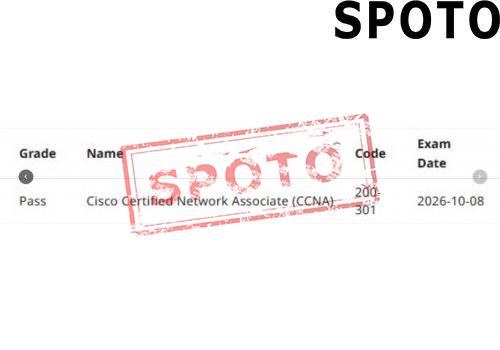
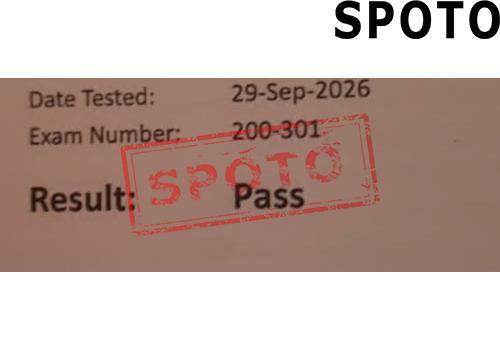
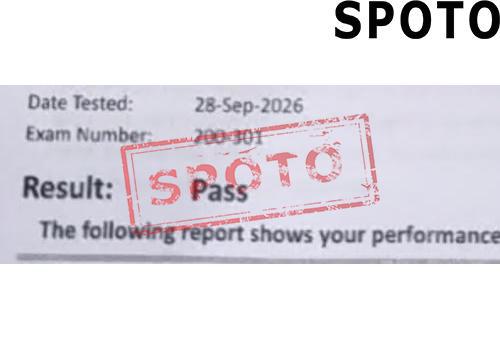
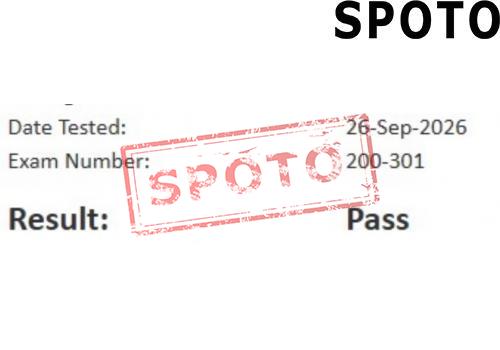
Latest Passing Reports from SPOTO Candidates
200-301

200-301

200-301-P

200-301-P

200-301-P

200-301-P

200-301

200-301

200-201

200-201

200-301-P

200-301-P

200-301-P

200-301-P

200-201

200-201

200-301-P

200-301-P

200-301-P

200-301-P

Write a Reply or Comment
Don't Risk Your Certification Exam Success – Take Real Exam Questions
Eligible to sit for Exam? 100% Exam Pass Guarantee
SPOTO Ebooks
Recent Posts
Excellent
5.0
Based on 5236 reviews
Request more information
I would like to receive email communications about product & offerings from SPOTO & its Affiliates.
I understand I can unsubscribe at any time.
Home/Blog/The Latest CCNA 2026 Exam Success Guide (What Real-World Network Engineers Need in 2026)
The Latest CCNA 2026 Exam Success Guide (What Real-World Network Engineers Need in 2026)
SPOTO 2 2026-07-31 10:38:24
The Latest CCNA 2026 Exam Success Guide (What Real-World Network Engineers Need in 2026)

A decade ago, breaking into networking meant racking physical switches, running Cat6 cables, and memorizing CLI commands line by line. While those core mechanics still matter, the daily job of a network engineer has completely shifted. Today, networks are mostly cloud-managed, configurations run through automated scripts, and telemetry tools use AI to spot anomalies before a ticket even opens.

Cisco updated the CCNA (200-301 v1.1) blueprint to match this reality. It is no longer just a hardware test—it bridges foundational routing with modern cloud operations and automation.

If you are planning to take the exam, here is a practical, ground-level breakdown of the latest blueprint changes, market value, domain topics, salary expectations, and study strategies.


1. Why the CCNA Still Holds Weight

Even with dozens of niche cloud and security certs floating around, the CCNA remains the go-to benchmark for entry and mid-level networking roles.

Employers keep asking for it because it tests real troubleshooting ability rather than simple definition lookup. Even though you learn Cisco syntax, the core concepts—like IPv4/IPv6 subnetting, VLAN trunking, OSPF routing, and spanning tree—are the exact same principles used on Juniper, Arista, or virtual cloud networks.

Passing it proves you understand how data actually moves across a wire, making it much easier to transition into cloud engineering, cybersecurity, or enterprise wireless down the line.


2. What Changed in the v1.1 Blueprint Refresh

Cisco kept the 200-301 exam code, but the v1.1 update cleaned out legacy material to make room for tools engineers use today. Key changes in the current blueprint include:

AI in Network Operations: The exam now checks your understanding of how predictive and generative AI tools assist in automated troubleshooting, network health monitoring, and detecting traffic anomalies.

Modern Infrastructure as Code (IaC): Older tools like Chef and Puppet were dropped. The blueprint now focuses on Ansible and Terraform for automated network deployments.

Cloud Management Dashboards: References to legacy Cisco DNA Center setups gave way to broader cloud-managed network platforms, matching how companies oversee multi-site deployments today.


3. Exam Structure and Domain Breakdown

The exam lasts 120 minutes and packs roughly 100 to 120 questions, mixing multiple-choice, drag-and-drop, and hands-on lab simulations. Cisco divides the 200-301 blueprint across six core domains:

(1) Network Fundamentals (20%)

Covers the physical and logical building blocks: routers, switches, firewalls, and access points. Expect questions on cabling specs, IPv4 and IPv6 address allocation, subnetting calculations, wireless architectures, and basic virtualization concepts.

(2) Network Access (20%)

Focuses on Layer 2 switching and local connectivity. You will need to know how to configure and verify VLANs, trunk links (802.1Q), Spanning Tree Protocol (STP), EtherChannel bundles, and Cisco wireless controllers.

(3) IP Connectivity (25%)

This is the heaviest section on the test. It checks whether you can build, read, and troubleshoot routing tables. You need a solid grip on static routes, default routes, single-area OSPFv2, and First Hop Redundancy Protocols like HSRP.

(4) IP Services (10%)

Covers essential network utilities that keep everyday traffic running: Network Address Translation (NAT), DHCP relays, DNS lookups, NTP time sync, SNMP monitoring, and secure SSH logins.

(5) Security Fundamentals (15%)

Focuses on keeping bad actors off the network. Topics include basic threat vectors, access control lists (ACLs), Layer 2 defenses (like DHCP snooping and dynamic ARP inspection), remote access security, and modern wireless encryption like WPA3.

(6) Automation and Programmability (10%)

Evaluates how software controls hardware. You should understand the difference between traditional networks and controller-based designs, know how to read JSON formatted data, understand RESTful API calls (GET, POST, PUT, DELETE), and recognize basic Ansible and Terraform syntax.


4. Realistic Salary Expectations

Holding a CCNA gets your foot in the door for solid mid-tier IT and networking roles. Salary ranges vary by location and company size, but general market benchmarks look like this:

Helpdesk Tier 2 / Network Tech: Focuses on physical setups, user tickets, and basic device swaps. Base pay usually sits between $55,000 and $75,000.

Junior Network Administrator: Handles switch configs, routing tweaks, and site troubleshooting. Salaries range from $75,000 to $98,000.

Network Operations Engineer / Infrastructure Lead: Manages multi-site connectivity, firewalls, and hybrid cloud links. Compensation spans $100,000 to $125,000+.


5. Realistic Tips for Exam Day

The CCNA test window moves fast. Once you submit an answer, Cisco doesn't let you go back, so managing your time is half the battle. A few practical ways to prepare:

Subnet in your head: If you take two minutes to figure out a subnet mask or broadcast address, you'll run out of time on lab questions. Practice IPv4 math until it takes under 20 seconds per problem.

Build labs, don't just read: Command line syntax only sticks when you break things in a simulator and fix them yourself. Practice setting up OSPF neighbors and trunk links from scratch.

Work through scenario-based question pools: Cisco questions love to give you a long show command output and ask why two routers aren't talking. Using updated practice sets—like the CCNA exam prep modules from SPOTO—helps you get used to Cisco's specific scenario style, fix weak spots, and pace yourself before sitting for the real test.
 

Latest Passing Reports from SPOTO Candidates
200-301
200-301-P
200-301-P
200-301
200-201
200-301-P
200-301-P
200-201
200-301-P
200-301-P
Write a Reply or Comment
Don't Risk Your Certification Exam Success – Take Real Exam Questions
Eligible to sit for Exam? 100% Exam Pass GuaranteeEligible to sit for Exam? 100% Exam Pass Guarantee
SPOTO Ebooks
Recent Posts
Cisco Automation Certification: Your Roadmap From Zero to Certified
Cisco REST API: A Practical Guide to Network Automation
Cisco HSRP Configuration: From First-Time Setup to Advanced Troubleshooting
MPLS LDP Neighbor Down: A Complete Troubleshooting Playbook
OSPF Stuck in EXSTART: Root Causes, Diagnosis, and the Fix
Advanced OSPF for the CCIE Lab: Multi-Area Design, Network Types, and Troubleshooting
Cisco Trunk Ports Explained: 802.1Q Mechanics, DTP Modes, and Troubleshooting
Advanced VLAN Configuration for the CCIE Lab: PVLANs, QinQ, VTPv3, and Troubleshooting
Master the Enterprise Network: A Ground-Level Guide to the CCNP 200-301 (350-401 ENCOR v1.2)
The Latest CCNA 2026 Exam Success Guide (What Real-World Network Engineers Need in 2026)
Excellent
5.0
Based on 5236 reviews
Request more information
I would like to receive email communications about product & offerings from SPOTO & its Affiliates.
I understand I can unsubscribe at any time.