

CCIE Automation Lab Exam Dump List
SPOTO
Last Updated Time: 2026/10/09
Language: English
-
CATEGORIESEXAM TRACKSEXAM QUESTION NUMBERDUMP COVERAGEPass Exam DUMPSFREE TEST
-
CCNA Automation150+100% cover
-
CCNP Automation150+100% cover
-
CCNP Automation150+100% cover
-
CCNP Automation150+100% cover
-
CCIE Automation150+100% cover
-
Luc***2026/10/10order CCIE ***Hen***2026/10/10order CCIE ***Ale***2026/10/10order CCIE ***
-
Mas***2026/10/10order CCIE ***Mic***2026/10/10order CCIE ***Eth***2026/10/10order CCIE ***
-
Dan***2026/10/10order CCIE ***Jac***2026/10/10order CCIE ***Log***2026/10/10order CCIE ***
-
Jac***2026/10/10order CCIE ***Lev***2026/10/10order CCIE ***Seb***2026/10/10order CCIE ***
-
Mat***2026/10/10order CCIE ***Jac***2026/10/10order CCIE ***Owe***2026/10/10order CCIE ***
-
The***2026/10/10order CCIE ***Aid***2026/10/10order CCIE ***Sam***2026/10/10order CCIE ***
-
Lia***2026/10/10order CCIE ***Noa***2026/10/10order CCIE ***Oli***2026/10/10order CCIE ***
-
Eli***2026/10/10order CCIE ***Wil***2026/10/10order CCIE ***Jam***2026/10/10order CCIE ***
-
Luc***2026/10/10order CCIE ***
-
Mas***2026/10/10order CCIE ***
-
Dan***2026/10/10order CCIE ***
-
Jac***2026/10/10order CCIE ***
-
Owe***2026/10/10order CCIE ***
-
The***2026/10/10order CCIE ***
-
Lia***2026/10/10order CCIE ***
-
Wil***2026/10/10order CCIE ***
CCIE Automation v1.1 Lab Exam Info-Fully Prepare Exam With SPOTO
Effective February 3, 2026, the former DevNet certifications have been rebranded to CCNA, CCNP, CCIE Automation certifications. The CCIE Automation (v1.1) Practical Exam is a comprehensive 8-hour, hands-on evaluation designed to test a candidate's ability to plan, design, develop, test, deploy, and manage software solutions within highly complex and automation-driven network environments. To ensure full preparation for the CCIE Automation Lab exam, SPOTO offers the most up-to-date and carefully crafted CCIE Automation Lab Exam Workbook and Solutions. By utilizing SPOTO's top-tier study materials, dedicating yourself to rigorous practice, and putting in consistent effort, you can significantly enhance your chances of passing the CCIE Automation Lab exam on your first attempt.
Exam number/code:
CCIE Automation v1.1 Lab
CCIE Automation v1.1 Lab
Exam Volume:
hands-on exam
hands-on exam
Exam Fee:
1,600 $ USD
1,600 $ USD
Exam Type:
hands-on exam
hands-on exam
Exam Duration:
8 hours
8 hours
Validity Period:
3 years
3 years
Salary and Job Opportunities:
Salary Expectations:The salary for CCIE Automation professionals varies based on factors such as experience, geographic location, and specific job role. However, on average:
Entry-Level: Starting salaries for candidates with CCIE Automation are typically in the range of $90,000 to $120,000 annually.
Mid-Level: With a few years of experience, professionals can expect to earn between $120,000 to $150,000 per year.
Senior-Level: Experienced CCIE Automation experts with specialized skills can command salaries of $150,000 to $200,000 or more annually.
Job Roles and Opportunities:
Professionals holding a CCIE Automation certification have access to a wide range of roles in various industries. Some of the most common positions include:
Network Automation Engineer: Focuses on automating network infrastructure, including tasks like configuration management, network provisioning, and fault detection
DevOps Engineer: Works on automating the development lifecycle, integrating automation tools to improve efficiency and reduce errors.
Network Engineer: Specializes in managing and troubleshooting network environments, with a particular focus on automation tools and platforms.
Cloud Network Engineer: Designs, deploys, and manages cloud-based network solutions, leveraging automation tools for scalability and performance.
Software-defined Networking (SDN) Engineer: Specializes in configuring and automating SDN systems, enabling more agile and flexible network management.
Automation Consultant: Provides expertise to organizations on implementing automation technologies to optimize network operations and processes.
Effective February 3, 2026, the former DevNet certifications have been rebranded to CCNA, CCNP, CCIE Automation certifications. The CCIE Automation (v1.1) Practical Exam is a comprehensive 8-hour, hands-on evaluation designed to test a candidate's ability to plan, design, develop, test, deploy, and manage software solutions within highly complex and automation-driven network environments. To ensure full preparation for the CCIE Automation Lab exam, SPOTO offers the most up-to-date and carefully crafted CCIE Automation Lab Exam Workbook and Solutions. By utilizing SPOTO's top-tier study materials, dedicating yourself to rigorous practice, and putting in consistent effort, you can significantly enhance your chances of passing the CCIE Automation Lab exam on your first attempt.
Exam number/code:
CCIE Automation v1.1 Lab
CCIE Automation v1.1 Lab
Exam Volume:
hands-on exam
hands-on exam
Exam Fee:
1,600 $ USD
1,600 $ USD
Exam Type:
hands-on exam
hands-on exam
Exam Duration:
8 hours
8 hours
Validity Period:
3 years
3 years
Salary and Job Opportunities:
Salary Expectations:The salary for CCIE Automation professionals varies based on factors such as experience, geographic location, and specific job role. However, on average:
Entry-Level: Starting salaries for candidates with CCIE Automation are typically in the range of $90,000 to $120,000 annually.
Mid-Level: With a few years of experience, professionals can expect to earn between $120,000 to $150,000 per year.
Senior-Level: Experienced CCIE Automation experts with specialized skills can command salaries of $150,000 to $200,000 or more annually.
Job Roles and Opportunities:
Professionals holding a CCIE Automation certification have access to a wide range of roles in various industries. Some of the most common positions include:
Network Automation Engineer: Focuses on automating network infrastructure, including tasks like configuration management, network provisioning, and fault detection
DevOps Engineer: Works on automating the development lifecycle, integrating automation tools to improve efficiency and reduce errors.
Network Engineer: Specializes in managing and troubleshooting network environments, with a particular focus on automation tools and platforms.
Cloud Network Engineer: Designs, deploys, and manages cloud-based network solutions, leveraging automation tools for scalability and performance.
Software-defined Networking (SDN) Engineer: Specializes in configuring and automating SDN systems, enabling more agile and flexible network management.
Automation Consultant: Provides expertise to organizations on implementing automation technologies to optimize network operations and processes.
About CCIE Automation v1.1 Lab Exam
1.CCIE Automation (v1.1) Practical Exam Topics
The CCIE Automation (v1.1) Practical Exam is an 8-hour, hands-on exam that requires a candidate to plan, design, develop, test, deploy, and maintain software solutions within complex automation-driven network environments.
1.0 Software Design, Development, and Deployment - 20%
1.1 Design a solution based on an on-premises, hybrid, or public cloud deployment, considering these factors:
1.2 Modify an existing network automation solution based on business and technical requirements (includes gap analysis, source of truth
1.3 Use Git in a CI/CD development workflow
1.4 Troubleshoot issues with a CI/CD pipeline (e.g., code-based failures, pipeline issues, and tool incompatibility)
1.5 Diagnose application performance issues - such as asynchronous request processing, database delays, high memory and CPU utilization, microservice network delays, and asymmetric routing - using network and application tools as well as assurance data.
2.0 Infrastructure as Code - 30%
2.1 Build, manage, and operate a Python-based REST API with a web application framework
2.2 Build, manage, and operate a Python-based CLI application to use a REST API
2.3 Consume and use a new API, given the documentation
2.4 Create a RESTCONF or NETCONF payload based on a given YANG module, and interpret the response
2.5 Create a NETCONF filter by using XPath
2.6 Configure network devices on an existing infrastructure by using NETCONF or RESTCONF, given YANG analysis tools
2.7 Create and use a role by utilizing Ansible to manage infrastructure, given support documentation
2.8 Use Terraform to statefully manage infrastructure, given support documentation
2.9 Create a basic Cisco NSO service package to meet given business and technical requirements. The service would generate a network configuration on the target device platforms using the "cisco-ios-cli" NED and be of type "python-and-template"
3.0 Network Programmability and Automation - 25%
3.1 Create, modify, and troubleshoot scripts by using Python libraries and SDK documentation to automate against APIs (ACI, AppDynamics, Catalyst Center, FDM, Intersight, IOS XE, Meraki, NSO, Webex)
3.2 Automate the configuration of a Cisco IOS XE network device (based on a provided architecture and configuration).
3.3 Modify and troubleshoot an automated test by using pyATS to meet requirements
3.4 Design a model-driven telemetry solution based on given business and technical requirements by using gNMI dial-in, gRPC dial-out, and NETCONF dial-in
3.5 Create YANG model-driven telemetry subscriptions
4.0 Containers - 10%
4.1 Create a Docker image (including Dockerfile)
4.2 Package and deploy a solution by using Docker Compose
4.3 Package and deploy a solution by using Kubernetes
4.4 Create, consume, and troubleshoot a Docker host and bridge-based networks and integrate them with external networks
5.0 Security - 15%
5.1 Leverage OWASP secure coding practices into all solutions to meet given requirements
5.2 Create a Certificate Signing Request (CSR) by using OpenSSL; send CSR to a provided Certificate Authority; and use the certificate to secure a web application
5.3 Use OAuth2+ to obtain an authentication token
5.4 Use a secret management system to secure an application
5.5 Use tokens, headers, and secrets to secure a REST
2.Steps to Obtain the CCIE Automation Certification
Step 1: Take the Eligibility CCNP Exam
The Cisco 350-901 AUTOCOR exam is a 120-minute test designed to validate a candidate’s knowledge in network automation system development and design. This exam is relevant for those pursuing both the CCNP and CCIE Automation certifications. It covers key areas such as Infrastructure as Code (IaC), operations management, and the role of artificial intelligence in automation.
Step 2: Take the CCIE Automation Practical Exam
The CCIE Automation v1.1 Practical Exam is an 8-hour hands-on assessment that requires candidates to plan, design, develop, test, deploy, and maintain software solutions within complex, automation-driven network environments. This exam tests a candidate's ability to solve real-world network automation challenges using industry-standard tools and methodologies.
3.CCIE Automation (v1.1) Equipment and Software List
The lab exam tests candidates on solutions that can be developed/configured using the listed equipment and software. Early in your preparation you should arrange access to the listed equipment and software.
Virtual Machines:
Ubuntu Linux: 24.04 LTS
• IOSvL2: 15.2
• IOSv: 15.9
• Cisco Catalyst 8000V: 17.5
• Nexus 9300v (N9Kv): 9.3(8)
• Cisco Application Policy Infrastructure Controller 6.1 w/ ACI Simulator
Candidate Workstation
The candidate workstation is based on Ubuntu 24.04 LTS. Documentation for software will be supplied where available.
The following software is installed on the candidate workstation:
• Ubuntu 24.04 standard GNOME desktop
• Python 3.13.9
• Ansible Core 2.19.3
o cisco.aci collection 2.12.0
• PyCharm Community 2025
• Vim 9.1
• Neovim 0.9.5
• Visual Studio Code 1.105
• Google Chrome
• Docker 28.4.0 + compose plugin 2.39.4
• Terraform 1.13.3
o ciscodevnet/aci v2.17.0
• Git 2.43
• kubectl 1.33
• telnet
• OpenSSH 9.6
• cURL 8.5
• wget 1.21
• netcat
• Bruno 2.13
• Wireshark 4.2
• OpenSSL 3.0
• Nginx 1.24
• Bash
• jq 1.7
• xmllint
• direnv 2.32
• Cisco Network Services Orchestrator (NSO) local installation 6.5
• Cisco NSO IOS CLI NED 6.109.4
• Cisco NSO NX-OS CLI NED 5.27.3
• Cisco YANG Suite 3.0
Python Libraries / Packages
The exam uses uv for management of Python virtual environments and dependencies. It is recommended to use it to create a virtual environment similar to the exam. Copy the“pyproject.toml” and “uv.lock” files into a directory and run: uv sync --frozen to create the virtual environment. An auto-generated “requirements.txt” is also provided for manual virtual environment creation without using uv.
Other Third Party Software
• GitLab 18.4
• HashiCorp Vault 1.20
• Telegraf 1.36
• InfluxDB 3.4
• Grafana 12.2
• Kubernetes 1.33
Cloud
• Cisco AppDynamics
• Cisco ThousandEyes
4.How to Pass the CCIE Automation v1.1 Lab Exam on Your First Try?
If you're aiming to pass the CCIE Automation Lab exam on your first attempt during the most stable preparation period, trust SPOTO to help you succeed! Our comprehensive CCIE Automation lab service is designed to make your exam preparation smooth and efficient.
At SPOTO, we offer a full range of services, including a detailed exam plan, one-on-one online support, instructional videos, and a complete lab rack for your practice. Whether you're a full-time professional or balancing other commitments, time constraints can be a significant challenge when preparing for the practical exam. That's why we provide access to fully equipped lab environments—either by renting or setting up your own—so you can get hands-on practice.
Passing the CCIE Automation lab exam on the first try not only saves you valuable time but also cuts down on unnecessary costs. With SPOTO’s assistance, you can speed up your preparation process. Our CCIE Automation lab dumps are constantly updated and provide the latest exam questions for practice. We also offer a 100% real lab exam environment with complete rack services and verified workbooks and solutions. Plus, our team of expert technical tutors is available 24/7 to offer guidance and answer any questions you may have. Let SPOTO be your trusted partner in achieving success on your CCIE Automation lab exam.
Inside Our CCIE Lab Infrastructure and Rack Environment
Latest Passing Reports from SPOTO Candidates
RELATED Practice test
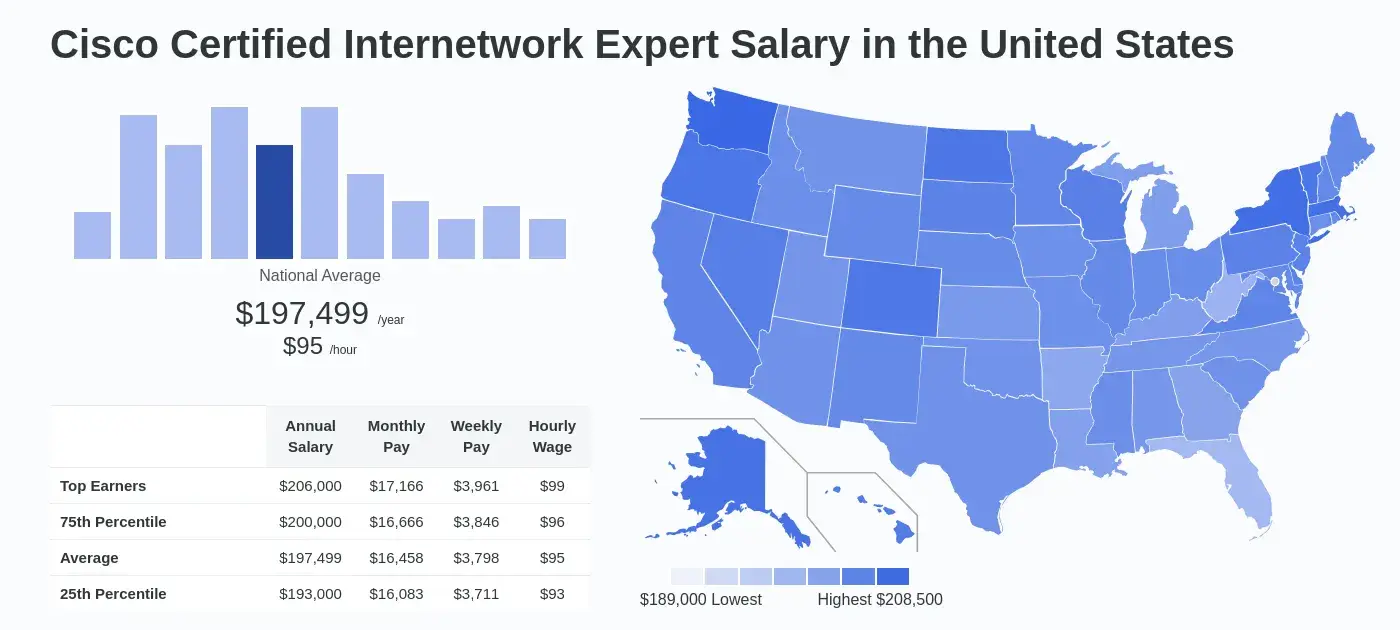
How Much Can You Make with the Certification?
Certified professionals can earn up to 40-percent more than their non-certified peers.
FAQs
1.How soon will I receive the learning materials?
After your payment has been verified, you will receive the following via email within 8 hours:
(1)Software and setup instructions
(2)Learning materials, including the workbook, solutions, and instructional videos
(3)Study plan
2.How can I open the workbook and solutions?
All workbooks and solutions are encrypted and can be opened on only one computer. We will provide a detailed guide to help you access the files. The materials are compatible with both Windows and Mac operating systems.
3.What is the duration of my service period?
Our standard service period is 3 months.
4.What happens if the exam becomes unstable?
We will provide you with updated information and materials as soon as any changes to the exam are confirmed.
If major changes occur during your service period, your remaining service time will be recalculated starting from the date the exam becomes stable again.
5.Is the rack practice environment the same as the actual exam?
Yes. The environment you practice on the rack is identical to the real lab exam, ensuring a realistic preparation experience.