Latest Cisco, PMP, AWS, CompTIA, Microsoft Materials on SALE Get Now Get Now
Home/
Blog/
What the AWS DVA-C02 Developer Exam Actually Tests and How to Pass It
SPOTO 2 2026-07-22 10:26:01
What the AWS DVA-C02 Developer Exam Actually Tests and How to Pass It

Anyone can log into the AWS Console, click a few buttons, and spin up a virtual server. But writing code that connects directly to cloud APIs, handles rate limits gracefully, and keeps database passwords out of git commits? That takes real software engineering.

That is where the AWS Certified Developer – Associate (DVA-C02) comes in.

If you build backend microservices, write Lambda functions, or maintain deployment pipelines on AWS, this exam is designed for you. Here is a practical, no-nonsense look at what the test covers, how the blueprint evolved, what salaries look like, and how to get certified without losing your mind.


1. What Makes This Exam Different?

A lot of people assume all associate-level cloud exams are basically the same. They aren't.

While architectural exams ask you to design high-level network diagrams and pick backup strategies, the DVA-C02 stays inside the application layer. You get asked about SDK method behavior, environment variables, token verification, and build scripts. Passing this test shows engineering leads a few specific things:

You know how to build serverless applications using AWS Lambda, API Gateway, and EventBridge.

You know how to structure and query data in Amazon DynamoDB without burning through throughput units.

You can set up real CI/CD pipelines using AWS CodePipeline and CodeBuild instead of deploying manually.

You understand how to lock down your code with IAM execution roles, KMS encryption, and Secrets Manager.


2. What Shifted in the Latest Blueprint?

When AWS updated the exam to the DVA-C02 version, they quietly retired older topics and aligned the questions with how modern tech companies build software today. If you happen to be studying with older prep guides, watch out for these focus shifts:

Security isn't an afterthought anymore: You'll see far more questions about managing secrets, setting up Amazon Cognito for user login, and handling encryption with AWS KMS.

Containers alongside serverless: Serverless still dominates the test, but AWS added specific scenario questions covering microservices deployed on Amazon ECS and AWS Fargate.

Troubleshooting and tracing: Standard log checking was replaced with real-world debugging scenarios using AWS X-Ray, CloudWatch metric filters, and dead-letter queues.


3. Looking Inside the 4 Exam Domains

You get 130 minutes to work through 65 questions (50 count toward your score, while 15 are unscored pilot questions). The passing mark is a scaled score of 720 out of 1,000. Here is how the test breaks down across the four core domains:

(1)with AWS Services (32%)

This is the single biggest section on the test. It checks how well you write code that talks to AWS using SDKs and the CLI. Expect heavy coverage on Lambda concurrency limits, API Gateway stage variables, and DynamoDB operations. You need to know when to use a Query versus a Scan, how partition keys affect data distribution, and how to speed up reads with DAX caching.

(2)Security (26%)

Making up over a quarter of the exam, this domain focuses on keeping your code secure. You need to understand how Cognito User Pools handle user authentication, how Identity Pools grant temporary access, and how to validate JWT tokens. You also need to write precise IAM policies so your applications only have access to the exact resources they need.

(3)Deployment (24%)

This module tests how you ship code to production safely. You'll need to understand how buildspec.yml files work in AWS CodeBuild, how to configure release stages in CodePipeline, and how CodeDeploy handles canary and rolling updates. You'll also see questions on packaging serverless applications with the AWS Serverless Application Model (SAM).

(4)Troubleshooting and Optimization (18%)

When an application breaks or slows down in production, this section tests your ability to fix it. Expect questions on tracing slow microservice calls using the AWS X-Ray SDK, setting up CloudWatch subscription filters, and handling API rate limits using exponential backoff logic.


4. Market Value: Salary Expectations

Because companies are constantly looking for developers who understand both application logic and cloud infrastructure, holding the DVA-C02 carries weight during job searches and salary reviews. While pay varies depending on your region and total experience, typical US market ranges for roles using this certification look like this:

Cloud Application Developer: $110,000 to $135,000 base salary for mid-level engineers writing cloud-native backend code.

Senior Serverless Engineer: $140,000 to $170,000+ for senior developers designing microservice systems.

DevOps / CI-CD Specialist: $125,000 to $155,000 for developers managing release pipelines and cloud deployments.


5. How to Prepare and Pass

You can't pass the DVA-C02 just by memorizing service definitions. A lot of the questions present a broken scenario or a code snippet and ask you to figure out what's wrong. Here is a straightforward study approach:

Build a simple project: Open an AWS Free Tier account. Build a basic API using API Gateway, route requests to a Python or Node.js Lambda function, and read data from DynamoDB. Try storing a secret in Secrets Manager and fetching it inside your code.

Pay attention to error codes: Know common SDK error messages and understand how your code should react.

Get used to scenario questions: Reading docs won't prepare you for the length and pacing of 65 wordy exam questions. Working through realistic practice question sets—like the updated DVA-C02 mock exams from SPOTO—helps you spot weak areas in your security or deployment knowledge, get comfortable with the exam phrasing, and head into test day ready to pass.
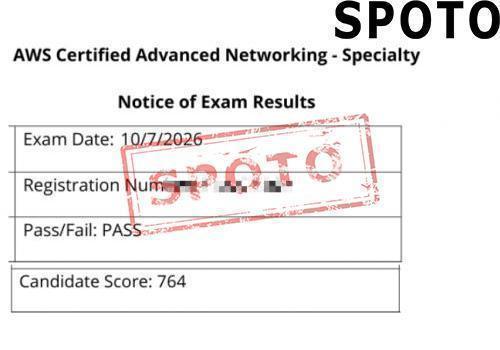
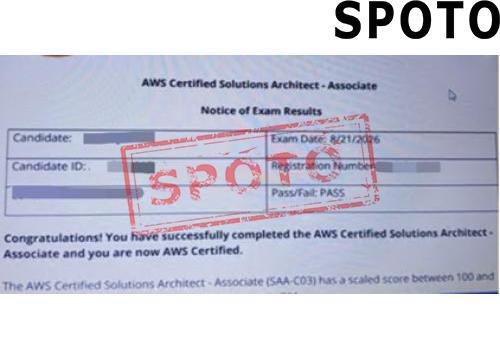
 

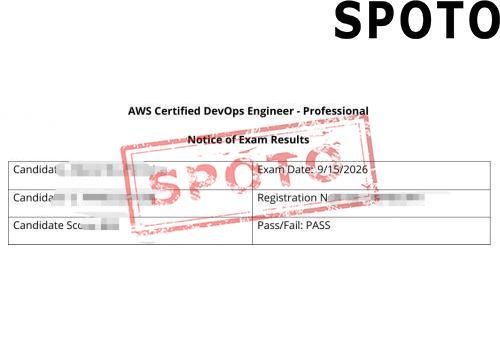
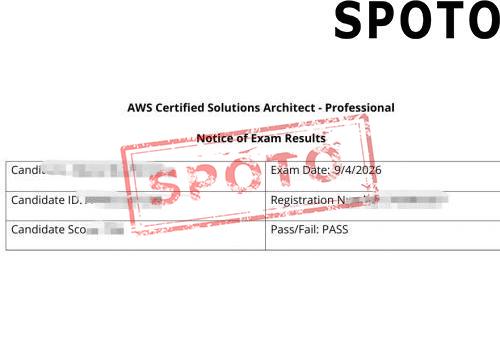
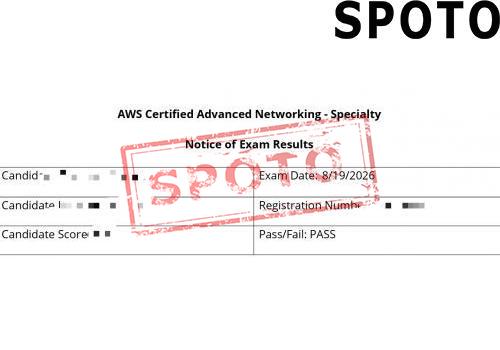
Latest Passing Reports from SPOTO Candidates
SAP-C02

SAP-C02

SAA-C03-P

SAA-C03-P

ANS-C01

ANS-C01

CLF-C02-P

CLF-C02-P

SAP-C02-P

SAP-C02-P

SAP-C02

SAP-C02

SAP-C02

SAP-C02

CLF-C02-P

CLF-C02-P

CLF-C02-P

CLF-C02-P

CLF-C02-P

CLF-C02-P

Write a Reply or Comment
Home/Blog/What the AWS DVA-C02 Developer Exam Actually Tests and How to Pass It
What the AWS DVA-C02 Developer Exam Actually Tests and How to Pass It
SPOTO 2 2026-07-22 10:26:01
What the AWS DVA-C02 Developer Exam Actually Tests and How to Pass It

Anyone can log into the AWS Console, click a few buttons, and spin up a virtual server. But writing code that connects directly to cloud APIs, handles rate limits gracefully, and keeps database passwords out of git commits? That takes real software engineering.

That is where the AWS Certified Developer – Associate (DVA-C02) comes in.

If you build backend microservices, write Lambda functions, or maintain deployment pipelines on AWS, this exam is designed for you. Here is a practical, no-nonsense look at what the test covers, how the blueprint evolved, what salaries look like, and how to get certified without losing your mind.


1. What Makes This Exam Different?

A lot of people assume all associate-level cloud exams are basically the same. They aren't.

While architectural exams ask you to design high-level network diagrams and pick backup strategies, the DVA-C02 stays inside the application layer. You get asked about SDK method behavior, environment variables, token verification, and build scripts. Passing this test shows engineering leads a few specific things:

You know how to build serverless applications using AWS Lambda, API Gateway, and EventBridge.

You know how to structure and query data in Amazon DynamoDB without burning through throughput units.

You can set up real CI/CD pipelines using AWS CodePipeline and CodeBuild instead of deploying manually.

You understand how to lock down your code with IAM execution roles, KMS encryption, and Secrets Manager.


2. What Shifted in the Latest Blueprint?

When AWS updated the exam to the DVA-C02 version, they quietly retired older topics and aligned the questions with how modern tech companies build software today. If you happen to be studying with older prep guides, watch out for these focus shifts:

Security isn't an afterthought anymore: You'll see far more questions about managing secrets, setting up Amazon Cognito for user login, and handling encryption with AWS KMS.

Containers alongside serverless: Serverless still dominates the test, but AWS added specific scenario questions covering microservices deployed on Amazon ECS and AWS Fargate.

Troubleshooting and tracing: Standard log checking was replaced with real-world debugging scenarios using AWS X-Ray, CloudWatch metric filters, and dead-letter queues.


3. Looking Inside the 4 Exam Domains

You get 130 minutes to work through 65 questions (50 count toward your score, while 15 are unscored pilot questions). The passing mark is a scaled score of 720 out of 1,000. Here is how the test breaks down across the four core domains:

(1)with AWS Services (32%)

This is the single biggest section on the test. It checks how well you write code that talks to AWS using SDKs and the CLI. Expect heavy coverage on Lambda concurrency limits, API Gateway stage variables, and DynamoDB operations. You need to know when to use a Query versus a Scan, how partition keys affect data distribution, and how to speed up reads with DAX caching.

(2)Security (26%)

Making up over a quarter of the exam, this domain focuses on keeping your code secure. You need to understand how Cognito User Pools handle user authentication, how Identity Pools grant temporary access, and how to validate JWT tokens. You also need to write precise IAM policies so your applications only have access to the exact resources they need.

(3)Deployment (24%)

This module tests how you ship code to production safely. You'll need to understand how buildspec.yml files work in AWS CodeBuild, how to configure release stages in CodePipeline, and how CodeDeploy handles canary and rolling updates. You'll also see questions on packaging serverless applications with the AWS Serverless Application Model (SAM).

(4)Troubleshooting and Optimization (18%)

When an application breaks or slows down in production, this section tests your ability to fix it. Expect questions on tracing slow microservice calls using the AWS X-Ray SDK, setting up CloudWatch subscription filters, and handling API rate limits using exponential backoff logic.


4. Market Value: Salary Expectations

Because companies are constantly looking for developers who understand both application logic and cloud infrastructure, holding the DVA-C02 carries weight during job searches and salary reviews. While pay varies depending on your region and total experience, typical US market ranges for roles using this certification look like this:

Cloud Application Developer: $110,000 to $135,000 base salary for mid-level engineers writing cloud-native backend code.

Senior Serverless Engineer: $140,000 to $170,000+ for senior developers designing microservice systems.

DevOps / CI-CD Specialist: $125,000 to $155,000 for developers managing release pipelines and cloud deployments.


5. How to Prepare and Pass

You can't pass the DVA-C02 just by memorizing service definitions. A lot of the questions present a broken scenario or a code snippet and ask you to figure out what's wrong. Here is a straightforward study approach:

Build a simple project: Open an AWS Free Tier account. Build a basic API using API Gateway, route requests to a Python or Node.js Lambda function, and read data from DynamoDB. Try storing a secret in Secrets Manager and fetching it inside your code.

Pay attention to error codes: Know common SDK error messages and understand how your code should react.

Get used to scenario questions: Reading docs won't prepare you for the length and pacing of 65 wordy exam questions. Working through realistic practice question sets—like the updated DVA-C02 mock exams from SPOTO—helps you spot weak areas in your security or deployment knowledge, get comfortable with the exam phrasing, and head into test day ready to pass.
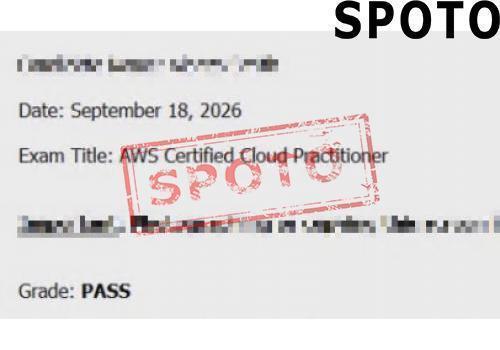
 

Latest Passing Reports from SPOTO Candidates
SAP-C02
SAA-C03-P
ANS-C01
CLF-C02-P
SAP-C02-P
SAP-C02
SAP-C02
CLF-C02-P
CLF-C02-P
CLF-C02-P
Write a Reply or Comment
Don't Risk Your Certification Exam Success – Take Real Exam Questions
Eligible to sit for Exam? 100% Exam Pass GuaranteeEligible to sit for Exam? 100% Exam Pass Guarantee
SPOTO Ebooks
Recent Posts
Real-World DevOps on Azure: What You Actually Need to Know for the AZ-400 Exam
What the AWS DVA-C02 Developer Exam Actually Tests and How to Pass It
AWS SAA-C03: What the Solutions Architect Exam Actually Tests, What It Pays, and How to Pass
Microsoft AZ-204: What Developers Actually Need to Know to Pass
AWS Cloud Practitioner (CLF-C02): What It Actually Covers, What It Pays, and Who Should Take It
The Real-World Guide to Microsoft AZ-120: SAP Workloads on Azure
Why the AZ-104 is Still the Hardest Associate Cloud Exam (And How to Beat It)
The High-Value Cloud Specialty: The Definitive Guide to Microsoft AZ-140
The Hard Truth About CompTIA Security+: Value, 2026 Updates, and Real-World Salary
Connecting the Modern Enterprise: The Definitive Guide to CompTIA Network+ in 2026
Excellent
5.0
Based on 5236 reviews
Request more information
I would like to receive email communications about product & offerings from SPOTO & its Affiliates.
I understand I can unsubscribe at any time.