Latest Cisco, PMP, AWS, CompTIA, Microsoft Materials on SALE Get Now Get Now
Home/
Blog/
The Introduction and Guide to the Certified Information Systems Auditor (CISA) Exam in 2026
SPOTO 2 2026-04-13 11:19:28
The Introduction and Guide to the Certified Information Systems Auditor (CISA) Exam in 2026

The Certified Information Systems Auditor (CISA) is a globally recognized certification in information systems auditing, awarded by the Institute for Information Systems Auditing and Responsibility (ISACA). Often referred to as the "golden certificate" in IT auditing, it is widely recognized in over 180 countries and regions worldwide.

The 2026 CISA exam continued the syllabus framework updated in August 2024, placing greater emphasis on cutting-edge areas such as risk-oriented auditing, cloud security, digital transformation governance, and business resilience. The overall difficulty was slightly increased, but it is now more closely aligned with real-world work scenarios.


1. CISA Exam Core Basic Information

Number of Questions: 150 multiple-choice questions, all objective (four options each), no subjective or true/false questions.

Exam Duration: 4 hours (240 minutes), approximately 96 seconds per question.

Scoring Range: 200-800 points, 450 points is the passing score. Pass/fail status is displayed immediately after the exam.

Exam Fee: Approximately $450 USD for ISACA members, approximately $760 USD for non-members. Prices may vary slightly by region.

Eligibility: No strict educational restrictions; anyone can register for the exam.

Certification Requirements: Passing the exam requires meeting three core conditions: adherence to the ISACA Code of Ethics; 5 years of experience in information systems auditing, control, security, or assurance; and submitting a certification application within 5 years of passing the exam (expired scores will be invalid).

Experience Credit Rules: Educational qualifications can reduce work experience: Bachelor's degree can reduce 1 year, Master's degree can reduce 2 years, and Doctoral degree can reduce 3 years; some relevant certifications (such as CIA and CPA) can also reduce work experience by up to one year.


2. The Five Knowledge Areas of CISA 2026

The 2026 CISA exam content is divided into five core areas, each with a clear weighting. Information systems operations and business resilience, and information asset protection are the two main focuses, each accounting for 26%.

(1) Information System Audit Process (18%)

Core Content: Risk assessment methods, audit plan development, audit evidence collection and evaluation, audit report writing, follow-up process

Key Skills: Mastering audit frameworks such as COBIT, ITIL, and NIST; designing risk-oriented audit procedures; assessing control effectiveness; identifying audit findings and proposing improvement suggestions

New additions in 2026: Application of data analytics in auditing; cloud environment and DevOps audit methods; use of automated audit tools

(2) IT Governance and Management (18%)

Core Content: Alignment of IT strategy with business objectives; IT governance framework; risk management; resource management; performance evaluation; compliance management

Key Skills: Understanding IT governance models (such as COBIT 2019); assessing the value of IT investments; designing IT risk management frameworks; ensuring IT compliance (such as GDPR and SOX)

Key Focuses in 2026: Digital transformation governance; agile governance; third-party risk management; IT outsourcing governance

(3) Information System Procurement, Development and Implementation (12%)

Core Content: System Development Lifecycle (SDLC) Management, Requirements Analysis, Project Management, Change Management, Testing and Quality Assurance, Post-Live Evaluation

Key Skills: Evaluating the effectiveness of SDLC controls, identifying risks during development, ensuring the system meets business requirements and security standards, and implementing effective change control processes

2026 Hot Topics: Agile Development Audit, DevSecOps, Low-Code/No-Code Platform Risk Assessment, API Security Audit

(4) Information System Operation and Business Resilience (26%)

Core Content: IT Service Management, System Operation Monitoring, Issue and Incident Management, Change Management, Backup and Recovery, Business Continuity Plan (BCP), Disaster Recovery Plan (DRP)

Key Skills: Evaluating IT operational efficiency, designing business continuity strategies, implementing effective backup and recovery mechanisms, ensuring high system availability, and reducing business interruption risks

2026 Enhancement: Cloud Environment Business Continuity, RTO/RPO Optimization, Supply Chain Resilience, Digital Business Interruption Response

(5) Information Asset Protection (26%)

Core Content: Access control, data security, network security, physical security, encryption technology, security incident response, privacy protection

Key Skills: Designing multi-layered security control systems, implementing Identity and Access Management (IAM), protecting sensitive data, responding to cyberattacks, and ensuring privacy compliance

New additions in 2026: Zero Trust Architecture, AI Security, Quantum Computing Security Risks, Data Governance and Classification, Privacy Enhancement Technologies (PETs)

Based on the 2026 CISA exam syllabus requirements and the learning pace of most candidates, the overall preparation period is recommended to be controlled within 3-6 months, ensuring 2-3 hours of highly focused study time each day.


3. Core Strategies for CISA Preparation in 2026

(1) Foundation Stage (1-2 months):

The core goal of this stage is not rote memorization of knowledge points, but rather to establish a complete CISA knowledge system, understand the underlying logic of information system auditing and the core boundaries of the five knowledge areas, overcome unfamiliarity with professional terminology, and lay a solid foundation for subsequent in-depth learning.

The 2-3 hours of study per day can be broken down as follows: First, spend 1 hour reading through the latest version of the official textbook, *CISA Review Manual*, reviewing the content chapter by chapter; then spend 1 hour creating mind maps to connect the knowledge points of each chapter into a coherent system; the remaining 0.5-1 hour should be spent organizing core professional terminology and marking easily confused concepts.

The learning focus is on the core concepts and control objectives of the five major knowledge areas. There's no need to delve into complex practical details. The key is to understand the core ideas of risk-oriented auditing, the basic logic of mainstream governance frameworks like COBIT, and the basic definitions of IT governance, business resilience, and information asset protection. For example, clarify the difference between RTO and RPO, the core principles of access control, and the basic steps of the audit process. Simultaneously, gain a preliminary understanding of the basic concepts added to the 2026 syllabus, such as cloud auditing, privacy protection, and zero-trust architecture.

(2) Intensive Phase (2-3 months):

This is the core intensive phase of exam preparation and a crucial period for improving scores. It requires in-depth learning based on the weighted areas of the exam syllabus, combining theoretical knowledge with auditing practice and risk assessment. Solidify knowledge points through chapter exercises and develop a CISA-specific problem-solving mindset.

A daily study schedule of 2-3 hours is recommended: 1 hour for detailed reading of the textbook focusing on high-weighted areas, delving into the details; 1 hour for completing the corresponding chapter's practice questions, with the official question bank being the preferred option; the remaining 0.5-1 hour for reviewing incorrect answers, analyzing the underlying knowledge gaps through case studies, and understanding the practical logic of risk assessment and control design.

Study should strictly adhere to the weighted allocation of effort according to the exam syllabus. Prioritize mastering the two core areas of Information System Operations and Business Resilience (26%) and Information Asset Protection, then delve into Information System Audit Processes and IT Governance and Management (18%), and finally master the Information System Procurement, Development, and Implementation module (12%).

During the learning process, it is essential to combine real audit cases to understand risk identification methods, control measure selection, and audit evidence collection logic in different scenarios. Simultaneously, focus on mastering the practical content newly added in 2026, such as cloud environment auditing, DevSecOps management, business resilience design, and privacy compliance auditing.

(3) Sprint Stage (1 month):

The core goal of this stage is to adapt to the exam rhythm, overcome weaknesses, and adjust exam-taking state. No new knowledge points will be learned; focus will be placed on mock exam training, reviewing incorrect answers, and memorizing high-frequency test points to ensure stable performance in the exam.

Daily study time can be flexibly allocated: On weekdays, dedicate 2 hours each day: 1 hour to review previous mistakes in your error log, specifically focusing on reinforcing weak knowledge points in the textbook, and 1 hour to memorizing frequently tested topics and easily confused content. On weekends, dedicate a full 4 hours to conduct realistic mock exams, strictly replicating the exam duration and pace to completely simulate the real exam environment.

After each mock exam, analyze each incorrect question to pinpoint knowledge gaps and focus on addressing weaknesses left over from the intensive review phase, such as cloud auditing processes, security incident response, and BCP/DRP optimization—newly added exam topics in 2026. Simultaneously practice exam-taking skills, such as quickly identifying keywords in the question stem, using the process of elimination to filter answers, and allocating time effectively to avoid getting bogged down in difficult questions.

Furthermore, focus on memorizing frequently tested topics such as key steps in the auditing process, core compliance requirements, and best practices for security controls to strengthen short-term memory.


Summary: CISA certification is not only proof of professional competence but also a significant boost to career development. While the 2026 CISA exam is more difficult, with the right preparation methods, combined with practical work experience, and through systematic learning and thorough preparation, passing the exam is entirely possible.

SPOTO recommends you refer to our preparation plan and begin your studies now, focusing on key areas in stages, to build a solid foundation for passing the exam and advancing your career.
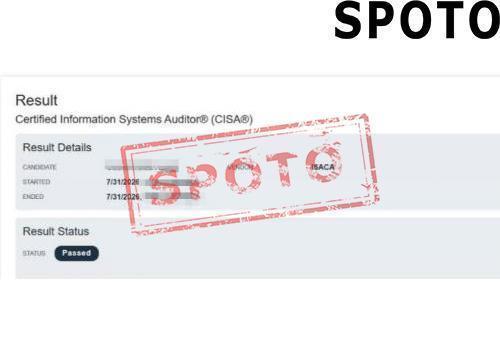
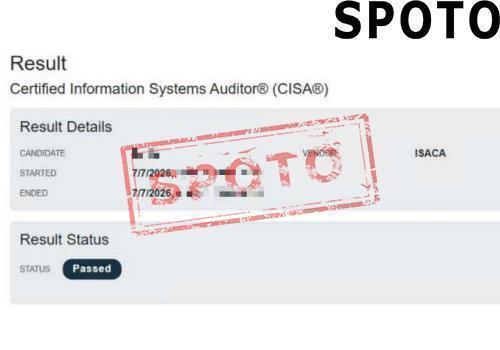
Latest Passing Reports from SPOTO Candidates
ISACA-CISA-P

ISACA-CISA-P

ISACA-CISM-P

ISACA-CISM-P

ISACA-CISA-P

ISACA-CISA-P

ISACA-CISM-P

ISACA-CISM-P

ISACA-COBIT-P

ISACA-COBIT-P

ISACA-CISM-P

ISACA-CISM-P

ISACA-CISM-P

ISACA-CISM-P

ISACA-CISM-P

ISACA-CISM-P

ISACA-CISA-P

ISACA-CISA-P

ISACA-CISM-P

ISACA-CISM-P

Write a Reply or Comment
Home/Blog/The Introduction and Guide to the Certified Information Systems Auditor (CISA) Exam in 2026
The Introduction and Guide to the Certified Information Systems Auditor (CISA) Exam in 2026
SPOTO 2 2026-04-13 11:19:28
The Introduction and Guide to the Certified Information Systems Auditor (CISA) Exam in 2026

The Certified Information Systems Auditor (CISA) is a globally recognized certification in information systems auditing, awarded by the Institute for Information Systems Auditing and Responsibility (ISACA). Often referred to as the "golden certificate" in IT auditing, it is widely recognized in over 180 countries and regions worldwide.

The 2026 CISA exam continued the syllabus framework updated in August 2024, placing greater emphasis on cutting-edge areas such as risk-oriented auditing, cloud security, digital transformation governance, and business resilience. The overall difficulty was slightly increased, but it is now more closely aligned with real-world work scenarios.


1. CISA Exam Core Basic Information

Number of Questions: 150 multiple-choice questions, all objective (four options each), no subjective or true/false questions.

Exam Duration: 4 hours (240 minutes), approximately 96 seconds per question.

Scoring Range: 200-800 points, 450 points is the passing score. Pass/fail status is displayed immediately after the exam.

Exam Fee: Approximately $450 USD for ISACA members, approximately $760 USD for non-members. Prices may vary slightly by region.

Eligibility: No strict educational restrictions; anyone can register for the exam.

Certification Requirements: Passing the exam requires meeting three core conditions: adherence to the ISACA Code of Ethics; 5 years of experience in information systems auditing, control, security, or assurance; and submitting a certification application within 5 years of passing the exam (expired scores will be invalid).

Experience Credit Rules: Educational qualifications can reduce work experience: Bachelor's degree can reduce 1 year, Master's degree can reduce 2 years, and Doctoral degree can reduce 3 years; some relevant certifications (such as CIA and CPA) can also reduce work experience by up to one year.


2. The Five Knowledge Areas of CISA 2026

The 2026 CISA exam content is divided into five core areas, each with a clear weighting. Information systems operations and business resilience, and information asset protection are the two main focuses, each accounting for 26%.

(1) Information System Audit Process (18%)

Core Content: Risk assessment methods, audit plan development, audit evidence collection and evaluation, audit report writing, follow-up process

Key Skills: Mastering audit frameworks such as COBIT, ITIL, and NIST; designing risk-oriented audit procedures; assessing control effectiveness; identifying audit findings and proposing improvement suggestions

New additions in 2026: Application of data analytics in auditing; cloud environment and DevOps audit methods; use of automated audit tools

(2) IT Governance and Management (18%)

Core Content: Alignment of IT strategy with business objectives; IT governance framework; risk management; resource management; performance evaluation; compliance management

Key Skills: Understanding IT governance models (such as COBIT 2019); assessing the value of IT investments; designing IT risk management frameworks; ensuring IT compliance (such as GDPR and SOX)

Key Focuses in 2026: Digital transformation governance; agile governance; third-party risk management; IT outsourcing governance

(3) Information System Procurement, Development and Implementation (12%)

Core Content: System Development Lifecycle (SDLC) Management, Requirements Analysis, Project Management, Change Management, Testing and Quality Assurance, Post-Live Evaluation

Key Skills: Evaluating the effectiveness of SDLC controls, identifying risks during development, ensuring the system meets business requirements and security standards, and implementing effective change control processes

2026 Hot Topics: Agile Development Audit, DevSecOps, Low-Code/No-Code Platform Risk Assessment, API Security Audit

(4) Information System Operation and Business Resilience (26%)

Core Content: IT Service Management, System Operation Monitoring, Issue and Incident Management, Change Management, Backup and Recovery, Business Continuity Plan (BCP), Disaster Recovery Plan (DRP)

Key Skills: Evaluating IT operational efficiency, designing business continuity strategies, implementing effective backup and recovery mechanisms, ensuring high system availability, and reducing business interruption risks

2026 Enhancement: Cloud Environment Business Continuity, RTO/RPO Optimization, Supply Chain Resilience, Digital Business Interruption Response

(5) Information Asset Protection (26%)

Core Content: Access control, data security, network security, physical security, encryption technology, security incident response, privacy protection

Key Skills: Designing multi-layered security control systems, implementing Identity and Access Management (IAM), protecting sensitive data, responding to cyberattacks, and ensuring privacy compliance

New additions in 2026: Zero Trust Architecture, AI Security, Quantum Computing Security Risks, Data Governance and Classification, Privacy Enhancement Technologies (PETs)

Based on the 2026 CISA exam syllabus requirements and the learning pace of most candidates, the overall preparation period is recommended to be controlled within 3-6 months, ensuring 2-3 hours of highly focused study time each day.


3. Core Strategies for CISA Preparation in 2026

(1) Foundation Stage (1-2 months):

The core goal of this stage is not rote memorization of knowledge points, but rather to establish a complete CISA knowledge system, understand the underlying logic of information system auditing and the core boundaries of the five knowledge areas, overcome unfamiliarity with professional terminology, and lay a solid foundation for subsequent in-depth learning.

The 2-3 hours of study per day can be broken down as follows: First, spend 1 hour reading through the latest version of the official textbook, *CISA Review Manual*, reviewing the content chapter by chapter; then spend 1 hour creating mind maps to connect the knowledge points of each chapter into a coherent system; the remaining 0.5-1 hour should be spent organizing core professional terminology and marking easily confused concepts.

The learning focus is on the core concepts and control objectives of the five major knowledge areas. There's no need to delve into complex practical details. The key is to understand the core ideas of risk-oriented auditing, the basic logic of mainstream governance frameworks like COBIT, and the basic definitions of IT governance, business resilience, and information asset protection. For example, clarify the difference between RTO and RPO, the core principles of access control, and the basic steps of the audit process. Simultaneously, gain a preliminary understanding of the basic concepts added to the 2026 syllabus, such as cloud auditing, privacy protection, and zero-trust architecture.

(2) Intensive Phase (2-3 months):

This is the core intensive phase of exam preparation and a crucial period for improving scores. It requires in-depth learning based on the weighted areas of the exam syllabus, combining theoretical knowledge with auditing practice and risk assessment. Solidify knowledge points through chapter exercises and develop a CISA-specific problem-solving mindset.

A daily study schedule of 2-3 hours is recommended: 1 hour for detailed reading of the textbook focusing on high-weighted areas, delving into the details; 1 hour for completing the corresponding chapter's practice questions, with the official question bank being the preferred option; the remaining 0.5-1 hour for reviewing incorrect answers, analyzing the underlying knowledge gaps through case studies, and understanding the practical logic of risk assessment and control design.

Study should strictly adhere to the weighted allocation of effort according to the exam syllabus. Prioritize mastering the two core areas of Information System Operations and Business Resilience (26%) and Information Asset Protection, then delve into Information System Audit Processes and IT Governance and Management (18%), and finally master the Information System Procurement, Development, and Implementation module (12%).

During the learning process, it is essential to combine real audit cases to understand risk identification methods, control measure selection, and audit evidence collection logic in different scenarios. Simultaneously, focus on mastering the practical content newly added in 2026, such as cloud environment auditing, DevSecOps management, business resilience design, and privacy compliance auditing.

(3) Sprint Stage (1 month):

The core goal of this stage is to adapt to the exam rhythm, overcome weaknesses, and adjust exam-taking state. No new knowledge points will be learned; focus will be placed on mock exam training, reviewing incorrect answers, and memorizing high-frequency test points to ensure stable performance in the exam.

Daily study time can be flexibly allocated: On weekdays, dedicate 2 hours each day: 1 hour to review previous mistakes in your error log, specifically focusing on reinforcing weak knowledge points in the textbook, and 1 hour to memorizing frequently tested topics and easily confused content. On weekends, dedicate a full 4 hours to conduct realistic mock exams, strictly replicating the exam duration and pace to completely simulate the real exam environment.

After each mock exam, analyze each incorrect question to pinpoint knowledge gaps and focus on addressing weaknesses left over from the intensive review phase, such as cloud auditing processes, security incident response, and BCP/DRP optimization—newly added exam topics in 2026. Simultaneously practice exam-taking skills, such as quickly identifying keywords in the question stem, using the process of elimination to filter answers, and allocating time effectively to avoid getting bogged down in difficult questions.

Furthermore, focus on memorizing frequently tested topics such as key steps in the auditing process, core compliance requirements, and best practices for security controls to strengthen short-term memory.


Summary: CISA certification is not only proof of professional competence but also a significant boost to career development. While the 2026 CISA exam is more difficult, with the right preparation methods, combined with practical work experience, and through systematic learning and thorough preparation, passing the exam is entirely possible.

SPOTO recommends you refer to our preparation plan and begin your studies now, focusing on key areas in stages, to build a solid foundation for passing the exam and advancing your career.
Latest Passing Reports from SPOTO Candidates
ISACA-CISA-P
ISACA-CISM-P
ISACA-CISA-P
ISACA-CISM-P
ISACA-COBIT-P
ISACA-CISM-P
ISACA-CISM-P
ISACA-CISM-P
ISACA-CISA-P
ISACA-CISM-P
Write a Reply or Comment
Don't Risk Your Certification Exam Success – Take Real Exam Questions
Eligible to sit for Exam? 100% Exam Pass GuaranteeEligible to sit for Exam? 100% Exam Pass Guarantee
SPOTO Ebooks
Recent Posts
Cisco 500-325 CSA Exam: The latest knowledge points you need to master in 2026
The Introduction and Guide to the Certified Information Systems Auditor (CISA) Exam in 2026
Google Professional Cloud Architect Exam: The truth you need to know in 2026
ISACA CISA Certification: The Success Guide you need to know in 2026
Cisco Collaboration SaaS 700-680 Certification: The Success Guide you need to know in 2026
AWS Exam: The truth you need to know in 2026 (Path to Advancement, Salary, Core Values)
The Introduction and Guide to the AWS DVA-C02 Exam in 2026
Cisco Exam: The truth you need to know in 2026 (Path to Advancement, Salary, Core Values)
CompTIA Exam: The truth you need to know in 2026 (Path to Advancement, Salary, Core Values)
The Introduction and Guide of Cisco 700-150 ICS Exam
Excellent
5.0
Based on 5236 reviews
Request more information
I would like to receive email communications about product & offerings from SPOTO & its Affiliates.
I understand I can unsubscribe at any time.