Table of Contents
- 1. Introduction to the ITIL4LDITS certification
- 2. The Competitive Edge of ITIL4LDITS Certification
- 3. Core Components of the ITIL4LDITS Certification
- 4. What are the requirements to be an ITIL 4 LDITS certification holder?
- 5. Comparable Certifications to ITIL 4 Leader Digital & IT Strategy Certification
1. Introduction to the ITIL4LDITS certification
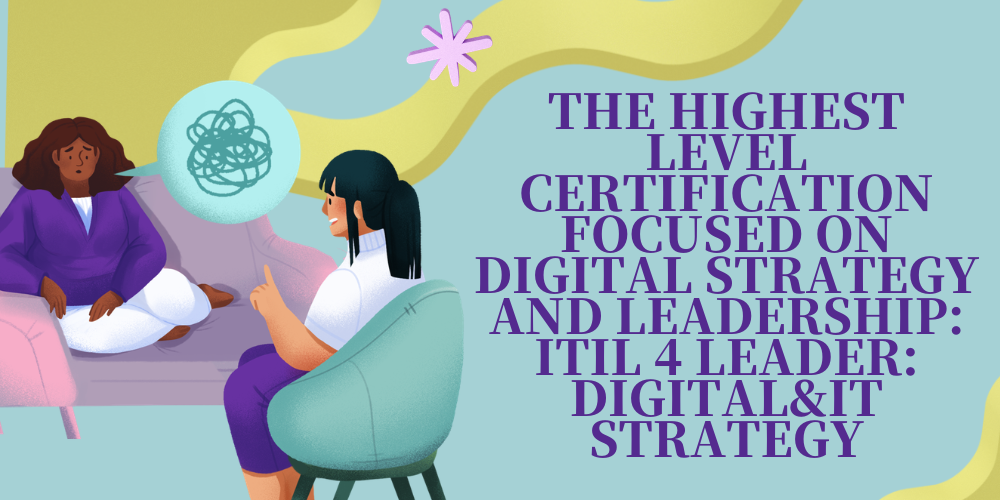
The ITIL 4 Leader: Digital & IT Strategy (DITS) designation represents the pinnacle of leadership qualifications within the ITIL framework, introduced by AXELOS. It forms one of two essential components in the ITIL 4 Strategic Leader (SL) track. This credential stands alone in the ITSM landscape as a high‑level certification dedicated exclusively to the formulation of digital transformation strategies, the harmonization of IT and business objectives, the cultivation of digital leadership, and the navigation of digital disruption. It is meticulously aligned with the pressing needs of organizations transitioning from conventional IT operations to digitally driven business models.
The DITS certification directly addresses persistent challenges in traditional ITSM, such as the gap between technology initiatives and business goals, the disconnect between strategic vision and operational execution, and the lack of structure in digital transformation efforts. It brings together five critical competency areas: digital strategy development, IT–business strategic alignment, co‑creation of business value, digital risk governance, and leadership evolution. By doing so, it validates a professional’s ability to translate a business vision into a concrete digital roadmap, leverage IT capabilities to support that roadmap, foster digital leadership qualities, guide organizational change, and effectively respond to disruptive forces.
2. The Competitive Edge of ITIL4LDITS Certification
As a globally accepted standard, ITIL 4 serves as the foundation for IT service management worldwide. The DITS certification is the sole top‑tier credential in the ITIL 4 suite that concentrates on digital strategy and leadership, making it a vital benchmark for identifying exceptional talent in this domain. Its international recognition is substantial.
Holders of the DITS certification can apply standardized strategic leadership approaches to overcome fundamental hurdles in digital transformation, including misalignment between strategy and execution, friction between IT and business units, and inefficient use of resources. They are equipped to establish a cohesive digital transformation cycle—spanning vision, strategy, execution, monitoring, and refinement—that can potentially lift transformation success rates beyond 70% and boost the return on IT investments by more than 50%.
As one of the two core modules required for the ITIL 4 Strategic Leader designation, this certification is indispensable for anyone aiming to achieve the full SL qualification, which is widely regarded as a premier credential for digital transformation executives. It paves the way for career advancement from technical management roles to strategic digital leadership positions.
The curriculum incorporates contemporary practices such as digital transformation methodologies, the application of emerging technologies, digital risk management, and organizational change management. This ensures that certified professionals are well‑prepared to handle the complex strategic challenges of enterprise digital transformation and to build leadership capabilities that are relevant in the digital era.
Through strategic alignment and value co‑creation, DITS‑certified individuals can reposition the IT function from a traditional support unit to a primary driver of business innovation. This elevates the IT team’s strategic influence within the organization, accelerates digital transformation initiatives, and contributes to long‑term business sustainability.
3. Core Components of the ITIL4LDITS Certification
The ITIL 4 Digital & IT Strategy (DITS) certification is a strategic‑level qualification tailored for senior executives and leaders responsible for steering digital direction.
In contrast to intermediate certifications that focus on specific practices or operational workflows, DITS centers on developing the capability to craft, direct, and continuously enhance enterprise‑wide digital strategies. It tackles high‑level questions such as "Why should we transform?” and "How can we lead transformation effectively?”
The certification adheres strictly to the official AXELOS syllabus, with examination topics revolving around strategic planning, business alignment, and leadership cultivation. The alignment of digital strategy with business goals is a central theme, requiring candidates to articulate a clear digital vision and employ tools like strategy maps to achieve bidirectional synchronization between IT and business strategies.
The module on digital disruption and innovation management focuses on identifying potentially disruptive technologies, leveraging innovations such as artificial intelligence and cloud computing, and rethinking business models accordingly. The digital risk and governance component provides a protective framework for strategy execution, ensuring data security and regulatory compliance are maintained.
Another key area addresses digital leadership and organizational change, emphasizing the shift from a directive management style to an empowering one, and the mastery of change management techniques to drive cultural transformation. Finally, the strategic execution and value delivery module concentrates on breaking down strategies into actionable steps and tracking value realization through key performance indicators.
4. What are the requirements to be an ITIL 4 LDITS certification holder?
(1) Qualification prerequisites:
Candidates must hold a current ITIL 4 Foundation certificate. Completion of an accredited training course delivered by an AXELOS Authorized Training Organization (ATO) is mandatory, as a formal training record is required to register for the exam.
It is advisable to first obtain the ITIL 4 Strategist: Direct, Plan and Improve (DPI) certification, as it provides valuable insight into the logic of strategic execution and continuous improvement.
While not strictly required, having 5–8 years of professional experience in IT management, business strategy, or digital transformation, familiarity with the full cycle of strategy formulation and execution, a solid grasp of ITIL 4 Foundation concepts, an understanding of the link between IT service management and business value, and strong strategic thinking skills will significantly enhance the likelihood of exam success.
(2) Training and Examination:
The DITS exam consists of 40 multiple‑choice questions. The majority are scenario‑based questions that mirror real‑world business situations, supplemented by a small number of questions on conceptual integration.
Native English speakers are allowed 60 minutes to complete the exam; non‑native speakers may request an extension to 90 minutes.
The passing score is 26 out of 40. Exam fees typically fall in the range of $400 to $500.
(3) Maintaining the Certification:
The DITS certification is valid for three years. To keep it active, holders must accumulate approved Continuing Professional Development (CPD) credits or successfully pass a more advanced ITIL 4 certification before the expiry date, which will automatically renew the current certificate.
5. Comparable Certifications to ITIL 4 Leader Digital & IT Strategy Certification
- CDO Certification
- TOGAF 10 Certified
- ISACA CDO (Chief Digital Officer) Certification
- ISACA CGEIT (Certified in the Governance of Enterprise IT)