Latest Cisco, PMP, AWS, CompTIA, Microsoft Materials on SALE Get Now Get Now
Home/
Blog/
The Complete Guide to the CCNA Exam 2026
SPOTO 2 2026-02-27 14:58:09
The Complete Guide to the CCNA Exam 2026

Starting from February 3, 2026, the Cisco CCNA certification will undergo a major update, with the exam code still being 200-301. However, the exam syllabus will be fully upgraded, deeply integrating AI, cloud, automation, and security, and better meeting the needs of modern enterprise network operations and digital transformation.

This guide will systematically interpret the core information, six major knowledge areas, key changes, preparation strategies, and test taking skills of the new version of the exam, helping you pass efficiently.

1. Implementation and registration

Activation time: Global unified launch on February 3, 2026, with the old version of the exam ending on February 2, 2026.

Exam code: 200-301 Implementing and Managing Cisco Networking Technologies.

Registration channel: Make an appointment through the Pearson VUE official website and bring your identification to take the exam.

Certification validity period: 3 years. Upon expiration, the certificate can be renewed through re examination or accumulation of Continuing Education Credits (CE).


2. Exam information

Duration: 120 minutes.

Quantity of questions: Approximately 90-100 questions (including non scoring test questions).

Full score/passing line: 1000 points/825 points.

Question type: Single choice question, multiple choice, drag and drop, simulation configuration, simulation scenario.

Core changes: Strengthen AI network operation and maintenance, cloud networks, automation, and programmability, weaken pure theoretical memory, and focus on practical configuration and troubleshooting.


3. Detailed explanation of the six major knowledge domains and examination points

The new version of CCNA is divided into six major knowledge domains, with weights and examination points that fully meet the practical needs of enterprise networks.

(1) Network foundation (20%) serves as the cornerstone of authentication, focusing on the underlying logic and infrastructure of the network

You need to master the correspondence between OSI layer 7 and TCP/IP layer 4, as well as the core principles and packet analysis of ARP, ICMP, TCP/UDP.

Equipment and topology: router, layer 2/layer 3 switch, firewall, WLC, PoE device functionality; Double/triple layer campus, Spine Leaf data center, hybrid cloud topology design.

IP address: IPv4/IPv6 address structure, subnet partitioning, VLSM, CIDR aggregation, classless routing and aggregation.

Basic tools: ping, traceroute, show, debug command usage, Wireshark packet capture basics, network connectivity troubleshooting process.

New exam topics: Basic applications of AI in network monitoring and traffic prediction, and hybrid cloud network connectivity models.

(2) Network access (20%) focuses on the configuration, management, and security of local area networks and wireless access.

Switching technology: VLAN, Trunk (802.1Q), VTP, STP/RSTP basic principles and configurations, port security, and port aggregation.

Inter VLAN routing: SVI, single arm routing, layer 3 switch routing configuration.

Wireless infrastructure: WLAN architecture SSID, 802.11 standard, WLC and AP association, basic wireless security (WPA2/WPA3).

Access control: 802.1X authentication, AAA basic, switch port security configuration.

(3) IP connectivity (25%) has the highest proportion, focusing on routing technology and IP network interconnection, and is the core of configuration and troubleshooting.

Static routing: Static routing, default routing, floating static routing configuration and routing logic.

Dynamic routing: RIP, OSPFv2/v3 basic principles, neighbor establishment, area design, routing aggregation, configuration and troubleshooting.

Routing table and routing: longest matching principle, management distance (AD), metric values, and routing redistribution basis.

IPv6 address type, stateless address auto configuration, OSPFv3, IPv6 static routing configuration.

Troubleshooting: Interface status investigation, routing loss, loop, connectivity fault location and repair.

(4) IP services (10%) focus on commonly used service configurations and applications for enterprise networks.

DHCP: router/switch DHCP server configuration, DHCP relay, address pooling, and exclusion addresses.

NAT/PAT: Static NAT, dynamic NAT, PAT configuration, principles and troubleshooting of internal and external network address translation.

DNS and ACL: DNS basics, standard/extended ACL configuration and application, filtering traffic and access control.

QoS foundation: Classification, tagging, queue mechanism to ensure critical business traffic.

(5) Security Fundamentals (15%) Strengthen network security awareness and basic protection capabilities.

Security threats: common types of attacks (DDoS, ARP spoofing, port scanning), vulnerabilities, and protection strategies.

Device Security: Password Policy, SSH Substitution for Telnet, VTY Line Security, Console Security Configuration.

Access control: ACL deep application, port security, 802.1X, AAA authentication basics.

New exam topics: Fundamentals of Next Generation Firewalls, ESG and Network Security Compliance, Cloud Environment Security Access Control.

(6) Automation and programmability (10%) are key upgrade modules for the 2026 version, which will be integrated with network digital transformation.

SDN and Controller: Cisco DNA Center Fundamentals, Traditional Management vs. Centralized Controller Management Comparison.

API basics: REST API, HTTP methods (GET/POST/PUT/DELETE), JSON/YAML data format, authentication mechanism.

Configuration tools: Ansible, Terraform basic applications, network automation scripts and template concepts.

AI Operations: Application scenarios of generative AI and machine learning in network troubleshooting and performance prediction.


4. Key changes in the 2026 version of CCNA

(1) Exam syllabus deeply integrates cutting-edge technologies

AI and intelligent operation and maintenance: adding the basic examination points of AI in traffic analysis, fault prediction, and automated troubleshooting.

Cloud and Hybrid Networks: Strengthening AWS/Azure Cloud Connectivity VPN and Fundamentals of Cloud Network Architecture.

Automated weight enhancement: shifting from traditional "command-line configuration" to "automated thinking + basic tool application."

(2) Integration of certification system

The original DevNet certification system has been integrated into CCNA/CCNP/CCIE Automation, and the new version of CCNA covers the network and automation foundation uniformly.

More emphasis is placed on multi vendor compatibility and open standards (such as OSPF, REST API), while weakening pure Cisco proprietary content.

(3) Practical oriented enhancement

The proportion of simulation questions (Sim) has increased, requiring complete configuration of VLAN, routing, ACL, DHCP and other scenarios.

Simlet focuses on troubleshooting and requires locating and repairing faults within a given topology.

Weakening pure theoretical memory, all test points are designed around a closed loop of "configuration verification troubleshooting."


5. Golden exam preparation strategy

(1)Core learning resources

Official resources: Cisco Learning Network, CCNA 200-301 official exam syllabus Packet Tracer.

Experimental tools: EVE-NG, GNS3, Cisco Modeling Labs (CML).

Question bank and courses: You can choose SPOTO's CCNA 2026 course as your study reference for preparation.

Automation tools: Ansible, Postman (API testing), Python basics (network scripting).

(2)Efficient learning methods

Experiment driven: For every knowledge point learned, immediately configure and verify it in the simulator, rejecting empty talk on paper.

Command association: Match commands with functions, understand why they match like this instead of rote memorization.

Topology drawing: Draw the topology of complex scenes first, clarify device roles, IP planning, and routing directions.

Troubleshooting mindset: Follow the troubleshooting process of "checking interfaces → viewing routes → verifying configurations → testing connectivity."


6. Certification value and subsequent development

The new version of CCNA is the entry-level core certification for the network industry, covering routing and switching, wireless, security, and automation full stack foundations. It is an essential stepping stone for entering the positions of network engineer, system operation and maintenance, and cloud network engineer.

After obtaining certification, one can advance to CCNP or CCIE or shift towards specialized fields such as automation, cloud security, and AI network operations.


Summary: The core transformation of the new version of the CCNA exam in 2026 is the shift from a "traditional network configurator" to a "digital network operator." " Preparing for exams is not only about passing exams, but also about building a modern network knowledge system and mastering AI and automation skills.

SPOTO is practical oriented, combining experiments and simulations to help you prepare efficiently and successfully obtain certification in one go!


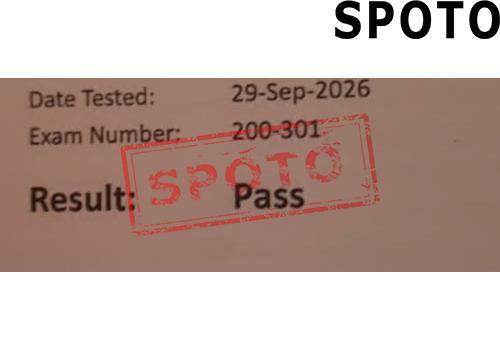
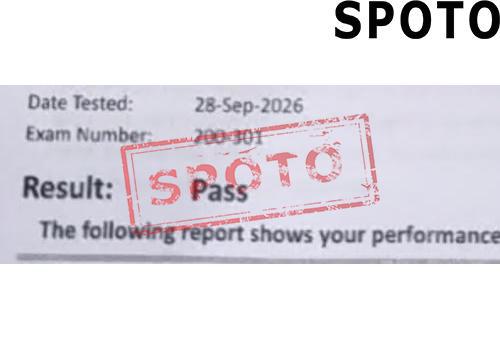
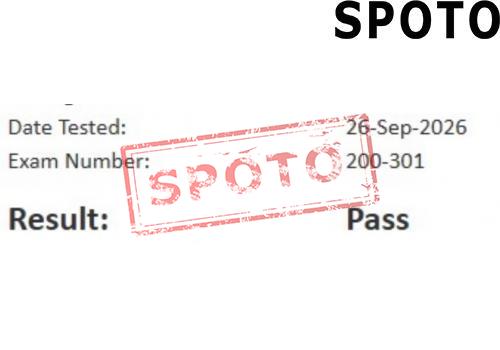
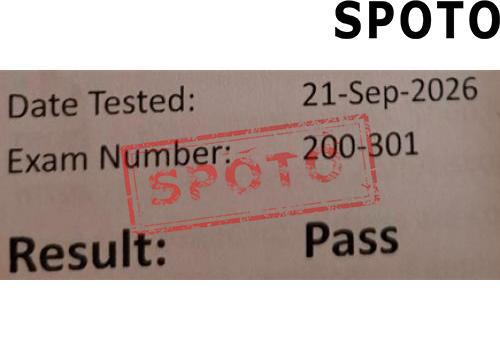
Latest Passing Reports from SPOTO Candidates
200-301-P

200-301-P

200-301

200-301

200-901

200-901

200-301-P

200-301-P

200-301-P

200-301-P

200-301

200-301

200-301-P

200-301-P

200-301

200-301

200-301-P

200-301-P

200-301-P

200-301-P

Write a Reply or Comment
Home/Blog/The Complete Guide to the CCNA Exam 2026
The Complete Guide to the CCNA Exam 2026
SPOTO 2 2026-02-27 14:58:09
The Complete Guide to the CCNA Exam 2026

Starting from February 3, 2026, the Cisco CCNA certification will undergo a major update, with the exam code still being 200-301. However, the exam syllabus will be fully upgraded, deeply integrating AI, cloud, automation, and security, and better meeting the needs of modern enterprise network operations and digital transformation.

This guide will systematically interpret the core information, six major knowledge areas, key changes, preparation strategies, and test taking skills of the new version of the exam, helping you pass efficiently.

1. Implementation and registration

Activation time: Global unified launch on February 3, 2026, with the old version of the exam ending on February 2, 2026.

Exam code: 200-301 Implementing and Managing Cisco Networking Technologies.

Registration channel: Make an appointment through the Pearson VUE official website and bring your identification to take the exam.

Certification validity period: 3 years. Upon expiration, the certificate can be renewed through re examination or accumulation of Continuing Education Credits (CE).


2. Exam information

Duration: 120 minutes.

Quantity of questions: Approximately 90-100 questions (including non scoring test questions).

Full score/passing line: 1000 points/825 points.

Question type: Single choice question, multiple choice, drag and drop, simulation configuration, simulation scenario.

Core changes: Strengthen AI network operation and maintenance, cloud networks, automation, and programmability, weaken pure theoretical memory, and focus on practical configuration and troubleshooting.


3. Detailed explanation of the six major knowledge domains and examination points

The new version of CCNA is divided into six major knowledge domains, with weights and examination points that fully meet the practical needs of enterprise networks.

(1) Network foundation (20%) serves as the cornerstone of authentication, focusing on the underlying logic and infrastructure of the network

You need to master the correspondence between OSI layer 7 and TCP/IP layer 4, as well as the core principles and packet analysis of ARP, ICMP, TCP/UDP.

Equipment and topology: router, layer 2/layer 3 switch, firewall, WLC, PoE device functionality; Double/triple layer campus, Spine Leaf data center, hybrid cloud topology design.

IP address: IPv4/IPv6 address structure, subnet partitioning, VLSM, CIDR aggregation, classless routing and aggregation.

Basic tools: ping, traceroute, show, debug command usage, Wireshark packet capture basics, network connectivity troubleshooting process.

New exam topics: Basic applications of AI in network monitoring and traffic prediction, and hybrid cloud network connectivity models.

(2) Network access (20%) focuses on the configuration, management, and security of local area networks and wireless access.

Switching technology: VLAN, Trunk (802.1Q), VTP, STP/RSTP basic principles and configurations, port security, and port aggregation.

Inter VLAN routing: SVI, single arm routing, layer 3 switch routing configuration.

Wireless infrastructure: WLAN architecture SSID, 802.11 standard, WLC and AP association, basic wireless security (WPA2/WPA3).

Access control: 802.1X authentication, AAA basic, switch port security configuration.

(3) IP connectivity (25%) has the highest proportion, focusing on routing technology and IP network interconnection, and is the core of configuration and troubleshooting.

Static routing: Static routing, default routing, floating static routing configuration and routing logic.

Dynamic routing: RIP, OSPFv2/v3 basic principles, neighbor establishment, area design, routing aggregation, configuration and troubleshooting.

Routing table and routing: longest matching principle, management distance (AD), metric values, and routing redistribution basis.

IPv6 address type, stateless address auto configuration, OSPFv3, IPv6 static routing configuration.

Troubleshooting: Interface status investigation, routing loss, loop, connectivity fault location and repair.

(4) IP services (10%) focus on commonly used service configurations and applications for enterprise networks.

DHCP: router/switch DHCP server configuration, DHCP relay, address pooling, and exclusion addresses.

NAT/PAT: Static NAT, dynamic NAT, PAT configuration, principles and troubleshooting of internal and external network address translation.

DNS and ACL: DNS basics, standard/extended ACL configuration and application, filtering traffic and access control.

QoS foundation: Classification, tagging, queue mechanism to ensure critical business traffic.

(5) Security Fundamentals (15%) Strengthen network security awareness and basic protection capabilities.

Security threats: common types of attacks (DDoS, ARP spoofing, port scanning), vulnerabilities, and protection strategies.

Device Security: Password Policy, SSH Substitution for Telnet, VTY Line Security, Console Security Configuration.

Access control: ACL deep application, port security, 802.1X, AAA authentication basics.

New exam topics: Fundamentals of Next Generation Firewalls, ESG and Network Security Compliance, Cloud Environment Security Access Control.

(6) Automation and programmability (10%) are key upgrade modules for the 2026 version, which will be integrated with network digital transformation.

SDN and Controller: Cisco DNA Center Fundamentals, Traditional Management vs. Centralized Controller Management Comparison.

API basics: REST API, HTTP methods (GET/POST/PUT/DELETE), JSON/YAML data format, authentication mechanism.

Configuration tools: Ansible, Terraform basic applications, network automation scripts and template concepts.

AI Operations: Application scenarios of generative AI and machine learning in network troubleshooting and performance prediction.


4. Key changes in the 2026 version of CCNA

(1) Exam syllabus deeply integrates cutting-edge technologies

AI and intelligent operation and maintenance: adding the basic examination points of AI in traffic analysis, fault prediction, and automated troubleshooting.

Cloud and Hybrid Networks: Strengthening AWS/Azure Cloud Connectivity VPN and Fundamentals of Cloud Network Architecture.

Automated weight enhancement: shifting from traditional "command-line configuration" to "automated thinking + basic tool application."

(2) Integration of certification system

The original DevNet certification system has been integrated into CCNA/CCNP/CCIE Automation, and the new version of CCNA covers the network and automation foundation uniformly.

More emphasis is placed on multi vendor compatibility and open standards (such as OSPF, REST API), while weakening pure Cisco proprietary content.

(3) Practical oriented enhancement

The proportion of simulation questions (Sim) has increased, requiring complete configuration of VLAN, routing, ACL, DHCP and other scenarios.

Simlet focuses on troubleshooting and requires locating and repairing faults within a given topology.

Weakening pure theoretical memory, all test points are designed around a closed loop of "configuration verification troubleshooting."


5. Golden exam preparation strategy

(1)Core learning resources

Official resources: Cisco Learning Network, CCNA 200-301 official exam syllabus Packet Tracer.

Experimental tools: EVE-NG, GNS3, Cisco Modeling Labs (CML).

Question bank and courses: You can choose SPOTO's CCNA 2026 course as your study reference for preparation.

Automation tools: Ansible, Postman (API testing), Python basics (network scripting).

(2)Efficient learning methods

Experiment driven: For every knowledge point learned, immediately configure and verify it in the simulator, rejecting empty talk on paper.

Command association: Match commands with functions, understand why they match like this instead of rote memorization.

Topology drawing: Draw the topology of complex scenes first, clarify device roles, IP planning, and routing directions.

Troubleshooting mindset: Follow the troubleshooting process of "checking interfaces → viewing routes → verifying configurations → testing connectivity."


6. Certification value and subsequent development

The new version of CCNA is the entry-level core certification for the network industry, covering routing and switching, wireless, security, and automation full stack foundations. It is an essential stepping stone for entering the positions of network engineer, system operation and maintenance, and cloud network engineer.

After obtaining certification, one can advance to CCNP or CCIE or shift towards specialized fields such as automation, cloud security, and AI network operations.


Summary: The core transformation of the new version of the CCNA exam in 2026 is the shift from a "traditional network configurator" to a "digital network operator." " Preparing for exams is not only about passing exams, but also about building a modern network knowledge system and mastering AI and automation skills.

SPOTO is practical oriented, combining experiments and simulations to help you prepare efficiently and successfully obtain certification in one go!


Latest Passing Reports from SPOTO Candidates
200-301-P
200-301
200-901
200-301-P
200-301-P
200-301
200-301-P
200-301
200-301-P
200-301-P
Write a Reply or Comment
Don't Risk Your Certification Exam Success – Take Real Exam Questions
Eligible to sit for Exam? 100% Exam Pass GuaranteeEligible to sit for Exam? 100% Exam Pass Guarantee
SPOTO Ebooks
Recent Posts
Certification for cross-system integration of multiple related ITIL practices: ITIL 4 Specialist-CAI
The Complete Guide to the CCNA Exam 2026
The Complete Guide to the PMP Exam 2026
Intermediate-level practical certification in service operations: ITIL4P-SRM
Practical certification focusing on the full lifecycle management of external IT resources: ITIL4P-SUM
Want to obtain the Fortinet NSE 7-FortiSASE 25 Enterprise Administrator certification? You'll need the following knowledge base in 2026:
Knowledge framework required to obtain AWS SAA-C03 certification in 2026
Core knowledge required to obtain Juniper certification in 2026
Core knowledge required to obtain Google Professional Data Engineer certification in 2026
Core knowledge required to obtain AZ-104 certification in 2026
Excellent
5.0
Based on 5236 reviews
Request more information
I would like to receive email communications about product & offerings from SPOTO & its Affiliates.
I understand I can unsubscribe at any time.