Table of Contents
- 1. Core Architectural Shift: Mandatory Foundational Prerequisites
- 2. Technical Deconstruction: What the 2026 Blueprint Actually Tests
- 3. Defensive Essentials: Diagnostics and Command Line Fluency
- 4. Navigating the "Zero Partial Credit" Multi-Select Trap
- 5. Bridging the Gap from Study to Operational Mastery
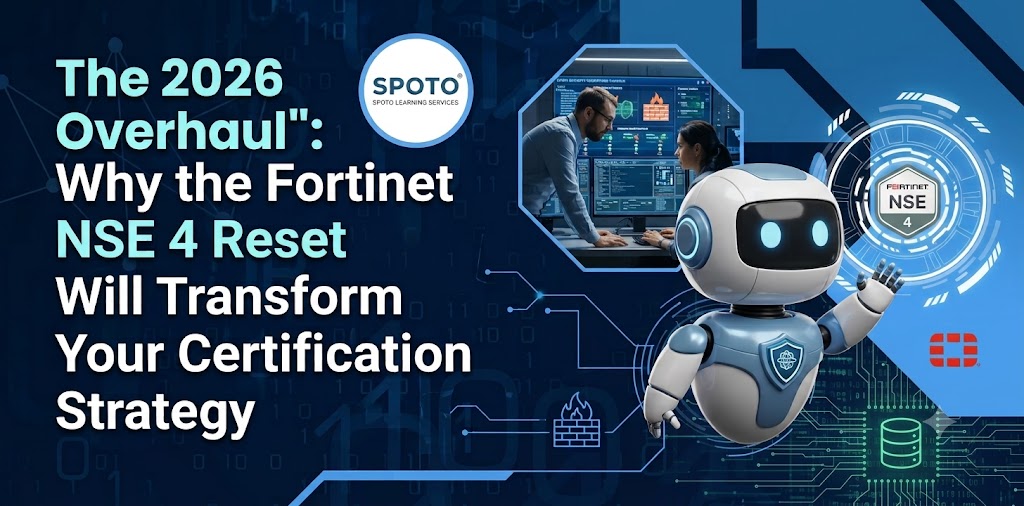
If you have viewed the Fortinet certification system as a carte blanche where you could pick and choose at will, you are about to hit a technical "brick wall." On July 15, 2026, the Fortinet Training Institute will completely retire the role-based naming system (FCP, FCSS, FCX)—which has caused market confusion over the past few years—in favor of a return to a traditional, strictly enforced 8-level numerical progression system, spanning from NSE 1 to NSE 8.
This change is so significant that Pearson VUE will suspend all Fortinet exam services for several days in mid-July to overhaul backend systems in preparation for the reset.
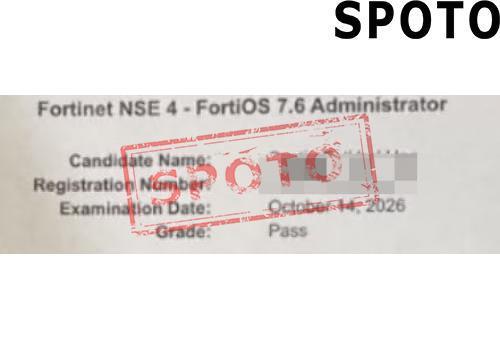
At the heart of this architectural shift is the NSE 4: FortiOS Administrator exam. Previously, experienced engineers could bypass the foundational administrator certification to tackle advanced security or enterprise architecture certifications directly. However, starting in July 2026, these "shortcuts" will vanish. The NSE 4 has shifted from a "recommended starting point" to a mandatory, non-negotiable "gatekeeper" milestone within the Fortinet ecosystem.
1. Core Architectural Shift: Mandatory Foundational Prerequisites
Let's break down the dependencies of the new certification path. Under the 2026 framework, the exam system will block you from obtaining higher-level certifications unless you hold a verified, valid NSE 4 certification.
NSE 5 and NSE 6 Progression Paths: To obtain any specialized Security Operations or Cloud Security certification at Level 5 or 6, you must hold a valid NSE 4 certificate in addition to passing the relevant specialty exam.
NSE 7 Architect Tier: To unlock the highly coveted certification paths for Advanced Enterprise Firewall and SD-WAN, the new plan establishes multi-layered dependencies: you must hold a valid NSE 4 certification *and* a valid NSE 5 or NSE 6 certification corresponding to that specific path before you are eligible to take the comprehensive NSE 7 exam.
Once your foundational administrator certification expires, the subsequent tiers of the entire certification framework will also collapse. Consequently, mastering the core content of the FortiOS administrator certification has become the top priority for engineering and technical personnel this year.
2. Technical Deconstruction: What the 2026 Blueprint Actually Tests
The updated exam leaves behind old, legacy FortiOS versions to focus entirely on advanced modern iterations. Fortinet has updated the question stems to evaluate how an administrator orchestrates a perimeter when classic boundaries no longer exist. The core curriculum mandates fluent execution across three primary technological pillars.
(1)Zero Trust Network Access (ZTNA) Integration
The blueprint completely steps away from relying solely on classic, wide-open client VPN tunnels. The updated exam tests your ability to deploy and enforce ZTNA tags directly within FortiOS. You must prove you can continuously verify device health, user identity, and posture before the firewall grants access to specific microsegmented corporate applications.
(2)High-Performance SSL/TLS Deep Packet Inspection
With nearly all malicious payloads now masked inside encrypted traffic streams, simple firewall filtering is functionally obsolete. The NSE 4 blueprint places a massive premium on configuring deep inspection profiles without crushing the hardware's CPU throughput. You must demonstrate how to manage certificate authorities, handle untrusted or revoked certificates, and build granular exemption lists for highly sensitive corporate traffic pipelines.
(3)Edge-Secure SD-WAN Interfaces
Traditional routing and security are no longer handled by separate boxes. The 2026 exam expects you to configure secure SD-WAN parameters directly within the FortiGate operating system. Expect intense questions on building Performance SLA rules, managing link quality measurements across multiple ISP links, and setting up dynamic traffic steering policies to protect critical cloud workloads from packet degradation.
3. Defensive Essentials: Diagnostics and Command Line Fluency
The examiners are heavily targeting "paper engineers" who only know how to click buttons in a clean Graphical User Interface (GUI). The updated testing matrix requires a strict, operational command-line interface (CLI) diagnostic capability.
You will face multi-layered situational prompts where you are handed raw console outputs from real-world network outages. The exam tests your capacity to decipher packet flow capture dumps, track NAT translation bottlenecks, and pinpoint why an IPsec VPN tunnel is failing Phase 1 or Phase 2 negotiations based purely on text diagnostics. If your troubleshooting strategy relies on restarting a device or clicking around a visual dashboard hoping to find a green arrow, you are not going to pass this exam.
4. Navigating the "Zero Partial Credit" Multi-Select Trap
The primary reason brilliant network engineers walk out of the Pearson VUE center with a failing score report is a mechanical quirk in Fortinet's evaluation engine: the absolute absence of partial credit.
The NSE 4 format relies heavily on complex multi-select questions. A prompt might describe a multi-tenant virtual domain (VDOM) routing conflict and instruct you to "select three choices" to correctly implement a secure firewall policy. If you identify two perfect answers but slip up on the third, the testing framework awards zero points for that entire item. The grading logic is completely binary. To survive this layout, your understanding of how explicit policies interact with global network settings must be entirely flawless.
5. Bridging the Gap from Study to Operational Mastery
Because the updated 2026 NSE 4 blueprint demands a rigorous blend of high-speed diagnostic analysis, strict multi-select logic, and precise command over modern FortiOS architectures, passive learning paths are fundamentally insufficient. You need to train your technical instincts to parse these complex configurations under a ticking clock.
When you are ready to transition out of theory and see exactly where your troubleshooting skills rank against the live testing conditions, utilizing dedicated simulation platforms is your most practical strategy. SPOTO provides meticulously updated NSE 4 practice question pools and high-fidelity exam simulators that perfectly match the strict multi-select formats and diagnostic depth of the active 2026 blueprints. Eliminating your configuration blind spots, sharpening your log-parsing speed, and mastering your time allocation beforehand ensures you can enter the testing center with total clarity, clear the gatekeeper exam, and secure your career progression on the first attempt.