Latest Cisco, PMP, AWS, CompTIA, Microsoft Materials on SALE Get Now Get Now
Home/
Blog/
Cisco CCNA 200-301 Exam: The Unfiltered Truth You Need to Know in 2026
SPOTO 2 2026-03-24 11:11:25
Cisco CCNA 200-301 Exam: The Unfiltered Truth You Need to Know in 2026

Cisco CCNA (200-301 v1.1), as the world's most authoritative entry-level network certification, will continue to maintain its industry benchmark position in 2026, while injecting cutting-edge elements such as AI and automation through v1.1 updates, becoming a key certification that connects traditional networks with modern technology.

The CCNA of 2026 is no longer just a simple routing and switching authentication, but a full stack entry-level certificate that integrates network infrastructure, security, wireless, cloud, and automation.


1. Latest exam information for 2026

Exam code: 200-301 CCNA v1.1

Exam duration: 120 minutes; non-native speakers can apply for a 30 minute extension

Number of questions: Approximately 50-70 questions, including various question types

Question types: Single choice, Multiple choice (no points for missed/wrong choices), Drag and drop, Simulation experiment, Configuration practice

Passing score: Officially not disclosed, the industry generally believes that the accuracy rate is about 70-80%

Exam fee: $300, globally unified, same retake fee

Validity period: 3 years; certification activity must be maintained through continuing education or re-examination.

Exam results: Only show pass/fail, do not display specific scores, provide performance percentages for each module


2. Key update for v1.1 version in 2026

New Fundamentals of AI and Machine Learning: Network AI Applications, Predictive Maintenance, and the Role of Generative AI in Network Management

Strengthening automation and programmability: REST API, JSON, Ansible/Terraform foundation, automation mindset

Cloud management network: application scenarios of cloud management platforms such as Cisco Meraki and Catalyst Center

Security Upgrade: Zero Trust Network, Advanced Access Control, Threat Detection and Response

Remove outdated content: some traditional frame relay, HDLC and other technologies, focus on modern network requirements


3. 2026 Exam Weight Distribution

In 2026, the six major modules of CCNA will have clear weights, with IP Connectivity (25%) being the core determining success or failure with the highest proportion.

Network Fundamentals (20%): OSI/TCPIP model, IPv4/IPv6 address structure, subnet partitioning, VLSM, CIDR aggregation, topology design, basic troubleshooting tools (ping, traceroute, show commands)

Network Access (20%): VLAN partitioning, Trunk link configuration, Inter VLAN routing, STP principles and security features, wireless infrastructure and AP mode

IP Connectivity (25%): Static routing, OSPF/EIGRP dynamic routing protocol (neighbor establishment, DR/BDR election, route aggregation), routing table analysis, longest prefix matching principle, IPv4/IPv6 dual stack deployment

IP Services (10%): DHCP services, NAT/PAT conversion, DNS infrastructure, NTP time synchronization, SNMP monitoring, Syslog log log management

Security Fundamentals (15%): ACL access control, device hardening (password policy, SSH replacement for Telnet), AAA authentication framework, VPN basics, IPsec principles, wireless security

Automation & programmability (10%): REST API principles, JSON data format, Controller Networking (SDN), Ansible basics, Python scripting basics, network management plane separation


4. Core truths for exam preparation

The 2026 CCNA exam rejects rote memorization and emphasizes the importance of "knowing the way is better than knowing the reason." Here are four strategies to help you prepare efficiently:

(1) Basic first

Master the underlying logic of TCP three-way handshake, OSPF neighbor establishment, STP election process, etc., rather than just memorizing commands

Proficient in computing IPv4/IPv6 subnets, able to complete VLSM and CIDR aggregation calculations within 30 seconds, which is a required exam point

Understand the separation architecture of control plane (routing decision), data plane (forwarding), and management plane (configuration)

(2) Practice is key

Set up an experimental environment using Cisco Packet Tracer or EVE-NG, repeatedly practice VLAN partitioning and Trunk configuration, Inter VLAN routing, OSPF multi area deployment, NAT/PAT implementation of internal network access to the Internet, ACL configuration filtering specific traffic.

Simulated configuration questions account for about 20%, and practical ability directly determines whether one can pass the exam.

(3) Key breakthroughs

IP Connectivity (25%): Deep understanding of OSPF protocol, able to analyze routing tables and troubleshoot neighbor establishment failure issues

Network Access (20%): Master the communication principles between VLANs and be able to quickly locate STP loop and port security issues

These two modules make up 45% of the total, which is the basic requirement for passing the exam

(4) Automation module: grasp the key concepts by focusing on big and small aspects

No need to be proficient in programming, focus on understanding the role of APIs, JSON format recognition, controller network advantages, and be able to distinguish the differences between traditional networks and SDN.

The proportion of automation modules is only 10%, and investing too much time is not cost-effective.


5. High-frequency score loss trap

In the 2026 CCNA exam, the following five traps caused 80% of candidates to lose points, which need to be avoided:

Subnet partition error: Confused subnet mask and wildcard mask, forgot VLSM calculation steps, ignored IPv6 address abbreviation rules

OSPF neighbor establishment failed: router ID not configured, area mismatch, OSPF not enabled interface, inconsistent Hello/Head time

VLAN configuration vulnerability: Trunk link does not allow corresponding VLANs to pass through, Native VLAN mismatch, Inter VLAN routing not enabled

ACL logic reversal: incorrect direction, wildcard mask calculation error, unreasonable rule order

Security configuration missing: Unnecessary services (Telnet, HTTP) not disabled, insufficient password policy strength, port security not enabled


6. Preparation time plan for 2026

For different basic candidates, SPOTO provides you with the following preparation time plan to help you pass the exam in the shortest possible time:

Zero foundation: 2-3 hours per day, 3 months of systematic learning (1 month of foundation + 1 month of practical operation + 1 month of problem-solving)

Basic knowledge: 1-2 hours per day, 1.5-2 months of reinforcement (with a focus on breaking through IP connectivity and network access modules)

Sprint phase (last 2 weeks):

Complete 3-5 sets of the latest 2026 v1.1 question bank and familiarize yourself with the new content of AI and STP. Focus on reviewing incorrect questions and establish a mapping of "scenario error correct answer." Simulated exam environment, adapted to time pressure and question type distribution


Summary: The 2026 Cisco CCNA exam (200-301 v1.1) is the golden entry-level certificate in the field of network technology, with its core value in building a complete network knowledge system, laying the foundation for future CCNP/CCIE advancement and career development.

SPOTO plans a preparation path of "foundation + practical operation + key breakthroughs + exam strategies" to help you avoid the trap of high-frequency score loss, pass the exam at once, and open the door to success in your IT career!
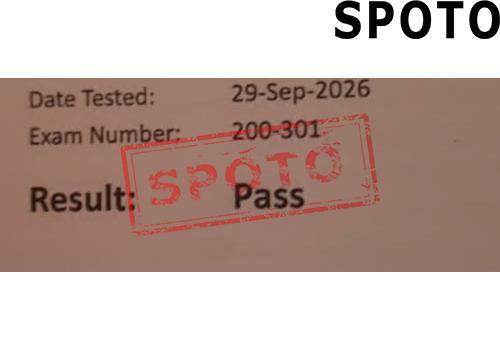
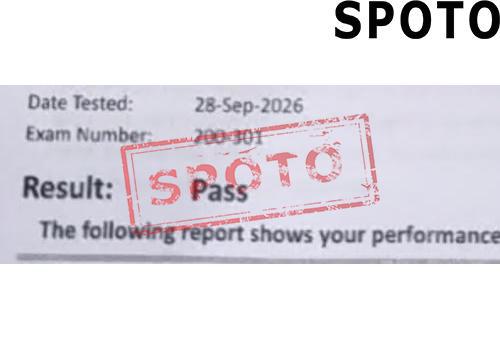
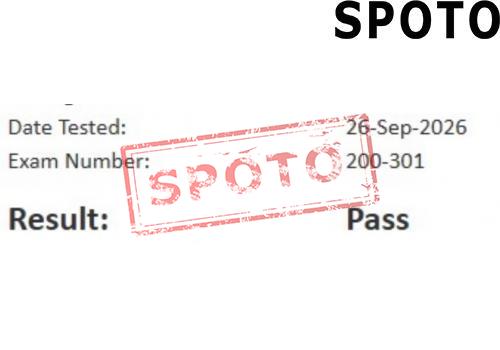
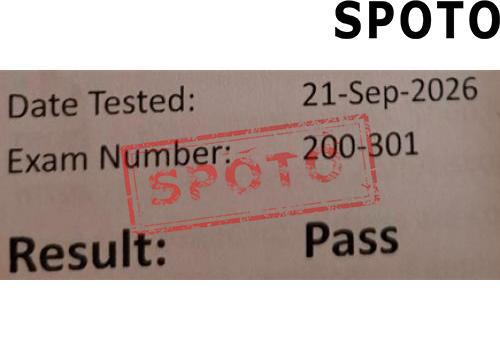
Latest Passing Reports from SPOTO Candidates
200-301

200-301

200-301-P

200-301-P

200-901

200-901

200-301-P

200-301-P

200-201-P

200-201-P

200-301

200-301

200-901

200-901

200-301-P

200-301-P

200-301

200-301

200-301

200-301

Write a Reply or Comment
Home/Blog/Cisco CCNA 200-301 Exam: The Unfiltered Truth You Need to Know in 2026
Cisco CCNA 200-301 Exam: The Unfiltered Truth You Need to Know in 2026
SPOTO 2 2026-03-24 11:11:25
Cisco CCNA 200-301 Exam: The Unfiltered Truth You Need to Know in 2026

Cisco CCNA (200-301 v1.1), as the world's most authoritative entry-level network certification, will continue to maintain its industry benchmark position in 2026, while injecting cutting-edge elements such as AI and automation through v1.1 updates, becoming a key certification that connects traditional networks with modern technology.

The CCNA of 2026 is no longer just a simple routing and switching authentication, but a full stack entry-level certificate that integrates network infrastructure, security, wireless, cloud, and automation.


1. Latest exam information for 2026

Exam code: 200-301 CCNA v1.1

Exam duration: 120 minutes; non-native speakers can apply for a 30 minute extension

Number of questions: Approximately 50-70 questions, including various question types

Question types: Single choice, Multiple choice (no points for missed/wrong choices), Drag and drop, Simulation experiment, Configuration practice

Passing score: Officially not disclosed, the industry generally believes that the accuracy rate is about 70-80%

Exam fee: $300, globally unified, same retake fee

Validity period: 3 years; certification activity must be maintained through continuing education or re-examination.

Exam results: Only show pass/fail, do not display specific scores, provide performance percentages for each module


2. Key update for v1.1 version in 2026

New Fundamentals of AI and Machine Learning: Network AI Applications, Predictive Maintenance, and the Role of Generative AI in Network Management

Strengthening automation and programmability: REST API, JSON, Ansible/Terraform foundation, automation mindset

Cloud management network: application scenarios of cloud management platforms such as Cisco Meraki and Catalyst Center

Security Upgrade: Zero Trust Network, Advanced Access Control, Threat Detection and Response

Remove outdated content: some traditional frame relay, HDLC and other technologies, focus on modern network requirements


3. 2026 Exam Weight Distribution

In 2026, the six major modules of CCNA will have clear weights, with IP Connectivity (25%) being the core determining success or failure with the highest proportion.

Network Fundamentals (20%): OSI/TCPIP model, IPv4/IPv6 address structure, subnet partitioning, VLSM, CIDR aggregation, topology design, basic troubleshooting tools (ping, traceroute, show commands)

Network Access (20%): VLAN partitioning, Trunk link configuration, Inter VLAN routing, STP principles and security features, wireless infrastructure and AP mode

IP Connectivity (25%): Static routing, OSPF/EIGRP dynamic routing protocol (neighbor establishment, DR/BDR election, route aggregation), routing table analysis, longest prefix matching principle, IPv4/IPv6 dual stack deployment

IP Services (10%): DHCP services, NAT/PAT conversion, DNS infrastructure, NTP time synchronization, SNMP monitoring, Syslog log log management

Security Fundamentals (15%): ACL access control, device hardening (password policy, SSH replacement for Telnet), AAA authentication framework, VPN basics, IPsec principles, wireless security

Automation & programmability (10%): REST API principles, JSON data format, Controller Networking (SDN), Ansible basics, Python scripting basics, network management plane separation


4. Core truths for exam preparation

The 2026 CCNA exam rejects rote memorization and emphasizes the importance of "knowing the way is better than knowing the reason." Here are four strategies to help you prepare efficiently:

(1) Basic first

Master the underlying logic of TCP three-way handshake, OSPF neighbor establishment, STP election process, etc., rather than just memorizing commands

Proficient in computing IPv4/IPv6 subnets, able to complete VLSM and CIDR aggregation calculations within 30 seconds, which is a required exam point

Understand the separation architecture of control plane (routing decision), data plane (forwarding), and management plane (configuration)

(2) Practice is key

Set up an experimental environment using Cisco Packet Tracer or EVE-NG, repeatedly practice VLAN partitioning and Trunk configuration, Inter VLAN routing, OSPF multi area deployment, NAT/PAT implementation of internal network access to the Internet, ACL configuration filtering specific traffic.

Simulated configuration questions account for about 20%, and practical ability directly determines whether one can pass the exam.

(3) Key breakthroughs

IP Connectivity (25%): Deep understanding of OSPF protocol, able to analyze routing tables and troubleshoot neighbor establishment failure issues

Network Access (20%): Master the communication principles between VLANs and be able to quickly locate STP loop and port security issues

These two modules make up 45% of the total, which is the basic requirement for passing the exam

(4) Automation module: grasp the key concepts by focusing on big and small aspects

No need to be proficient in programming, focus on understanding the role of APIs, JSON format recognition, controller network advantages, and be able to distinguish the differences between traditional networks and SDN.

The proportion of automation modules is only 10%, and investing too much time is not cost-effective.


5. High-frequency score loss trap

In the 2026 CCNA exam, the following five traps caused 80% of candidates to lose points, which need to be avoided:

Subnet partition error: Confused subnet mask and wildcard mask, forgot VLSM calculation steps, ignored IPv6 address abbreviation rules

OSPF neighbor establishment failed: router ID not configured, area mismatch, OSPF not enabled interface, inconsistent Hello/Head time

VLAN configuration vulnerability: Trunk link does not allow corresponding VLANs to pass through, Native VLAN mismatch, Inter VLAN routing not enabled

ACL logic reversal: incorrect direction, wildcard mask calculation error, unreasonable rule order

Security configuration missing: Unnecessary services (Telnet, HTTP) not disabled, insufficient password policy strength, port security not enabled


6. Preparation time plan for 2026

For different basic candidates, SPOTO provides you with the following preparation time plan to help you pass the exam in the shortest possible time:

Zero foundation: 2-3 hours per day, 3 months of systematic learning (1 month of foundation + 1 month of practical operation + 1 month of problem-solving)

Basic knowledge: 1-2 hours per day, 1.5-2 months of reinforcement (with a focus on breaking through IP connectivity and network access modules)

Sprint phase (last 2 weeks):

Complete 3-5 sets of the latest 2026 v1.1 question bank and familiarize yourself with the new content of AI and STP. Focus on reviewing incorrect questions and establish a mapping of "scenario error correct answer." Simulated exam environment, adapted to time pressure and question type distribution


Summary: The 2026 Cisco CCNA exam (200-301 v1.1) is the golden entry-level certificate in the field of network technology, with its core value in building a complete network knowledge system, laying the foundation for future CCNP/CCIE advancement and career development.

SPOTO plans a preparation path of "foundation + practical operation + key breakthroughs + exam strategies" to help you avoid the trap of high-frequency score loss, pass the exam at once, and open the door to success in your IT career!
Latest Passing Reports from SPOTO Candidates
200-301
200-301-P
200-901
200-301-P
200-201-P
200-301
200-901
200-301-P
200-301
200-301
Write a Reply or Comment
Don't Risk Your Certification Exam Success – Take Real Exam Questions
Eligible to sit for Exam? 100% Exam Pass GuaranteeEligible to sit for Exam? 100% Exam Pass Guarantee
SPOTO Ebooks
Recent Posts
Cisco CCNA 200-301 Exam: The Unfiltered Truth You Need to Know in 2026
Microsoft DP-420: A 10-Day Plan to Help You Quickly Achieve a High Score
ITIL 4 Specialist: High-Velocity IT (HVIT): 2026 Complete Guide to the Digital Exploration Specialist Certification
Microsoft AZ-500 Exam: Your Fast Track to Higher Scores in 2026
ITIL 4 Specialist: Drive Stakeholder Value (DSV): Your Expert Advancement Certification
Microsoft AZ-400 Exam: Strategies for Rapidly Improving Your Score in 2026
Microsoft AZ-204 Exam: The Fast way to improve scores in 2026
ITIL 4 Strategist: Direct, Plan, and Improve Exam: Your Strategic Direction Expert Certification
ITIL 4 Specialist: Create, Deliver and Support Exam: Your Expert-Level Certification
Microsoft AZ-120 Exam in 2026: The Ultimate Guide to Quickly Improve Your Score
Excellent
5.0
Based on 5236 reviews
Request more information
I would like to receive email communications about product & offerings from SPOTO & its Affiliates.
I understand I can unsubscribe at any time.