Latest Cisco, PMP, AWS, CompTIA, Microsoft Materials on SALE Get Now Get Now
Home/
Blog/
Beyond the Hype: Building a Role-Aligned AWS Certification Blueprint in 2026
SPOTO 2 2026-07-01 10:39:20
Beyond the Hype: Building a Role-Aligned AWS Certification Blueprint in 2026

If you are mapping out your professional trajectory, deciding where to invest your study time can be daunting. The AWS certification ecosystem has undergone a significant transformation to match this modern reality, retiring legacy specialty titles and introducing rigorous tracks that align with precise career paths. To cut through the noise, you need to understand exactly what each modern blueprint tests and how to align them with your career goals.


1. The 2026 Ecosystem: From Foundational Maps to Specialized Tiers

The current AWS certification framework is built on a clear progression model: Foundational entry points, Associate-level core engineering badges, and Advanced Professional or Specialty tracks.

(1) The Foundational Tier: Setting the Baseline

AWS Certified Cloud Practitioner (CLF-C02): This remains the universal high-level map of the AWS cloud. It evaluates your grasp of global infrastructure boundaries, core compute and storage service definitions, billing structures, and the foundational Shared Responsibility Model. It is an ideal starting point if you are entirely new to cloud concepts or work in a non-technical alignment role like project management or procurement.

AWS Certified AI Practitioner (AIF-C01): This newer foundational entry point targets the massive wave of AI integration. It skips the deep network routing questions to evaluate your conceptual understanding of machine learning lifecycles, foundation model (FM) behaviors, performance tuning options like fine-tuning versus Retrieval-Augmented Generation (RAG), and the core tenets of responsible AI.

(2) The Associate Level: Developing Core Technical Competency

The Associate tier is where real cloud careers establish their technical roots. These exams require hands-on familiarity with the AWS Command Line Interface (CLI) and operational architectures.

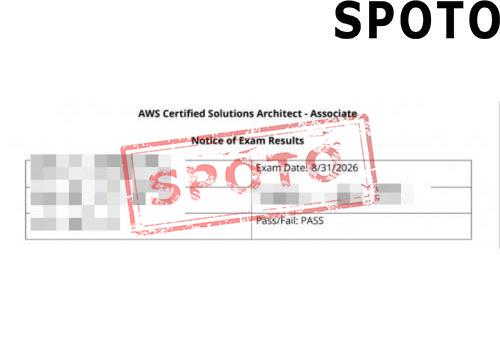
Solutions Architect – Associate (SAA-C03): The flagship credential for multi-tier infrastructure design. This blueprint evaluates your capacity to design resilient, high-performing, secure, and cost-optimized systems using the AWS Well-Architected Framework. You must master decoupling patterns via SQS and SNS, multi-Availability Zone failover pipelines, and complex VPC network segmentation.

Developer – Associate (DVA-C02): Built specifically for application engineers. This exam tests your capability to interact with AWS APIs using Software Development Kits (SDKs). Expect deep evaluations on serverless application execution via AWS Lambda and Amazon API Gateway, state management within DynamoDB tables, and configuring automated CI/CD pipelines using the AWS developer tools suite.

SysOps Administrator – Associate: The operational gatekeeper. This track focuses heavily on system monitoring, metric evaluation via Amazon CloudWatch, deployment automation, incident response, and data backup/recovery protocols across complex multi-tenant host pools.

Data Engineer – Associate (DEA-C01): Tailored for data infrastructure specialists. It tests your hands-on ability to orchestrate data ingestion pipelines, manage AWS Glue cataloging schemas, execute scalable transformations, and optimize analytical queries inside Amazon Redshift clusters.

Machine Learning Engineer – Associate (MLA-C01): Positioned at the intersection of development and operations. It validates your competency in scaling machine learning workflows, packaging model components, handling data drift, and managing deployment lifecycles within Amazon SageMaker.

(3) The Professional and Specialty Track: Elite Architectural Mastery

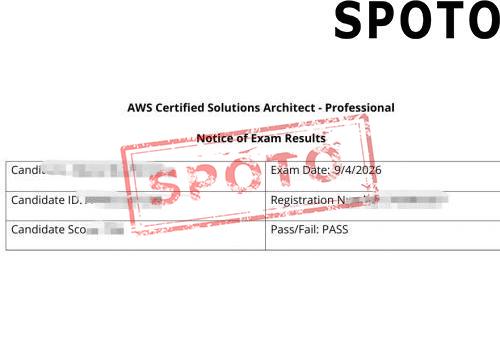
Solutions Architect – Professional (SAP-C02): Widely regarded as one of the most grueling exams in the IT industry. It moves beyond a single workload to evaluate multi-account corporate governance strategies, automated infrastructure provisioning at an organizational scale, complex hybrid-cloud network transits, and massive data migration plans.

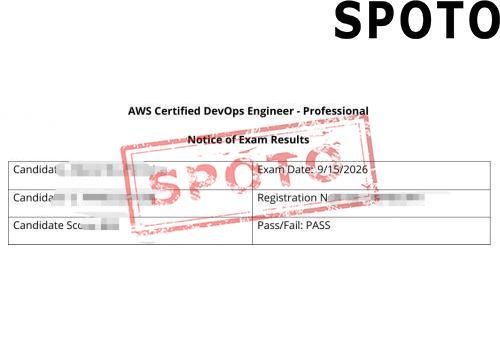
DevOps Engineer – Professional (DOP-C02): Validates your mastery of continuous delivery, automated compliance guardrails, cross-account security provisioning, and self-healing system remediations under heavy production stress.

AWS Certified Generative AI Developer – Professional (AIP-C01): The absolute cutting edge of the engineering portfolio. This credential certifies your ability to take base models and build enterprise-grade, secure applications. It drills deep into prompt engineering automation, vector database orchestration, custom agentic AI architectures via Amazon Bedrock, and securing systems against advanced prompt injection or data poisoning attacks.


2. Mapping Your Ideal Learning Path

Choosing the right combination of certifications depends heavily on your daily operational focus. Trying to master every track simultaneously results in superficial knowledge; success requires selecting a focused path.

The Enterprise Cloud Architect

If your goal is to design high-level infrastructure layouts and lead enterprise migrations, your path should prioritize structural depth. Start with the Cloud Practitioner to baseline terminology, pivot immediately into the Solutions Architect – Associate to master the core service interactions, and ultimately target the Solutions Architect – Professional. This sequence builds the precise pattern recognition required to evaluate performance-versus-cost trade-offs in multi-region environments.

The Cloud Application & GenAI Engineer

For developers building modern, intelligent applications, infrastructure is simply the platform where code executes. Your optimal route starts with the AI Practitioner to anchor core model concepts, advances to the Developer – Associate to master serverless mechanics and API integrations, and culminates in the Generative AI Developer – Professional. This combination proves you can write efficient application logic while securely leveraging large language models at scale.

The Platform & Infrastructure Operations Engineer

If your responsibilities center on keeping systems stable, automated, and secure, you must own the operational layer. The most effective track moves from the Cloud Practitioner directly to the SysOps Administrator – Associate or Solutions Architect – Associate, and finishes at the DevOps Engineer – Professional. This progression ensures you understand how to translate rigid architectural drawings into fluid, self-healing automated deployment pipelines.


3. Mastering the Constraint Analysis Method

The primary factor that causes smart engineers to fail advanced AWS exams is not a lack of technical knowledge—it is a failure to parse the specific constraints embedded within scenario questions. AWS design questions frequently present four options that are all technically functional within a standard AWS console.

The secret to isolating the single correct answer lies in identifying the priority keyword within the prompt. If a question describes a fluctuating workload and requests a solution that minimizes "operational overhead," any answer requiring you to manually write custom crontab scripts or manage self-hosted orchestration tools is a distractor—even if it technically works. Your answer must lean toward fully managed, native services like AWS Systems Manager or EventBridge. Conversely, if the prompt emphasizes "lowest possible latency" or "strict cryptographic control," your selection must pivot toward dedicated infrastructure and hardware security modules, completely disregarding cost considerations.


4. Turning Intent Into Execution

Because the modern AWS exam catalog relies heavily on multi-layered situational logic, configuration scripts, and intricate service dependencies, passive studying will leave major gaps in your preparation. You cannot clear the 720 Associate passing threshold or the 750 Professional barrier through casual video streaming or memorizing static documentation. True readiness requires testing your decision-making patterns against realistic testing parameters.

When you are ready to baseline your technical comprehension and build the pacing stamina required to handle these long scenario loops, utilizing targeted simulation environments is a vital step. SPOTO provides accurate, up-to-date AWS practice exam matrices and comprehensive review modules mapped directly to active 2026 blueprints. By using these practical modules to isolate your conceptual blind spots, master multi-select question logic, and refine your architectural troubleshooting speed before your official testing window opens, you can enter the proctored environment with complete confidence and clear your target AWS certification on your very first attempt.
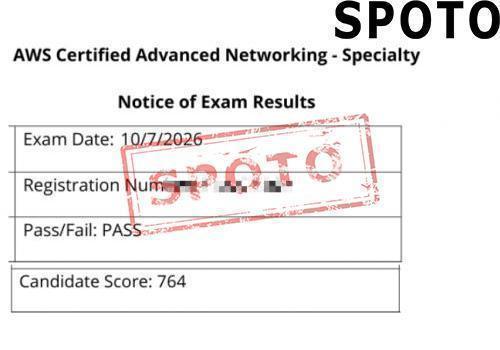
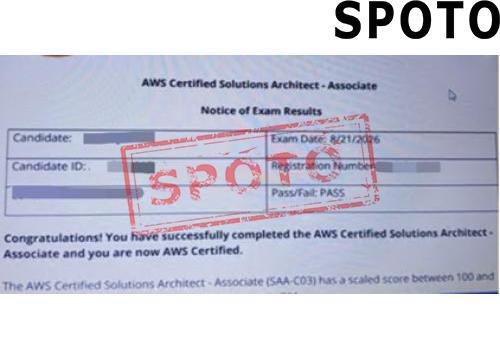
 

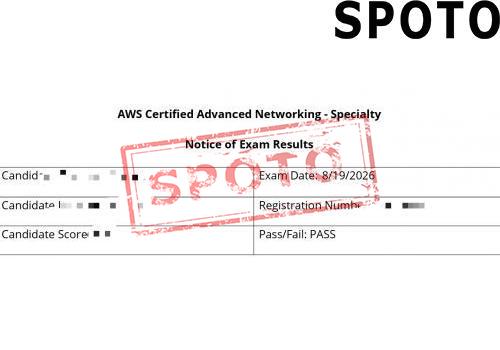
Latest Passing Reports from SPOTO Candidates
SAP-C02

SAP-C02

SAA-C03-P

SAA-C03-P

ANS-C01

ANS-C01

CLF-C02-P

CLF-C02-P

SAP-C02-P

SAP-C02-P

SAP-C02

SAP-C02

SAP-C02

SAP-C02

CLF-C02-P

CLF-C02-P

CLF-C02-P

CLF-C02-P

CLF-C02-P

CLF-C02-P

Write a Reply or Comment
Home/Blog/Beyond the Hype: Building a Role-Aligned AWS Certification Blueprint in 2026
Beyond the Hype: Building a Role-Aligned AWS Certification Blueprint in 2026
SPOTO 2 2026-07-01 10:39:20
Beyond the Hype: Building a Role-Aligned AWS Certification Blueprint in 2026

If you are mapping out your professional trajectory, deciding where to invest your study time can be daunting. The AWS certification ecosystem has undergone a significant transformation to match this modern reality, retiring legacy specialty titles and introducing rigorous tracks that align with precise career paths. To cut through the noise, you need to understand exactly what each modern blueprint tests and how to align them with your career goals.


1. The 2026 Ecosystem: From Foundational Maps to Specialized Tiers

The current AWS certification framework is built on a clear progression model: Foundational entry points, Associate-level core engineering badges, and Advanced Professional or Specialty tracks.

(1) The Foundational Tier: Setting the Baseline

AWS Certified Cloud Practitioner (CLF-C02): This remains the universal high-level map of the AWS cloud. It evaluates your grasp of global infrastructure boundaries, core compute and storage service definitions, billing structures, and the foundational Shared Responsibility Model. It is an ideal starting point if you are entirely new to cloud concepts or work in a non-technical alignment role like project management or procurement.

AWS Certified AI Practitioner (AIF-C01): This newer foundational entry point targets the massive wave of AI integration. It skips the deep network routing questions to evaluate your conceptual understanding of machine learning lifecycles, foundation model (FM) behaviors, performance tuning options like fine-tuning versus Retrieval-Augmented Generation (RAG), and the core tenets of responsible AI.

(2) The Associate Level: Developing Core Technical Competency

The Associate tier is where real cloud careers establish their technical roots. These exams require hands-on familiarity with the AWS Command Line Interface (CLI) and operational architectures.

Solutions Architect – Associate (SAA-C03): The flagship credential for multi-tier infrastructure design. This blueprint evaluates your capacity to design resilient, high-performing, secure, and cost-optimized systems using the AWS Well-Architected Framework. You must master decoupling patterns via SQS and SNS, multi-Availability Zone failover pipelines, and complex VPC network segmentation.

Developer – Associate (DVA-C02): Built specifically for application engineers. This exam tests your capability to interact with AWS APIs using Software Development Kits (SDKs). Expect deep evaluations on serverless application execution via AWS Lambda and Amazon API Gateway, state management within DynamoDB tables, and configuring automated CI/CD pipelines using the AWS developer tools suite.

SysOps Administrator – Associate: The operational gatekeeper. This track focuses heavily on system monitoring, metric evaluation via Amazon CloudWatch, deployment automation, incident response, and data backup/recovery protocols across complex multi-tenant host pools.

Data Engineer – Associate (DEA-C01): Tailored for data infrastructure specialists. It tests your hands-on ability to orchestrate data ingestion pipelines, manage AWS Glue cataloging schemas, execute scalable transformations, and optimize analytical queries inside Amazon Redshift clusters.

Machine Learning Engineer – Associate (MLA-C01): Positioned at the intersection of development and operations. It validates your competency in scaling machine learning workflows, packaging model components, handling data drift, and managing deployment lifecycles within Amazon SageMaker.

(3) The Professional and Specialty Track: Elite Architectural Mastery

Solutions Architect – Professional (SAP-C02): Widely regarded as one of the most grueling exams in the IT industry. It moves beyond a single workload to evaluate multi-account corporate governance strategies, automated infrastructure provisioning at an organizational scale, complex hybrid-cloud network transits, and massive data migration plans.

DevOps Engineer – Professional (DOP-C02): Validates your mastery of continuous delivery, automated compliance guardrails, cross-account security provisioning, and self-healing system remediations under heavy production stress.

AWS Certified Generative AI Developer – Professional (AIP-C01): The absolute cutting edge of the engineering portfolio. This credential certifies your ability to take base models and build enterprise-grade, secure applications. It drills deep into prompt engineering automation, vector database orchestration, custom agentic AI architectures via Amazon Bedrock, and securing systems against advanced prompt injection or data poisoning attacks.


2. Mapping Your Ideal Learning Path

Choosing the right combination of certifications depends heavily on your daily operational focus. Trying to master every track simultaneously results in superficial knowledge; success requires selecting a focused path.

The Enterprise Cloud Architect

If your goal is to design high-level infrastructure layouts and lead enterprise migrations, your path should prioritize structural depth. Start with the Cloud Practitioner to baseline terminology, pivot immediately into the Solutions Architect – Associate to master the core service interactions, and ultimately target the Solutions Architect – Professional. This sequence builds the precise pattern recognition required to evaluate performance-versus-cost trade-offs in multi-region environments.

The Cloud Application & GenAI Engineer

For developers building modern, intelligent applications, infrastructure is simply the platform where code executes. Your optimal route starts with the AI Practitioner to anchor core model concepts, advances to the Developer – Associate to master serverless mechanics and API integrations, and culminates in the Generative AI Developer – Professional. This combination proves you can write efficient application logic while securely leveraging large language models at scale.

The Platform & Infrastructure Operations Engineer

If your responsibilities center on keeping systems stable, automated, and secure, you must own the operational layer. The most effective track moves from the Cloud Practitioner directly to the SysOps Administrator – Associate or Solutions Architect – Associate, and finishes at the DevOps Engineer – Professional. This progression ensures you understand how to translate rigid architectural drawings into fluid, self-healing automated deployment pipelines.


3. Mastering the Constraint Analysis Method

The primary factor that causes smart engineers to fail advanced AWS exams is not a lack of technical knowledge—it is a failure to parse the specific constraints embedded within scenario questions. AWS design questions frequently present four options that are all technically functional within a standard AWS console.

The secret to isolating the single correct answer lies in identifying the priority keyword within the prompt. If a question describes a fluctuating workload and requests a solution that minimizes "operational overhead," any answer requiring you to manually write custom crontab scripts or manage self-hosted orchestration tools is a distractor—even if it technically works. Your answer must lean toward fully managed, native services like AWS Systems Manager or EventBridge. Conversely, if the prompt emphasizes "lowest possible latency" or "strict cryptographic control," your selection must pivot toward dedicated infrastructure and hardware security modules, completely disregarding cost considerations.


4. Turning Intent Into Execution

Because the modern AWS exam catalog relies heavily on multi-layered situational logic, configuration scripts, and intricate service dependencies, passive studying will leave major gaps in your preparation. You cannot clear the 720 Associate passing threshold or the 750 Professional barrier through casual video streaming or memorizing static documentation. True readiness requires testing your decision-making patterns against realistic testing parameters.

When you are ready to baseline your technical comprehension and build the pacing stamina required to handle these long scenario loops, utilizing targeted simulation environments is a vital step. SPOTO provides accurate, up-to-date AWS practice exam matrices and comprehensive review modules mapped directly to active 2026 blueprints. By using these practical modules to isolate your conceptual blind spots, master multi-select question logic, and refine your architectural troubleshooting speed before your official testing window opens, you can enter the proctored environment with complete confidence and clear your target AWS certification on your very first attempt.
 

Latest Passing Reports from SPOTO Candidates
SAP-C02
SAA-C03-P
ANS-C01
CLF-C02-P
SAP-C02-P
SAP-C02
SAP-C02
CLF-C02-P
CLF-C02-P
CLF-C02-P
Write a Reply or Comment
Don't Risk Your Certification Exam Success – Take Real Exam Questions
Eligible to sit for Exam? 100% Exam Pass GuaranteeEligible to sit for Exam? 100% Exam Pass Guarantee
SPOTO Ebooks
Recent Posts
Beyond the Hype: Building a Role-Aligned AWS Certification Blueprint in 2026
Is Red Hat certification still worth pursuing in 2026
The Distributed Edge: Mastering the 5-Exam F5 Certification Matrix
Stop Writing Plain Code: The Engineering Guide to Cracking the AWS DVA-C02 Exam
Building the AI Factory: Is the NVIDIA NCA-AIIO Your Ticket into the Data Center?
Demystifying the Cloud Blueprint: How to Pass the AWS Solutions Architect Associate (SAA-C03) Exam in 2026
Beyond the Hype: Is the CCNP Still Worth Pursuing in 2026?
Scraping Past the Hype: What It Really Takes to Pass the NVIDIA NCA-GENL Exam
Is the CCNA outdated? The Real Truth About Choosing Your Networking Path in 2026
Details Determine Success or Failure: The Brutal Truth About Passing the NVIDIA NCP-AIN Certification Exam
Excellent
5.0
Based on 5236 reviews
Request more information
I would like to receive email communications about product & offerings from SPOTO & its Affiliates.
I understand I can unsubscribe at any time.