Latest Cisco, PMP, AWS, CompTIA, Microsoft Materials on SALE Get Now Get Now
Home/
Blog/
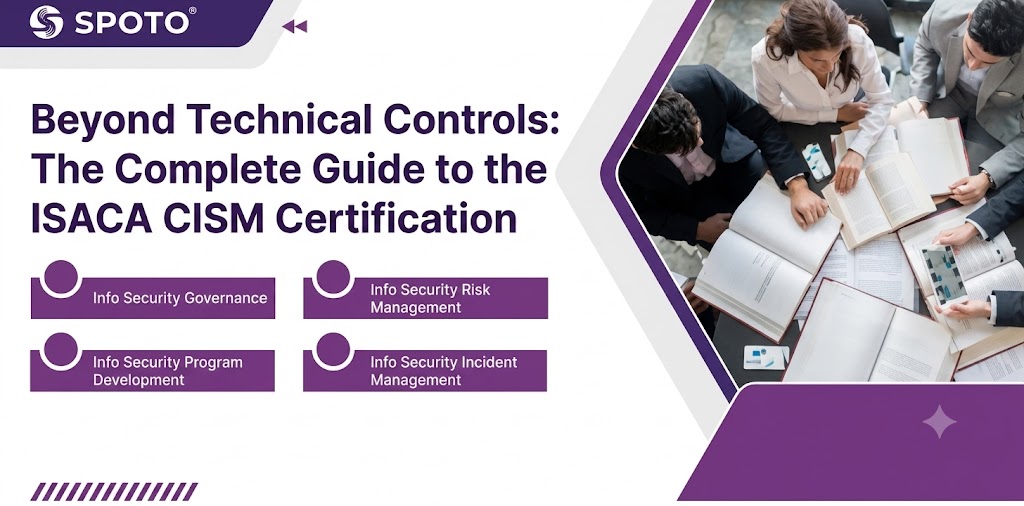
Beyond Technical Controls: The Complete Guide to the ISACA CISM Certification
SPOTO 2 2026-07-24 10:23:52
Beyond Technical Controls: The Complete Guide to the ISACA CISM Certification

Building strong cybersecurity defenses isn't just about deploying firewalls or patching software. It requires aligning security strategies with business goals, managing enterprise risk, and ensuring fast recovery when incidents occur.

For IT professionals aiming to step into security leadership, the Certified Information Security Manager (CISM) credential serves as a standard for managerial competence.

Here is a clear look at what the CISM certification entails, its career benefits, exam details, qualification requirements, and related industry credentials.


1. What is CISM Certification?

The CISM (Certified Information Security Manager) is an advanced management-level certification issued by ISACA, a global professional association focused on IT governance, risk, and cybersecurity.

Unlike hands-on technical certifications that evaluate how to configure security tools or write scripts, CISM focuses on how to manage, design, oversee, and assess an enterprise security program. The certification content is updated regularly by ISACA to reflect modern operational realities, including cloud security governance, zero-trust frameworks, data privacy regulations, and supply chain risk management.

Holding a CISM proves that an engineer or administrator can transition into management and make security decisions that support overall business objectives.


2. Benefits of Having CISM Certification

Earning the CISM certification demonstrates that you possess a management mindset rather than just technical knowledge. It shows employers you know how to talk to board members and executives about risk in business terms. Key advantages of holding a CISM include:

Executive Credibility: It is widely recognized as a benchmark credential for roles like Information Security Manager, Security Director, and Chief Information Security Officer (CISO).

Global Portability: Because CISM focuses on universal governance and risk management principles, the certification is respected in over 180 countries across finance, healthcare, government, and technology sectors.

Higher Earning Potential: Employers place a high value on professionals who can bridge the gap between technical teams and executive leadership. Industry data shows CISM holders frequently command annual salaries between $135,000 and $165,000+, depending on location and experience.

Career Progression: It serves as a clear stepping stone for experienced technical staff looking to move out of daily ticket queues and into strategic planning and leadership roles.


3. Details of the CISM Certification

The CISM exam lasts 240 minutes (4 hours) and consists of 150 multiple-choice questions. Candidates can take the test either via online remote proctoring or at an authorized PSI testing center. Final scores are converted to a scaled range between 200 and 800 points, with 450 points required to pass.

The exam content is distributed across four core management domains:

Information Security Governance (17%): Designing an information security strategy that aligns with organizational goals, legal requirements, and enterprise governance frameworks.

Information Risk Management (20%): Identifying vulnerabilities, calculating potential business impact, and implementing risk treatment options to keep risk within acceptable limits.

Information Security Program Development and Management (33%): Designing, building, and operating the security infrastructure, policy frameworks, and team workflows needed to execute the security strategy.

Information Security Incident Management (30%): Establishing response plans, managing containment efforts, and ensuring business continuity when security breaches occur.

The CISM exam relies heavily on scenario-based questions. Instead of testing memorized definitions, questions put candidates in managerial scenarios where they must choose the best or first action to take from an executive perspective.


What Are the Qualifications to Get a CISM Certification?

Earning the official CISM credential requires completing a three-part process:

(1) Pass the Certification Assessment

You must register for and pass the 150-question CISM exam. Preparing for the test involves reviewing ISACA's core domains and practicing scenario-based decision-making. Working through updated practice question pools—such as the CISM prep resources offered by SPOTO—helps candidates get used to ISACA's managerial question logic and manage their pacing during the 4-hour exam

(2) Verify Work Experience

Passing the exam grants you exam-passed status, but to hold the full certification, you must verify at least 5 years of professional work experience in information security management within the 10 years prior to application. At least 3 of those years must be in two or more of the core CISM domains. Candidates can waive up to 2 years of the general experience requirement if they hold related credentials (like CISA or CISSP) or a relevant master's degree.

(3) Maintain the Certification

CISM certification is maintained on a 3-year cycle. To stay active, credential holders must agree to ISACA's Code of Professional Ethics, pay an annual maintenance fee, and earn a minimum of 20 Continuing Professional Education (CPE) credits per year (with a total of 120 CPEs required over the 3-year cycle).


5. Similar Certifications to CISM Certification

Depending on your specific career goals in security and IT management, several related certifications cover adjacent skill sets:

  • Certified Information Systems Security Professional (CISSP): Offered by ISC2, covering a broader mix of deep technical security domains along with security management.
  • Certified in Risk and Information Systems Control (CRISC): Also issued by ISACA, focusing specifically on enterprise IT risk identification and control implementation.
  • Certified Chief Information Security Officer (CCISO): Managed by EC-Council, designed specifically for top-tier executive leadership and C-suite management strategies.
  • Certified Information Systems Auditor (CISA): ISACA's flagship qualification for auditing, controlling, and monitoring enterprise IT systems.
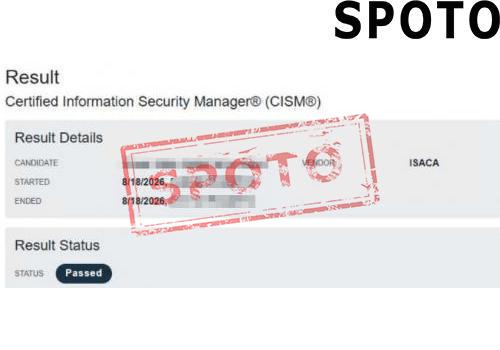
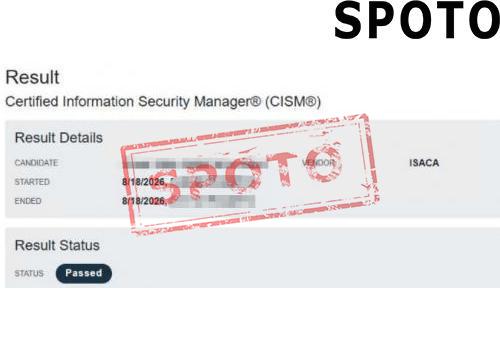
Latest Passing Reports from SPOTO Candidates
ISACA-CISM-P

ISACA-CISM-P

ISACA-CISM-P

ISACA-CISM-P

ISACA-CISA-P

ISACA-CISA-P

ISACA-CISA-P

ISACA-CISA-P

ISACA-CISM-P

ISACA-CISM-P

ISACA-CISM-P

ISACA-CISM-P

ISACA-CISA-P

ISACA-CISA-P

ISACA-CGEIT-P

ISACA-CGEIT-P

ISACA-CISM-P

ISACA-CISM-P

ISACA-CISM-P

ISACA-CISM-P

Write a Reply or Comment
Home/Blog/Beyond Technical Controls: The Complete Guide to the ISACA CISM Certification
Beyond Technical Controls: The Complete Guide to the ISACA CISM Certification
SPOTO 2 2026-07-24 10:23:52
Beyond Technical Controls: The Complete Guide to the ISACA CISM Certification

Building strong cybersecurity defenses isn't just about deploying firewalls or patching software. It requires aligning security strategies with business goals, managing enterprise risk, and ensuring fast recovery when incidents occur.

For IT professionals aiming to step into security leadership, the Certified Information Security Manager (CISM) credential serves as a standard for managerial competence.

Here is a clear look at what the CISM certification entails, its career benefits, exam details, qualification requirements, and related industry credentials.


1. What is CISM Certification?

The CISM (Certified Information Security Manager) is an advanced management-level certification issued by ISACA, a global professional association focused on IT governance, risk, and cybersecurity.

Unlike hands-on technical certifications that evaluate how to configure security tools or write scripts, CISM focuses on how to manage, design, oversee, and assess an enterprise security program. The certification content is updated regularly by ISACA to reflect modern operational realities, including cloud security governance, zero-trust frameworks, data privacy regulations, and supply chain risk management.

Holding a CISM proves that an engineer or administrator can transition into management and make security decisions that support overall business objectives.


2. Benefits of Having CISM Certification

Earning the CISM certification demonstrates that you possess a management mindset rather than just technical knowledge. It shows employers you know how to talk to board members and executives about risk in business terms. Key advantages of holding a CISM include:

Executive Credibility: It is widely recognized as a benchmark credential for roles like Information Security Manager, Security Director, and Chief Information Security Officer (CISO).

Global Portability: Because CISM focuses on universal governance and risk management principles, the certification is respected in over 180 countries across finance, healthcare, government, and technology sectors.

Higher Earning Potential: Employers place a high value on professionals who can bridge the gap between technical teams and executive leadership. Industry data shows CISM holders frequently command annual salaries between $135,000 and $165,000+, depending on location and experience.

Career Progression: It serves as a clear stepping stone for experienced technical staff looking to move out of daily ticket queues and into strategic planning and leadership roles.


3. Details of the CISM Certification

The CISM exam lasts 240 minutes (4 hours) and consists of 150 multiple-choice questions. Candidates can take the test either via online remote proctoring or at an authorized PSI testing center. Final scores are converted to a scaled range between 200 and 800 points, with 450 points required to pass.

The exam content is distributed across four core management domains:

Information Security Governance (17%): Designing an information security strategy that aligns with organizational goals, legal requirements, and enterprise governance frameworks.

Information Risk Management (20%): Identifying vulnerabilities, calculating potential business impact, and implementing risk treatment options to keep risk within acceptable limits.

Information Security Program Development and Management (33%): Designing, building, and operating the security infrastructure, policy frameworks, and team workflows needed to execute the security strategy.

Information Security Incident Management (30%): Establishing response plans, managing containment efforts, and ensuring business continuity when security breaches occur.

The CISM exam relies heavily on scenario-based questions. Instead of testing memorized definitions, questions put candidates in managerial scenarios where they must choose the best or first action to take from an executive perspective.


What Are the Qualifications to Get a CISM Certification?

Earning the official CISM credential requires completing a three-part process:

(1) Pass the Certification Assessment

You must register for and pass the 150-question CISM exam. Preparing for the test involves reviewing ISACA's core domains and practicing scenario-based decision-making. Working through updated practice question pools—such as the CISM prep resources offered by SPOTO—helps candidates get used to ISACA's managerial question logic and manage their pacing during the 4-hour exam

(2) Verify Work Experience

Passing the exam grants you exam-passed status, but to hold the full certification, you must verify at least 5 years of professional work experience in information security management within the 10 years prior to application. At least 3 of those years must be in two or more of the core CISM domains. Candidates can waive up to 2 years of the general experience requirement if they hold related credentials (like CISA or CISSP) or a relevant master's degree.

(3) Maintain the Certification

CISM certification is maintained on a 3-year cycle. To stay active, credential holders must agree to ISACA's Code of Professional Ethics, pay an annual maintenance fee, and earn a minimum of 20 Continuing Professional Education (CPE) credits per year (with a total of 120 CPEs required over the 3-year cycle).


5. Similar Certifications to CISM Certification

Depending on your specific career goals in security and IT management, several related certifications cover adjacent skill sets:

  • Certified Information Systems Security Professional (CISSP): Offered by ISC2, covering a broader mix of deep technical security domains along with security management.
  • Certified in Risk and Information Systems Control (CRISC): Also issued by ISACA, focusing specifically on enterprise IT risk identification and control implementation.
  • Certified Chief Information Security Officer (CCISO): Managed by EC-Council, designed specifically for top-tier executive leadership and C-suite management strategies.
  • Certified Information Systems Auditor (CISA): ISACA's flagship qualification for auditing, controlling, and monitoring enterprise IT systems.
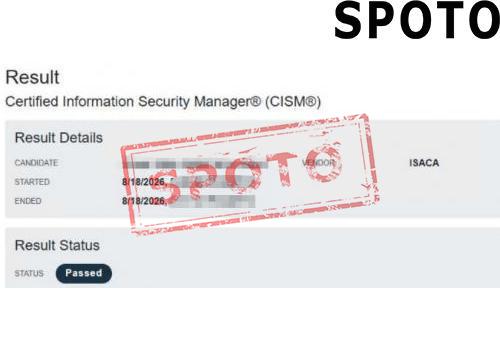
Latest Passing Reports from SPOTO Candidates
ISACA-CISM-P
ISACA-CISM-P
ISACA-CISA-P
ISACA-CISA-P
ISACA-CISM-P
ISACA-CISM-P
ISACA-CISA-P
ISACA-CGEIT-P
ISACA-CISM-P
ISACA-CISM-P
Write a Reply or Comment
Don't Risk Your Certification Exam Success – Take Real Exam Questions
Eligible to sit for Exam? 100% Exam Pass GuaranteeEligible to sit for Exam? 100% Exam Pass Guarantee
SPOTO Ebooks
Recent Posts
Mastering Claims Management: A Comprehensive Guide to the CII IF4 Exam
Beyond Technical Controls: The Complete Guide to the ISACA CISM Certification
Straight Talk on the AZ-700: What You Need to Know to Pass Microsoft's Azure Network Exam
AWS Renamed SysOps to CloudOps (SOA-C03): What's New and How to Pass
Real-World DevOps on Azure: What You Actually Need to Know for the AZ-400 Exam
What the AWS DVA-C02 Developer Exam Actually Tests and How to Pass It
AWS SAA-C03: What the Solutions Architect Exam Actually Tests, What It Pays, and How to Pass
Microsoft AZ-204: What Developers Actually Need to Know to Pass
AWS Cloud Practitioner (CLF-C02): What It Actually Covers, What It Pays, and Who Should Take It
The Real-World Guide to Microsoft AZ-120: SAP Workloads on Azure
Excellent
5.0
Based on 5236 reviews
Request more information
I would like to receive email communications about product & offerings from SPOTO & its Affiliates.
I understand I can unsubscribe at any time.