Latest Cisco, PMP, AWS, CompTIA, Microsoft Materials on SALE Get Now Get Now
Home/
Blog/
AWS Renamed SysOps to CloudOps (SOA-C03): What's New and How to Pass
SPOTO 2 2026-07-23 10:27:40
AWS Renamed SysOps to CloudOps (SOA-C03): What's New and How to Pass

If you've been keeping an eye on AWS certifications lately, you probably noticed a quiet rebrand. The classic SysOps Administrator – Associate (SOA-C02) is officially out. In its place sits the AWS Certified CloudOps Engineer – Associate (SOA-C03).

This change isn't just a simple name swap. AWS updated the exam objectives to align with how modern cloud teams actually work. Running infrastructure today isn't about remoting into virtual machines or clicking around the console to fix disk space issues. It revolves around infrastructure as code, automated incident response, and keeping tabs on multi-account environments.

Here is a clear breakdown of what's on the SOA-C03 exam, how the syllabus shifted, realistic pay scales, and a practical plan to clear it.


1. What Actually Changed in SOA-C03?

The jump from SOA-C02 to SOA-C03 reflects how ops roles have evolved over the last few years. Traditional system administration has largely merged into CloudOps and SRE functions. A few major focus shifts stand out on the new blueprint:

Less console work, more automation: You'll see far more questions testing programmatic management using CloudFormation, the AWS CDK, and Systems Manager runbooks.

Broader observability: Instead of basic CloudWatch alarms on standalone EC2 instances, the test checks whether you can aggregate logs across AWS Organizations, track container metrics in ECS/EKS, and trace calls across microservices.

Modern security controls: Expect scenario questions on IAM Roles Anywhere for hybrid workloads, AWS Config rules for drift detection, and centralized key rotation in KMS.

FinOps and cost control: Cost optimization isn't an afterthought anymore. You need to know how to set up S3 storage lifecycle rules, interpret Cost & Usage Reports (CUR), and right-size compute resources dynamically.


2. Is the SOA-C03 Worth Getting?

Among the three core AWS Associate certs—Solutions Architect, Developer, and CloudOps—the CloudOps exam has a reputation for being the most scenario-heavy and practical. While Solutions Architect asks high-level design questions, CloudOps tests what happens when things break in production. Holding this credential tells employers a few specific things:

You know how to wire up automated fixes using EventBridge and Systems Manager so minor outages resolve themselves.

You can configure reliable backups across S3, EBS, and RDS, and run disaster recovery drills that hit strict RTO and RPO targets.

You know how to enforce security policies across multi-account setups using AWS Control Tower and Service Control Policies (SCPs).


3. Breakdown of the 4 Exam Domains

You get 130 minutes to tackle 65 questions (50 count toward your final score, while 15 are unscored pilot questions). The passing threshold is 720 out of 1,000. Question formats are either standard single-choice or multiple-response. Here is how the four core domains break down:

(1)Monitoring, Logging, Analysis, Remediation, and Performance Optimization

This is the biggest chunk of the test. It focuses on keeping systems healthy and automating responses. You'll need to know how to create composite alarms in CloudWatch, set up log subscription filters, parse CloudTrail logs, and build EventBridge rules that trigger Systems Manager Automation runbooks when something goes wrong.

(2)Reliability and Business Continuity

This domain covers system resilience and disaster recovery. Expect questions on Multi-AZ database setups, Auto Scaling lifecycle hooks, and load balancer health checks. You'll also need to know how AWS Backup works across services and how to set up cross-region S3 or RDS replication for failover scenarios.

(3)Deployment, Provisioning, and Automation

This section checks how well you deploy resources programmatically. You'll get tested on CloudFormation drift detection, CDK template structures, Systems Manager Patch Manager for OS updates, and rolling or canary deployment strategies for containerized apps.

(4)Security and Compliance

The final domain covers identity, access, and governance. You need to write tight, least-privilege IAM policies, manage execution roles, evaluate non-compliant resources with AWS Config, enforce KMS encryption, and lock down network perimeters using Security Groups and Network ACLs.


4. Salary Potential for CloudOps Engineers

Demand for engineers who can handle cloud operations, automation, and incident response remains high across the industry. Compensation depends heavily on location and total years of experience, but typical US salary ranges for roles aligned with SOA-C03 skills look roughly like this:

Cloud Ops / System Administrator: $110,000 to $135,000 base salary for mid-level engineers managing daily infrastructure and monitoring setups.

Cloud Operations / Infrastructure Engineer: $135,000 to $160,000 for engineers building automated pipelines, handling release operations, and managing multi-region setups.

Site Reliability Engineer (SRE) / Ops Lead: $155,000 to $180,000+ for senior technical leads running high-availability setups and automated incident response systems.


5. How to Prepare and Pass

Because the SOA-C03 relies on detailed scenario questions, simply reading product documentation isn't going to cut it. You need to know how AWS services interact under stress. Here is a straightforward study blueprint:

Get practical experience in the CLI and Console: Open an AWS Free Tier account. Build a custom CloudWatch dashboard, set up an EventBridge rule that sends an SNS notification when an EC2 instance changes state, and deploy a small app using a CloudFormation template.

Learn diagnostic patterns: Focus on troubleshooting logic. Figure out why a CloudFormation stack rolls back, why an Auto Scaling group fails to launch an instance, or why the Systems Manager SSM Agent isn't showing up as managed.

Practice under exam conditions: The wording on SOA-C03 questions can be long and full of extra detail designed to test your diagnostic speed. s: Working through updated practice exam sets—like the SOA-C03 mock exams from SPOTO—helps you get used to the scenario style, spot blind spots in logging or automation, and manage your time so you don't feel rushed on test day.
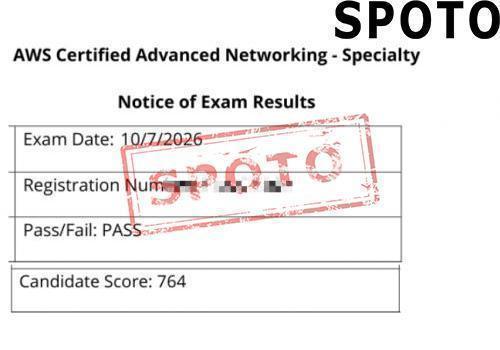
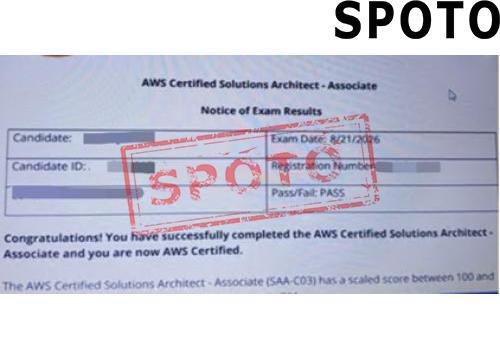
 

Latest Passing Reports from SPOTO Candidates
SAP-C02

SAP-C02

SAA-C03-P

SAA-C03-P

ANS-C01

ANS-C01

CLF-C02-P

CLF-C02-P

SAP-C02-P

SAP-C02-P

SAP-C02

SAP-C02

SAP-C02

SAP-C02

CLF-C02-P

CLF-C02-P

CLF-C02-P

CLF-C02-P

CLF-C02-P

CLF-C02-P

Write a Reply or Comment
Home/Blog/AWS Renamed SysOps to CloudOps (SOA-C03): What's New and How to Pass
AWS Renamed SysOps to CloudOps (SOA-C03): What's New and How to Pass
SPOTO 2 2026-07-23 10:27:40
AWS Renamed SysOps to CloudOps (SOA-C03): What's New and How to Pass

If you've been keeping an eye on AWS certifications lately, you probably noticed a quiet rebrand. The classic SysOps Administrator – Associate (SOA-C02) is officially out. In its place sits the AWS Certified CloudOps Engineer – Associate (SOA-C03).

This change isn't just a simple name swap. AWS updated the exam objectives to align with how modern cloud teams actually work. Running infrastructure today isn't about remoting into virtual machines or clicking around the console to fix disk space issues. It revolves around infrastructure as code, automated incident response, and keeping tabs on multi-account environments.

Here is a clear breakdown of what's on the SOA-C03 exam, how the syllabus shifted, realistic pay scales, and a practical plan to clear it.


1. What Actually Changed in SOA-C03?

The jump from SOA-C02 to SOA-C03 reflects how ops roles have evolved over the last few years. Traditional system administration has largely merged into CloudOps and SRE functions. A few major focus shifts stand out on the new blueprint:

Less console work, more automation: You'll see far more questions testing programmatic management using CloudFormation, the AWS CDK, and Systems Manager runbooks.

Broader observability: Instead of basic CloudWatch alarms on standalone EC2 instances, the test checks whether you can aggregate logs across AWS Organizations, track container metrics in ECS/EKS, and trace calls across microservices.

Modern security controls: Expect scenario questions on IAM Roles Anywhere for hybrid workloads, AWS Config rules for drift detection, and centralized key rotation in KMS.

FinOps and cost control: Cost optimization isn't an afterthought anymore. You need to know how to set up S3 storage lifecycle rules, interpret Cost & Usage Reports (CUR), and right-size compute resources dynamically.


2. Is the SOA-C03 Worth Getting?

Among the three core AWS Associate certs—Solutions Architect, Developer, and CloudOps—the CloudOps exam has a reputation for being the most scenario-heavy and practical. While Solutions Architect asks high-level design questions, CloudOps tests what happens when things break in production. Holding this credential tells employers a few specific things:

You know how to wire up automated fixes using EventBridge and Systems Manager so minor outages resolve themselves.

You can configure reliable backups across S3, EBS, and RDS, and run disaster recovery drills that hit strict RTO and RPO targets.

You know how to enforce security policies across multi-account setups using AWS Control Tower and Service Control Policies (SCPs).


3. Breakdown of the 4 Exam Domains

You get 130 minutes to tackle 65 questions (50 count toward your final score, while 15 are unscored pilot questions). The passing threshold is 720 out of 1,000. Question formats are either standard single-choice or multiple-response. Here is how the four core domains break down:

(1)Monitoring, Logging, Analysis, Remediation, and Performance Optimization

This is the biggest chunk of the test. It focuses on keeping systems healthy and automating responses. You'll need to know how to create composite alarms in CloudWatch, set up log subscription filters, parse CloudTrail logs, and build EventBridge rules that trigger Systems Manager Automation runbooks when something goes wrong.

(2)Reliability and Business Continuity

This domain covers system resilience and disaster recovery. Expect questions on Multi-AZ database setups, Auto Scaling lifecycle hooks, and load balancer health checks. You'll also need to know how AWS Backup works across services and how to set up cross-region S3 or RDS replication for failover scenarios.

(3)Deployment, Provisioning, and Automation

This section checks how well you deploy resources programmatically. You'll get tested on CloudFormation drift detection, CDK template structures, Systems Manager Patch Manager for OS updates, and rolling or canary deployment strategies for containerized apps.

(4)Security and Compliance

The final domain covers identity, access, and governance. You need to write tight, least-privilege IAM policies, manage execution roles, evaluate non-compliant resources with AWS Config, enforce KMS encryption, and lock down network perimeters using Security Groups and Network ACLs.


4. Salary Potential for CloudOps Engineers

Demand for engineers who can handle cloud operations, automation, and incident response remains high across the industry. Compensation depends heavily on location and total years of experience, but typical US salary ranges for roles aligned with SOA-C03 skills look roughly like this:

Cloud Ops / System Administrator: $110,000 to $135,000 base salary for mid-level engineers managing daily infrastructure and monitoring setups.

Cloud Operations / Infrastructure Engineer: $135,000 to $160,000 for engineers building automated pipelines, handling release operations, and managing multi-region setups.

Site Reliability Engineer (SRE) / Ops Lead: $155,000 to $180,000+ for senior technical leads running high-availability setups and automated incident response systems.


5. How to Prepare and Pass

Because the SOA-C03 relies on detailed scenario questions, simply reading product documentation isn't going to cut it. You need to know how AWS services interact under stress. Here is a straightforward study blueprint:

Get practical experience in the CLI and Console: Open an AWS Free Tier account. Build a custom CloudWatch dashboard, set up an EventBridge rule that sends an SNS notification when an EC2 instance changes state, and deploy a small app using a CloudFormation template.

Learn diagnostic patterns: Focus on troubleshooting logic. Figure out why a CloudFormation stack rolls back, why an Auto Scaling group fails to launch an instance, or why the Systems Manager SSM Agent isn't showing up as managed.

Practice under exam conditions: The wording on SOA-C03 questions can be long and full of extra detail designed to test your diagnostic speed. s: Working through updated practice exam sets—like the SOA-C03 mock exams from SPOTO—helps you get used to the scenario style, spot blind spots in logging or automation, and manage your time so you don't feel rushed on test day.
 

Latest Passing Reports from SPOTO Candidates
SAP-C02
SAA-C03-P
ANS-C01
CLF-C02-P
SAP-C02-P
SAP-C02
SAP-C02
CLF-C02-P
CLF-C02-P
CLF-C02-P
Write a Reply or Comment
Don't Risk Your Certification Exam Success – Take Real Exam Questions
Eligible to sit for Exam? 100% Exam Pass GuaranteeEligible to sit for Exam? 100% Exam Pass Guarantee
SPOTO Ebooks
Recent Posts
Straight Talk on the AZ-700: What You Need to Know to Pass Microsoft's Azure Network Exam
AWS Renamed SysOps to CloudOps (SOA-C03): What's New and How to Pass
Real-World DevOps on Azure: What You Actually Need to Know for the AZ-400 Exam
What the AWS DVA-C02 Developer Exam Actually Tests and How to Pass It
AWS SAA-C03: What the Solutions Architect Exam Actually Tests, What It Pays, and How to Pass
Microsoft AZ-204: What Developers Actually Need to Know to Pass
AWS Cloud Practitioner (CLF-C02): What It Actually Covers, What It Pays, and Who Should Take It
The Real-World Guide to Microsoft AZ-120: SAP Workloads on Azure
Why the AZ-104 is Still the Hardest Associate Cloud Exam (And How to Beat It)
The High-Value Cloud Specialty: The Definitive Guide to Microsoft AZ-140
Excellent
5.0
Based on 5236 reviews
Request more information
I would like to receive email communications about product & offerings from SPOTO & its Affiliates.
I understand I can unsubscribe at any time.