Latest Cisco, PMP, AWS, CompTIA, Microsoft Materials on SALE Get Now Get Now
Home/
Blog/
CCIE DC LAB v3.1: A Full-Stack Practical Guide to Building Modern Data Centers
SPOTO 2 2026-04-27 10:59:21
CCIE DC LAB v3.1: A Full-Stack Practical Guide to Building Modern Data Centers

CCIE Data Center v3.1 is no longer merely a configuration exam focused on isolated features; it has evolved into a comprehensive assessment of full-stack architecture. With the version update released in February 2026, the exam's core focus has shifted to the deep integration of ACI, EVPN-VXLAN, UCS, and automation technologies.

Faced with the grueling 8-hour lab challenge, you must transform yourself from a "network configurator" into a "full-stack data center architect."


1. Reshaping the Core Technology Stack: From "Fragmented" to "Integrated"

The assessment weighting in v3.1 is now more concentrated; you must establish expert-level conceptual understanding and operational proficiency across five key domains:

ACI Ecosystem: Accounting for over 40% of the exam weight. You must not only master Tenants, Contracts, and Micro-segmentation policies but also possess a deep understanding of how ACI integrates with UCS compute nodes and storage resources.

EVPN-VXLAN: As the de facto standard for modern data centers, the multi-tenancy logic, VNI mapping, and ARP suppression mechanisms of BGP EVPN must be second nature to you.

Compute and Storage: UCS 4.0 and MDS 9000 serve as the structural backbone supporting business operations. Focus your efforts on mastering the dynamic configuration of Service Profiles and storage multipathing optimization.

Network Automation: With 15% of the exam weight allocated to Python, Ansible, and Terraform, this domain serves as the critical differentiator—the high-frequency watershed—that distinguishes an ordinary engineer from a true expert.

Environment Baseline: Ensure that the software versions in your lab environment are absolutely synchronized with those in the actual exam center: ACI 5.2, NX-OS 10.1, and UCSM 4.0. API call failures or missing commands caused by version discrepancies can be fatal to your success in the lab exam environment.


2. The 16-Week Expert Advancement Journey

Phase I: Laying the Foundation (Weeks 1–3)

Goal: Compile a technical checklist and complete the environment setup.

Strategy: Avoid getting bogged down in lengthy reading; instead, immediately utilize the Cisco DevNet Sandbox to build the corresponding lab environment. Every learning objective should be immediately followed by hands-on verification, transforming configuration manuals into your own personal operational templates.

Phase II: Scenario Mastery and Integration (Weeks 4–10)

Goal: Conquer complex logic and automated delivery challenges.

Integrated Thinking: Practice end-to-end integration involving ACI, UCS, and storage, simulating real-world business provisioning scenarios.

Troubleshooting Boot Camp: Deliberately induce ACI policy conflicts or EVPN route learning interruptions to build your personal library of troubleshooting logic.

Automation in Action: Shun manual configuration; instead, use Ansible Playbooks and Terraform modules to achieve "one-click deployment" of infrastructure.

Phase III: Full-Scale Simulation and Stress Management (Weeks 11–16)

Goal: Adapt to an intense, high-pressure 8-hour operational environment.

Strategy: Conduct a full-scale simulation once a week. Allocate your time with minute-by-minute precision: 3 hours for writing design documentation, and 5 hours for coding, deployment, troubleshooting, and verification. Focus on compiling your own "LAB Pitfall Cheat Sheet," covering common syntax errors and configuration traps.


3. Expert-Level Success Secrets

Architectural Thinking Takes Priority: The exam evaluation looks beyond whether you have merely established link connectivity; it places greater emphasis on the soundness of your architectural design—specifically, whether it incorporates redundancy, is easily scalable, and complies with security policy requirements.

Troubleshooting is the Soul of the LAB: The vast majority of lost points stem from exceeding the time limit during troubleshooting. Mastering ACI Fault logs, BGP EVPN routing table analysis, and UCS state machine diagnostics is the fastest path to passing the exam.

Automation is Not a Bonus—It is a Prerequisite: Do not attempt to compensate for a lack of automation scripts by relying on traditional CLI methods; under the 2026 assessment standards, an architecture that cannot be delivered via automated means is considered incomplete.

Pacing and Time Management: The quality of the documentation for your design module determines whether you gain the examiners' confidence right from the initial stage. Ensure that you allocate sufficient buffer time—typically 30 minutes—during the deployment module to handle any unexpected issues.


4. Exam Preparation Resource Index

Official Authoritative Sources: Primarily guided by the ACI Programming Guide, the NX-OS Programmability Guide, and official Cisco blueprints.

Practical Toolkit: Master the use of VS Code, Postman, and Git.

Lab Platform: Prioritize CML 2.0+ as the primary local environment, supplemented by the DevNet Sandbox for realistic simulations involving actual hardware resources.


Summary: CCIE DC v3.1 is not merely a comprehensive assessment of technical proficiency; it is, more importantly, a crucible for refining one's professional caliber. You must fully immerse yourself in the practical application of "Automated Operations" and "SDN Architecture Design"—eschewing the mere pursuit of answers in favor of analyzing the underlying traffic paths and policy logic.

Outdated exam preparation information is often the root cause of failure. SPOTO has established a real-time update mechanism—synchronized directly with official sources—to ensure that every question bank and solution set aligns precisely with the latest exam blueprints. By deeply integrating the mastery of technical challenges with targeted practical exercises, we ensure that every ounce of your effort hits the mark, empowering you to successfully secure your certification on your very first attempt.
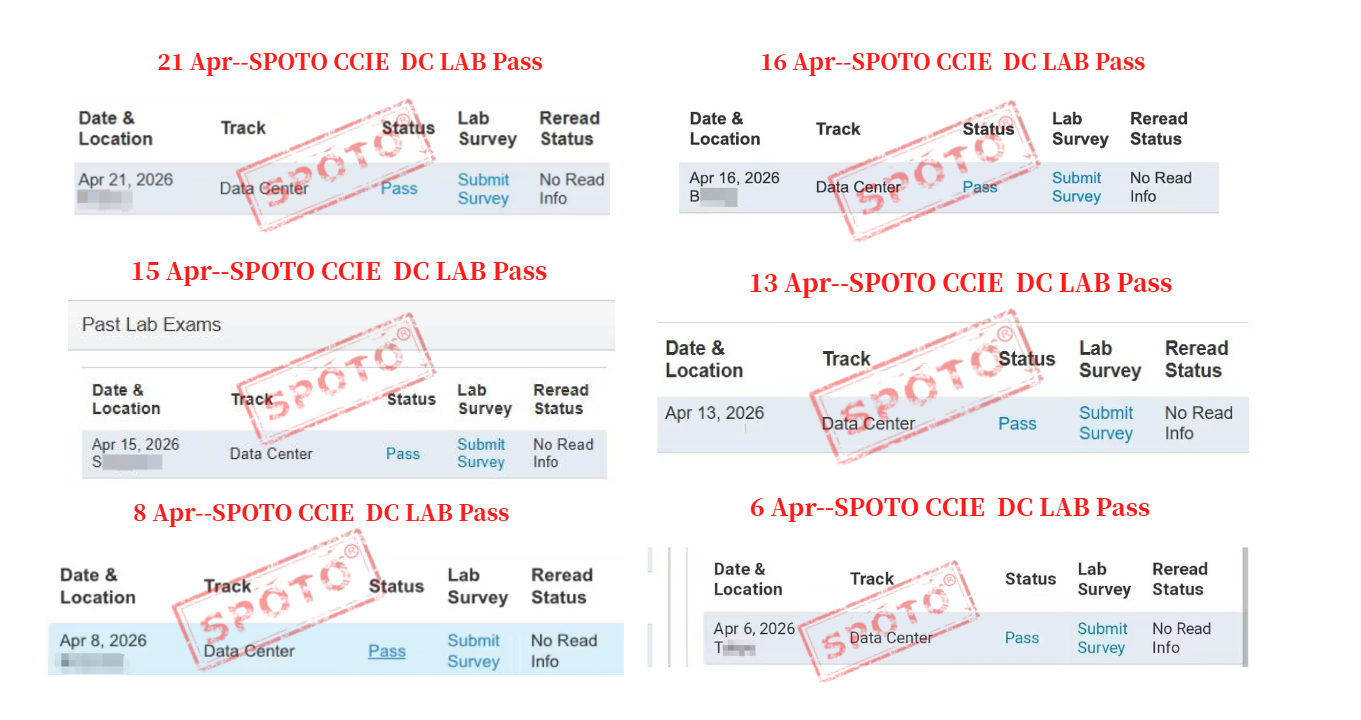
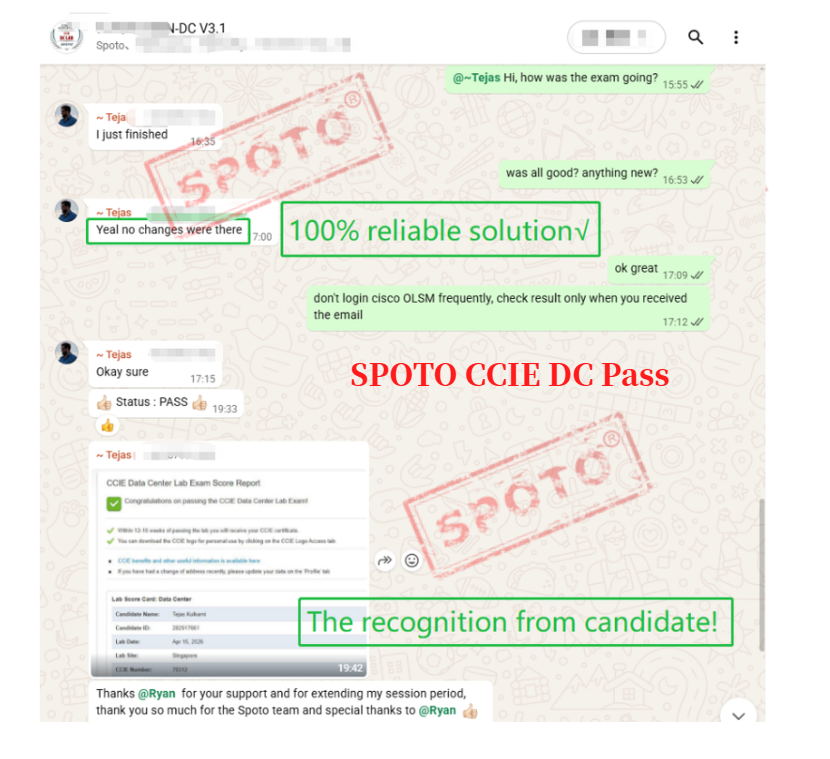
 

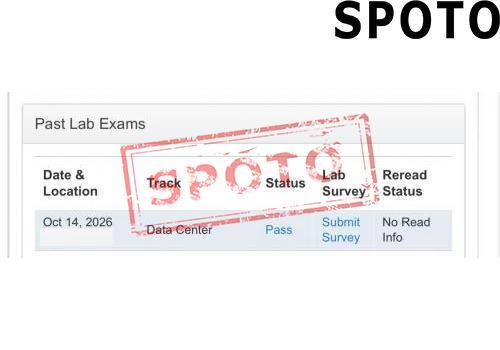
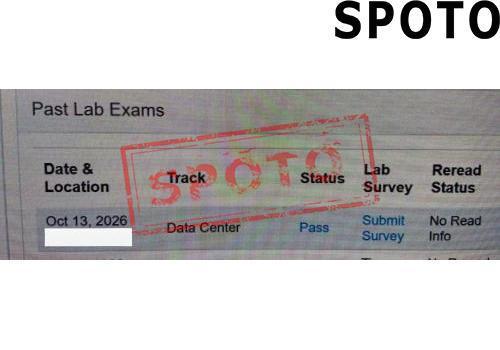
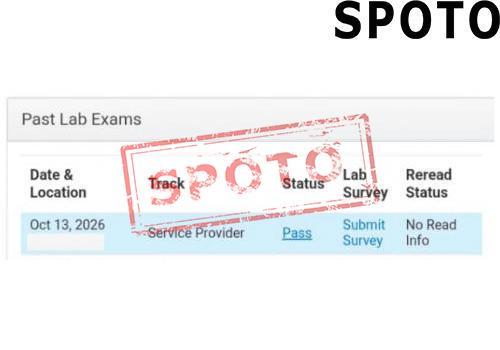
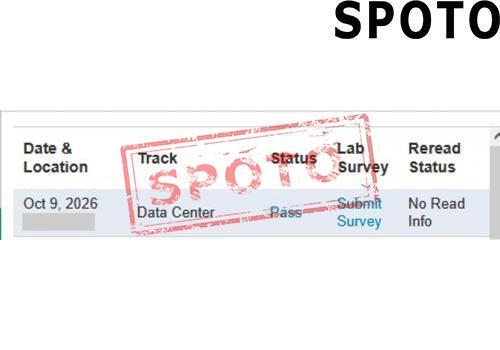
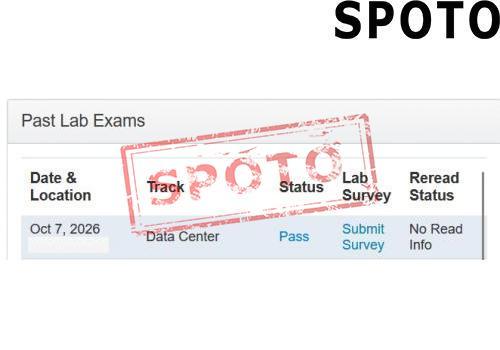
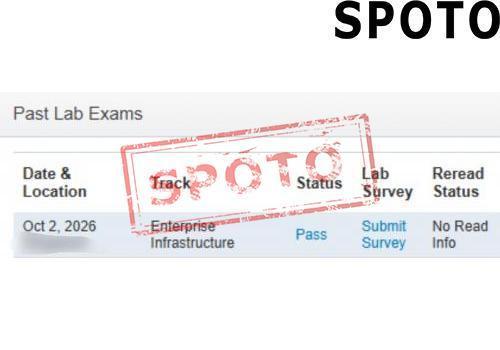
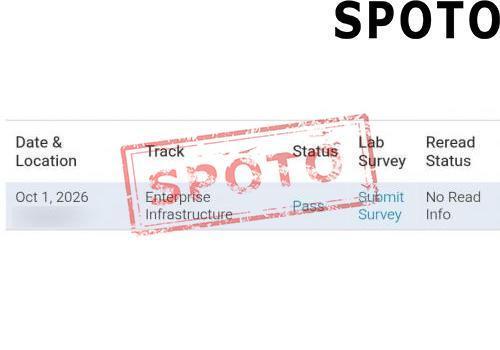
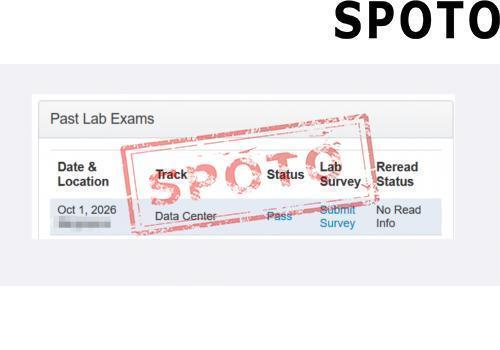
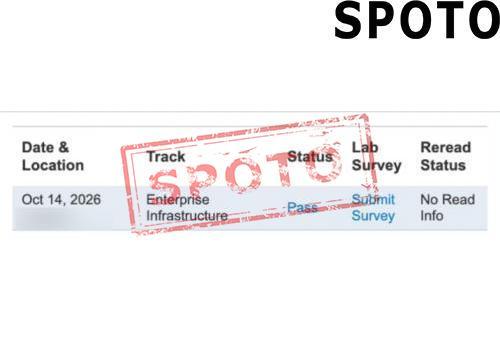
Latest Passing Reports from SPOTO Candidates
EI LAB

EI LAB

EI LAB

EI LAB

EI LAB

EI LAB

DC LAB

DC LAB

sec lab

sec lab

dc lab

dc lab

ccde lab

ccde lab

EI lab

EI lab

DC lab

DC lab

EI Lab

EI Lab

Write a Reply or Comment
Home/Blog/CCIE DC LAB v3.1: A Full-Stack Practical Guide to Building Modern Data Centers
CCIE DC LAB v3.1: A Full-Stack Practical Guide to Building Modern Data Centers
SPOTO 2 2026-04-27 10:59:21
CCIE DC LAB v3.1: A Full-Stack Practical Guide to Building Modern Data Centers

CCIE Data Center v3.1 is no longer merely a configuration exam focused on isolated features; it has evolved into a comprehensive assessment of full-stack architecture. With the version update released in February 2026, the exam's core focus has shifted to the deep integration of ACI, EVPN-VXLAN, UCS, and automation technologies.

Faced with the grueling 8-hour lab challenge, you must transform yourself from a "network configurator" into a "full-stack data center architect."


1. Reshaping the Core Technology Stack: From "Fragmented" to "Integrated"

The assessment weighting in v3.1 is now more concentrated; you must establish expert-level conceptual understanding and operational proficiency across five key domains:

ACI Ecosystem: Accounting for over 40% of the exam weight. You must not only master Tenants, Contracts, and Micro-segmentation policies but also possess a deep understanding of how ACI integrates with UCS compute nodes and storage resources.

EVPN-VXLAN: As the de facto standard for modern data centers, the multi-tenancy logic, VNI mapping, and ARP suppression mechanisms of BGP EVPN must be second nature to you.

Compute and Storage: UCS 4.0 and MDS 9000 serve as the structural backbone supporting business operations. Focus your efforts on mastering the dynamic configuration of Service Profiles and storage multipathing optimization.

Network Automation: With 15% of the exam weight allocated to Python, Ansible, and Terraform, this domain serves as the critical differentiator—the high-frequency watershed—that distinguishes an ordinary engineer from a true expert.

Environment Baseline: Ensure that the software versions in your lab environment are absolutely synchronized with those in the actual exam center: ACI 5.2, NX-OS 10.1, and UCSM 4.0. API call failures or missing commands caused by version discrepancies can be fatal to your success in the lab exam environment.


2. The 16-Week Expert Advancement Journey

Phase I: Laying the Foundation (Weeks 1–3)

Goal: Compile a technical checklist and complete the environment setup.

Strategy: Avoid getting bogged down in lengthy reading; instead, immediately utilize the Cisco DevNet Sandbox to build the corresponding lab environment. Every learning objective should be immediately followed by hands-on verification, transforming configuration manuals into your own personal operational templates.

Phase II: Scenario Mastery and Integration (Weeks 4–10)

Goal: Conquer complex logic and automated delivery challenges.

Integrated Thinking: Practice end-to-end integration involving ACI, UCS, and storage, simulating real-world business provisioning scenarios.

Troubleshooting Boot Camp: Deliberately induce ACI policy conflicts or EVPN route learning interruptions to build your personal library of troubleshooting logic.

Automation in Action: Shun manual configuration; instead, use Ansible Playbooks and Terraform modules to achieve "one-click deployment" of infrastructure.

Phase III: Full-Scale Simulation and Stress Management (Weeks 11–16)

Goal: Adapt to an intense, high-pressure 8-hour operational environment.

Strategy: Conduct a full-scale simulation once a week. Allocate your time with minute-by-minute precision: 3 hours for writing design documentation, and 5 hours for coding, deployment, troubleshooting, and verification. Focus on compiling your own "LAB Pitfall Cheat Sheet," covering common syntax errors and configuration traps.


3. Expert-Level Success Secrets

Architectural Thinking Takes Priority: The exam evaluation looks beyond whether you have merely established link connectivity; it places greater emphasis on the soundness of your architectural design—specifically, whether it incorporates redundancy, is easily scalable, and complies with security policy requirements.

Troubleshooting is the Soul of the LAB: The vast majority of lost points stem from exceeding the time limit during troubleshooting. Mastering ACI Fault logs, BGP EVPN routing table analysis, and UCS state machine diagnostics is the fastest path to passing the exam.

Automation is Not a Bonus—It is a Prerequisite: Do not attempt to compensate for a lack of automation scripts by relying on traditional CLI methods; under the 2026 assessment standards, an architecture that cannot be delivered via automated means is considered incomplete.

Pacing and Time Management: The quality of the documentation for your design module determines whether you gain the examiners' confidence right from the initial stage. Ensure that you allocate sufficient buffer time—typically 30 minutes—during the deployment module to handle any unexpected issues.


4. Exam Preparation Resource Index

Official Authoritative Sources: Primarily guided by the ACI Programming Guide, the NX-OS Programmability Guide, and official Cisco blueprints.

Practical Toolkit: Master the use of VS Code, Postman, and Git.

Lab Platform: Prioritize CML 2.0+ as the primary local environment, supplemented by the DevNet Sandbox for realistic simulations involving actual hardware resources.


Summary: CCIE DC v3.1 is not merely a comprehensive assessment of technical proficiency; it is, more importantly, a crucible for refining one's professional caliber. You must fully immerse yourself in the practical application of "Automated Operations" and "SDN Architecture Design"—eschewing the mere pursuit of answers in favor of analyzing the underlying traffic paths and policy logic.

Outdated exam preparation information is often the root cause of failure. SPOTO has established a real-time update mechanism—synchronized directly with official sources—to ensure that every question bank and solution set aligns precisely with the latest exam blueprints. By deeply integrating the mastery of technical challenges with targeted practical exercises, we ensure that every ounce of your effort hits the mark, empowering you to successfully secure your certification on your very first attempt.
 

Latest Passing Reports from SPOTO Candidates
EI LAB
EI LAB
EI LAB
DC LAB
sec lab
dc lab
ccde lab
EI lab
DC lab
EI Lab
Write a Reply or Comment
Don't Risk Your Certification Exam Success – Take Real Exam Questions
Eligible to sit for Exam? 100% Exam Pass GuaranteeEligible to sit for Exam? 100% Exam Pass Guarantee
SPOTO Ebooks
Recent Posts
CCIE EI v1.1 Lab Exam In-Depth Analysis: Modernizing Enterprise Network Architecture and a Guide to Success
CCIE DC LAB v3.1: A Full-Stack Practical Guide to Building Modern Data Centers
2026 Latest CCIE Automation v1.1 Exam Preparation Guide
CCIE Enterprise Infrastructure (EI v1.1) In-Depth Preparation Guide: From Protocol Expertise to Architectural Engineering
CCIE Automation (v1.1): Core Exam Changes and Advanced Preparation Strategies
CCIE Automation: An In-Depth Preparation Strategy for the New 2026 Certification Framework
CCIE Data Center (v3.1) Lab Exam In-Depth Analysis: Technical Evolution and Comprehensive Preparation Guide
CCIE EI LAB Exam: Latest Question Changes and Exam Impact Analysis
CCIE Automation Certification: Latest Question Changes and Exam Impact Analysis
CCIE DC LAB (v3.1) Exam: Latest Question Changes and Exam Impact Analysis
Excellent
5.0
Based on 5236 reviews
Request more information
I would like to receive email communications about product & offerings from SPOTO & its Affiliates.
I understand I can unsubscribe at any time.