Latest Cisco, PMP, AWS, CompTIA, Microsoft Materials on SALE Get Now Get Now
Home/
Blog/
The Automation Frontier: Mastering the CCIE Automation v1.1 (2026 Update)
SPOTO 2 2026-05-15 10:08:51
The Automation Frontier: Mastering the CCIE Automation v1.1 (2026 Update)

The networking world has officially crossed the rubicon. As we navigate through 2026, the transition from manual, box-by-box configuration to centralized, policy-driven orchestration is no longer a future goal—it is the baseline requirement for the modern enterprise. To reflect this reality, Cisco's recent rebranding of the DevNet Expert to the CCIE Automation v1.1 (effective February 2026) marks a significant milestone in the evolution of the "Expert" title.

For candidates pursuing their digits this year, the CCIE Automation v1.1 is not just a name change. It represents a tactical realignment of the blueprint to match the current industry obsession with Infrastructure as Code (IaC), Observability, and Cloud-Native integration. This blog serves as a comprehensive guide to the latest updates, the technical shifts in the blueprint, and a battle-tested roadmap for success.


1. The Strategic Rebranding: Why CCIE Automation?

For years, the "DevNet Expert" lived in a slightly different world than the traditional CCIE tracks. In February 2026, Cisco brought this certification fully into the CCIE family. The move to CCIE Automation v1.1 signals that automation is no longer a "niche" skill for developers but a core competency for network architects.

While the "delta" in technical content between the old DevNet v1.0 and the new Automation v1.1 is approximately 10%, the expectations for implementation have risen. The exam now focuses less on "writing a script that works" and more on "building an automated system that is scalable, secure, and maintainable."


2. Blueprint v1.1: The Technical Deep Dive

The 2026 update introduced several key shifts in the technology stack that candidates must master.

The Rise of Terraform and the Fall of Puppet

In the v1.1 blueprint, Puppet has been officially deprecated to make room for the undisputed king of IaC: Terraform (version 1.5+). Candidates are now expected to handle complex state management, provider configurations for Cisco ACI and SD-WAN, and the development of reusable Terraform modules. This reflects a industry-wide pivot toward declarative infrastructure.

From Monitoring to Observability

A major new focus in the 2026 lab is the shift from simple SNMP/Syslog monitoring to Full-Stack Observability. You are now expected to integrate telemetry data from Cisco platforms with modern observability stacks like Prometheus and Grafana. Understanding how to build dashboards and automated alerting loops based on Model-Driven Telemetry (MDT) is a critical new competency.

Containerization and Microservices

The blueprint has doubled down on Kubernetes (K8s) and Docker. As network services become increasingly containerized, the CCIE Automation candidate must be able to manage K8s resources, understand Ingress controllers, and automate the deployment of microservices within a CI/CD pipeline (typically utilizing GitLab CI or GitHub Actions).


3. The 8-Hour Gauntlet: Exam Structure

The exam maintains the standard CCIE format, split into two modules that test different hemispheres of the NetDevOps brain.

Module 1: Design (3 Hours)

In this module, you are the Lead Architect. You will be presented with business requirements, existing constraints, and technical goals. You must choose the right automation strategy.

The Challenge: You might need to decide between using Ansible for configuration drift management versus Terraform for initial resource provisioning.

2026 Focus: Designing "Secure-by-Design" automation workflows, incorporating OWASP API Security principles and secret management (e.g., HashiCorp Vault).

Module 2: Deploy, Operate, and Optimize (5 Hours)

This is the hands-on section. You are provided with a live environment consisting of Catalyst Center (DNA Center), vManage, APIC, and Nexus Dashboard.

Key Task: Using Python (3.9+) and REST APIs to extract real-time telemetry and modify fabric policies dynamically.

Troubleshooting: This is where the CCIE earns their stripes. You might be given a broken pyATS script or a failing Ansible playbook and tasked with fixing the logic under extreme time pressure.


4. The 16-Week Expert Roadmap

Preparing for the CCIE Automation v1.1 requires a structured, iterative approach. You cannot "cram" 5 years of DevOps experience into a few weeks.

Phase 1: Tooling and Foundations (Weeks 1-4)

Master the languages of the lab. Focus on Python 3.9+ (specifically the requests, json, and re libraries), YAML syntax, and Jinja2 templating. By the end of week 4, you should be able to take a raw Excel or JSON file and render a complex BGP configuration template without consulting documentation.

Phase 2: Controller API Mastery (Weeks 5-10)

Spend dedicated time on each "Big Three" controller:

Catalyst Center (DNA Center): Practice intent-based APIs for host onboarding and fabric management.

Catalyst SD-WAN (vManage): Master the /dataservice/ endpoints for policy pushes and device templating.

Cisco ACI (APIC): This is often the steepest learning curve. Understand the Management Information Tree (MIT) and how to navigate the object model using the ACI REST API.

Phase 3: IaC and Observability (Weeks 11-13)

This is the v1.1-specific phase. Build full environments using Terraform. Learn to manage Terraform state files and implement Prometheus/Grafana stacks to monitor your automated fabric. Integrate pyATS for "stateful validation" to ensure your automation actually achieved the desired network state.

Phase 4: Full-Scale Mock Exams (Weeks 14-16)

The CCIE is a test of time management. Perform full 8-hour simulations. Practice the art of "Doc-Finding"—you have access to Cisco documentation, so you must know exactly where the API reference for each controller is located to avoid wasting precious minutes.


5. Critical Success Factors: Expert Insights

Version Fidelity: The 2026 lab uses specific versions (e.g., Nexus OS 10.1, DNA Center 2.3). Ensure your local CML (Cisco Modeling Labs) or DevNet Sandboxes are aligned. A small syntax change in a JSON payload between versions can lead to a script failure.

Idempotency is king: If your script works once but fails when run a second time, it is not "expert" level code. Always ensure your automation is idempotent and handles exceptions gracefully.

Read the design first: Many candidates fail the DOO module because they didn't pay attention to the constraints set in the design module. The two modules are intrinsically linked.


Conclusion: The CCIE Automation v1.1 is a formidable challenge, but it is also the most rewarding certification in the current networking landscape. It validates that you are not just a user of technology, but an orchestrator of systems. By focusing on the integration of Terraform, Python APIs, and the Cisco Controller Ecosystem, you are preparing yourself for the highest echelon of the profession.

Stay ahead of the curve with SPOTO. Our platform evolves alongside Cisco, providing you with a version-accurate ecosystem that guarantees your skills are current. Instead of rote learning, you'll gain a mastery of the complex architectural logic essential for the CCIE. Partner with us to achieve your certification and lead the next generation of enterprise infrastructure.
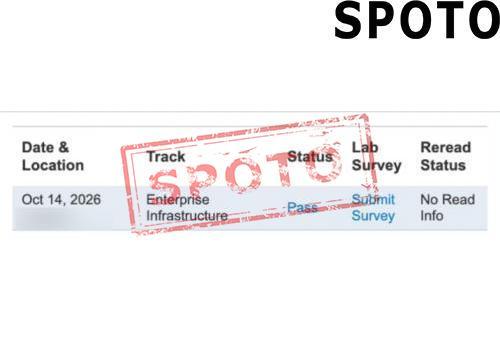
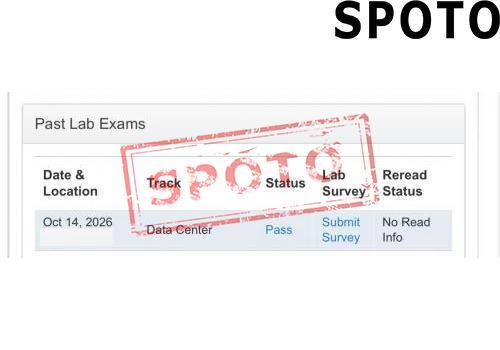
 

Latest Passing Reports from SPOTO Candidates
sec lab

sec lab

sec lab

sec lab

EI LAB

EI LAB

EI Lab

EI Lab

EI Lab

EI Lab

EI Lab

EI Lab

DC LAB

DC LAB

sec lab

sec lab

EI LAB

EI LAB

EI LAB

EI LAB

Write a Reply or Comment
Home/Blog/The Automation Frontier: Mastering the CCIE Automation v1.1 (2026 Update)
The Automation Frontier: Mastering the CCIE Automation v1.1 (2026 Update)
SPOTO 2 2026-05-15 10:08:51
The Automation Frontier: Mastering the CCIE Automation v1.1 (2026 Update)

The networking world has officially crossed the rubicon. As we navigate through 2026, the transition from manual, box-by-box configuration to centralized, policy-driven orchestration is no longer a future goal—it is the baseline requirement for the modern enterprise. To reflect this reality, Cisco's recent rebranding of the DevNet Expert to the CCIE Automation v1.1 (effective February 2026) marks a significant milestone in the evolution of the "Expert" title.

For candidates pursuing their digits this year, the CCIE Automation v1.1 is not just a name change. It represents a tactical realignment of the blueprint to match the current industry obsession with Infrastructure as Code (IaC), Observability, and Cloud-Native integration. This blog serves as a comprehensive guide to the latest updates, the technical shifts in the blueprint, and a battle-tested roadmap for success.


1. The Strategic Rebranding: Why CCIE Automation?

For years, the "DevNet Expert" lived in a slightly different world than the traditional CCIE tracks. In February 2026, Cisco brought this certification fully into the CCIE family. The move to CCIE Automation v1.1 signals that automation is no longer a "niche" skill for developers but a core competency for network architects.

While the "delta" in technical content between the old DevNet v1.0 and the new Automation v1.1 is approximately 10%, the expectations for implementation have risen. The exam now focuses less on "writing a script that works" and more on "building an automated system that is scalable, secure, and maintainable."


2. Blueprint v1.1: The Technical Deep Dive

The 2026 update introduced several key shifts in the technology stack that candidates must master.

The Rise of Terraform and the Fall of Puppet

In the v1.1 blueprint, Puppet has been officially deprecated to make room for the undisputed king of IaC: Terraform (version 1.5+). Candidates are now expected to handle complex state management, provider configurations for Cisco ACI and SD-WAN, and the development of reusable Terraform modules. This reflects a industry-wide pivot toward declarative infrastructure.

From Monitoring to Observability

A major new focus in the 2026 lab is the shift from simple SNMP/Syslog monitoring to Full-Stack Observability. You are now expected to integrate telemetry data from Cisco platforms with modern observability stacks like Prometheus and Grafana. Understanding how to build dashboards and automated alerting loops based on Model-Driven Telemetry (MDT) is a critical new competency.

Containerization and Microservices

The blueprint has doubled down on Kubernetes (K8s) and Docker. As network services become increasingly containerized, the CCIE Automation candidate must be able to manage K8s resources, understand Ingress controllers, and automate the deployment of microservices within a CI/CD pipeline (typically utilizing GitLab CI or GitHub Actions).


3. The 8-Hour Gauntlet: Exam Structure

The exam maintains the standard CCIE format, split into two modules that test different hemispheres of the NetDevOps brain.

Module 1: Design (3 Hours)

In this module, you are the Lead Architect. You will be presented with business requirements, existing constraints, and technical goals. You must choose the right automation strategy.

The Challenge: You might need to decide between using Ansible for configuration drift management versus Terraform for initial resource provisioning.

2026 Focus: Designing "Secure-by-Design" automation workflows, incorporating OWASP API Security principles and secret management (e.g., HashiCorp Vault).

Module 2: Deploy, Operate, and Optimize (5 Hours)

This is the hands-on section. You are provided with a live environment consisting of Catalyst Center (DNA Center), vManage, APIC, and Nexus Dashboard.

Key Task: Using Python (3.9+) and REST APIs to extract real-time telemetry and modify fabric policies dynamically.

Troubleshooting: This is where the CCIE earns their stripes. You might be given a broken pyATS script or a failing Ansible playbook and tasked with fixing the logic under extreme time pressure.


4. The 16-Week Expert Roadmap

Preparing for the CCIE Automation v1.1 requires a structured, iterative approach. You cannot "cram" 5 years of DevOps experience into a few weeks.

Phase 1: Tooling and Foundations (Weeks 1-4)

Master the languages of the lab. Focus on Python 3.9+ (specifically the requests, json, and re libraries), YAML syntax, and Jinja2 templating. By the end of week 4, you should be able to take a raw Excel or JSON file and render a complex BGP configuration template without consulting documentation.

Phase 2: Controller API Mastery (Weeks 5-10)

Spend dedicated time on each "Big Three" controller:

Catalyst Center (DNA Center): Practice intent-based APIs for host onboarding and fabric management.

Catalyst SD-WAN (vManage): Master the /dataservice/ endpoints for policy pushes and device templating.

Cisco ACI (APIC): This is often the steepest learning curve. Understand the Management Information Tree (MIT) and how to navigate the object model using the ACI REST API.

Phase 3: IaC and Observability (Weeks 11-13)

This is the v1.1-specific phase. Build full environments using Terraform. Learn to manage Terraform state files and implement Prometheus/Grafana stacks to monitor your automated fabric. Integrate pyATS for "stateful validation" to ensure your automation actually achieved the desired network state.

Phase 4: Full-Scale Mock Exams (Weeks 14-16)

The CCIE is a test of time management. Perform full 8-hour simulations. Practice the art of "Doc-Finding"—you have access to Cisco documentation, so you must know exactly where the API reference for each controller is located to avoid wasting precious minutes.


5. Critical Success Factors: Expert Insights

Version Fidelity: The 2026 lab uses specific versions (e.g., Nexus OS 10.1, DNA Center 2.3). Ensure your local CML (Cisco Modeling Labs) or DevNet Sandboxes are aligned. A small syntax change in a JSON payload between versions can lead to a script failure.

Idempotency is king: If your script works once but fails when run a second time, it is not "expert" level code. Always ensure your automation is idempotent and handles exceptions gracefully.

Read the design first: Many candidates fail the DOO module because they didn't pay attention to the constraints set in the design module. The two modules are intrinsically linked.


Conclusion: The CCIE Automation v1.1 is a formidable challenge, but it is also the most rewarding certification in the current networking landscape. It validates that you are not just a user of technology, but an orchestrator of systems. By focusing on the integration of Terraform, Python APIs, and the Cisco Controller Ecosystem, you are preparing yourself for the highest echelon of the profession.

Stay ahead of the curve with SPOTO. Our platform evolves alongside Cisco, providing you with a version-accurate ecosystem that guarantees your skills are current. Instead of rote learning, you'll gain a mastery of the complex architectural logic essential for the CCIE. Partner with us to achieve your certification and lead the next generation of enterprise infrastructure.
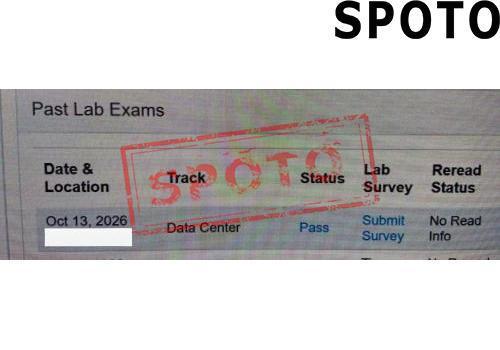
 

Latest Passing Reports from SPOTO Candidates
sec lab
sec lab
EI LAB
EI Lab
EI Lab
EI Lab
DC LAB
sec lab
EI LAB
EI LAB
Write a Reply or Comment
Don't Risk Your Certification Exam Success – Take Real Exam Questions
Eligible to sit for Exam? 100% Exam Pass GuaranteeEligible to sit for Exam? 100% Exam Pass Guarantee
SPOTO Ebooks
Recent Posts
The Automation Frontier: Mastering the CCIE Automation v1.1 (2026 Update)
The Road to the Digits: The 2026 CCIE Enterprise Infrastructure v1.1 Landscape
The Evolution of the Architect: Navigating the CCIE Automation v1.1 Update (2026)
Architecting the Future: Navigating the CCIE Data Center v3.1 Evolution (2026)
A Comprehensive Guide to CCIE Enterprise Infrastructure v1.1
Beyond the Script: Mastering the CCIE Automation v1.1 Lab (2026 Edition)
Navigating the Shift: A Comprehensive Guide to the CCIE Enterprise Infrastructure v1.1 Lab (2026 Update)
Master the Fabric: A Comprehensive Guide to the CCIE Data Center v3.1 (2026 Update)
Mastering the CCIE Automation v1.1: A Comprehensive 2026 Certification Blueprint
CCIE Automation v1.1 Core Essentials: The 2026 Mastery Framework
Excellent
5.0
Based on 5236 reviews
Request more information
I would like to receive email communications about product & offerings from SPOTO & its Affiliates.
I understand I can unsubscribe at any time.