Latest Cisco, PMP, AWS, CompTIA, Microsoft Materials on SALE Get Now Get Now
Home/
Blog/
A Comprehensive Guide to CCIE Enterprise Infrastructure v1.1
SPOTO 2 2026-05-13 10:03:21
A Comprehensive Guide to CCIE Enterprise Infrastructure v1.1

The prestigious CCIE Enterprise Infrastructure (EI) certification remains the "North Star" for network engineers worldwide. However, as we move through 2026, the definition of an "expert" has fundamentally shifted. Gone are the days when mastering the CLI of a standalone router was sufficient.

Today, the Cisco Certified Internetwork Expert must navigate a complex sea of Software-Defined Networking (SDN), Intent-Based Networking (IBN), and Programmability.

With the recent refinements in the CCIE EI v1.1 lab exam, candidates face a more integrated and "real-world" challenge than ever before. This blog explores the current state of the lab, the critical updates in 2026, and a strategic roadmap to conquering this 8-hour marathon.


1. The Anatomy of the 2026 Lab Exam

The CCIE EI lab exam continues to utilize a modular format designed to test the entire lifecycle of a network. Understanding this structure is the first step toward success.

Module 1: Design (3 Hours)

In this module, you act as a senior architect. You are provided with business requirements, constraints, and existing topologies. You must make high-level decisions regarding technology selection, capacity planning, and security policy. There is no device access; instead, you answer web-based questions (drag-and-drop, multiple-choice) that determine the "blueprint" of the network you will likely build in the next phase.

Module 2: Deploy, Operate, and Optimize (5 Hours)

This is the hands-on "heavy lifting" section. You are tasked with configuring, troubleshooting, and optimizing the network based on the design provided. It is a live environment where your ability to translate a business requirement into a functional configuration—either via CLI or a controller GUI—is tested under immense time pressure.


2. Core Technical Pivots: What Has Changed?

While the fundamental routing and switching principles remain, the 2026 update emphasizes the transition from "managing devices" to "managing fabrics."

The Dominance of Software-Defined Access (SDA)

Cisco Catalyst Center (formerly DNA Center) is now the primary interface for the campus network. In the 2026 lab, candidates must be proficient in building a fabric from scratch. This includes:

Underlay/Overlay orchestration: Understanding how LISP (Control Plane), VXLAN (Data Plane), and CTS/TrustSec (Policy Plane) work in unison.

Host Onboarding: Dynamically assigning users to Scalable Group Tags (SGTs).

Fusion Router Integration: Effectively leaking routes between the fabric and the shared services or the internet.

Catalyst SD-WAN Evolution

The integration of Cisco Catalyst SD-WAN (formerly Viptela) has matured significantly. The exam no longer just asks for basic VPN tunnels. It now focuses on:

Advanced Policy-Based Routing: Implementing Centralized and Localized policies for traffic engineering.

Direct Internet Access (DIA): Securing the branch with integrated Zscaler or Cisco Umbrella.

Cloud OnRamp: Optimizing SaaS application performance across the WAN.

Traditional Routing in a Modern Context

Don't be fooled—BGP, OSPF, and EIGRP still form the backbone of the exam. However, the context is different. You aren't just configuring BGP; you are likely configuring BGP as the routing protocol between an SD-WAN Edge and a legacy site, or as the protocol supporting a Multiprotocol Label Switching (MPLS) core.


3. The "New Core": Automation and Programmability (15%)

Automation is no longer a peripheral skill—it is the "glue" that binds the 2026 lab together. Candidates are expected to interact with REST APIs to pull data or push configurations to Catalyst Center and vManage.

Key skills tested include:

Python Scripting: Using the requests library to automate repetitive tasks.

Model-Driven Telemetry: Replacing legacy SNMP with YANG-based data models (gNMI/NETCONF/RESTCONF).

Jinja2 Templating: Generating complex configurations using data structures (YAML/JSON).

pyATS/Genie: Utilizing Cisco's official automation framework for "stateful" network validation.


4. A 16-Week Battle Plan for 2026

Preparing for the CCIE EI in 2026 requires a shift in study habits. You cannot simply memorize commands; you must understand the underlying logic of the controllers.

Phase 1: The Foundations (Weeks 1–4)

Focus on CCNP-level Routing and Switching. Ensure you can configure VRFs, OSPF areas, and BGP attributes without thinking. Mastering the CLI foundation is essential because you will lose time later if you struggle with basic routing.

Phase 2: SD-WAN and SDA Sprints (Weeks 5–10)

This is where most candidates fail. You need a dedicated lab environment (CML 2.x or a physical rack) to practice:

SDA Fabric build-up: Do it 10 times until you can do it with your eyes closed.

SD-WAN Controller Onboarding: Get comfortable with the vBond, vSmart, and vManage relationship.

Phase 3: The Automation Engine (Weeks 11–13)

Do not leave automation for the last week. Practice calling APIs. Learn how to parse a JSON response to find specific device status codes. Integrate pyATS into your labbing routine to verify your routing table after a configuration change.

Phase 4: Full-Scale Mock Exams (Weeks 14–16)

The CCIE is a test of Time Management. You must take at least three full 8-hour mock exams. This builds the mental stamina required to stay focused when things break in the 7th hour.


5. Critical Success Factors: Tips from the Field

Read the Entire Design Module: Many candidates rush through Module 1. However, the constraints you agree to in Design often dictate the configuration required in Module 2.

Verify, Verify, Verify: In the lab, a "ping" is not enough. You must verify that the traffic is following the specific path dictated by the task (e.g., via a specific SD-WAN policy).

Leverage Documentation: You have access to the Cisco Documentation during the exam. Practice finding the specific syntax for "EIGRP Over the Top" or "ZBF" in under two minutes.

Mindset Management: If a task in Module 2 is taking more than 20 minutes, skip it and come back. You need the "low-hanging fruit" points to build a buffer.


Conclusion: The CCIE Enterprise Infrastructure v1.1 update in 2026 is a reflection of the industry's move toward agility and automation. It is a formidable challenge that requires a blend of deep technical knowledge, architectural foresight, and coding proficiency.

By embracing the shift toward Software-Defined Networking and treating automation as a core competency rather than an afterthought, you can master the fabric and join the elite ranks of CCIE professionals. The road is long, the lab is hard, but the "Expert" title is a lifelong testament to your resilience and skill.

SPOTO is your strategic partner in professional evolution. We offer a synchronized, version-accurate learning ecosystem that guarantees your preparation stays perfectly aligned with current Cisco standards. By moving beyond rote memorization, we empower you to master the architectural logic required of a true expert. Achieve your CCIE status with SPOTO and take your place at the forefront of enterprise networking.
 

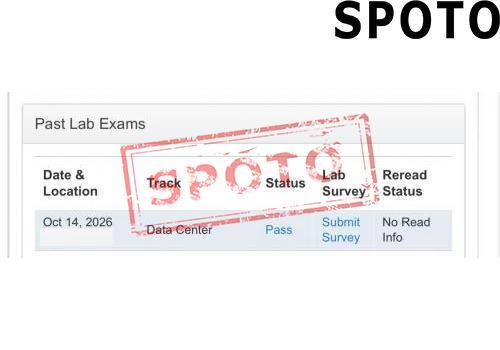
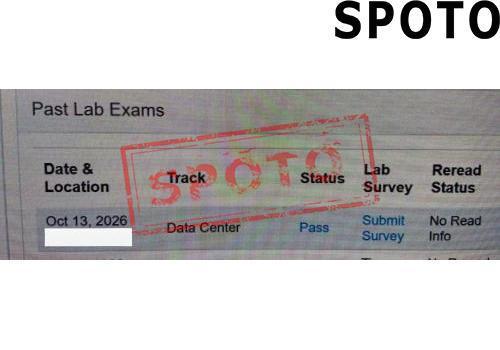
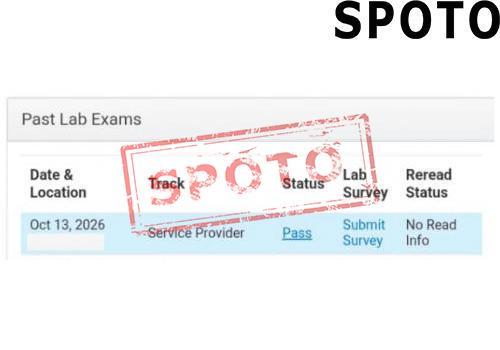
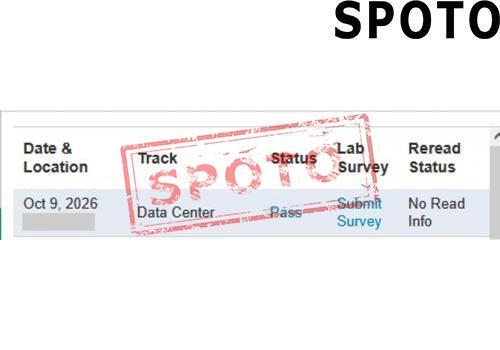
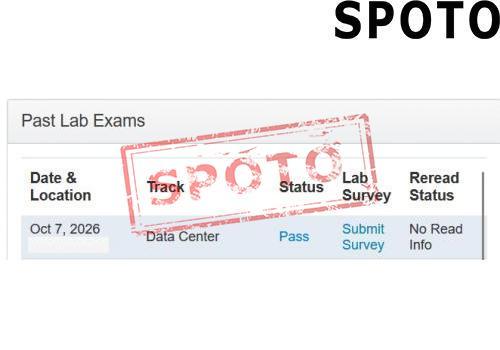
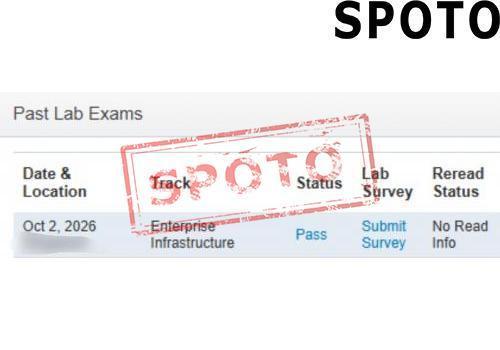
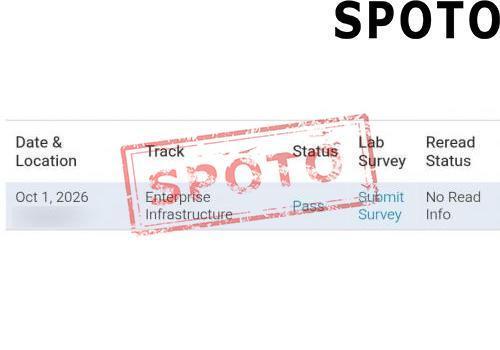
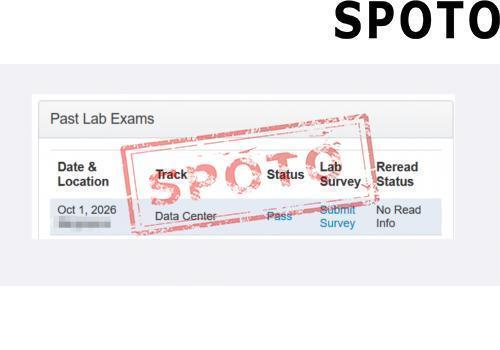
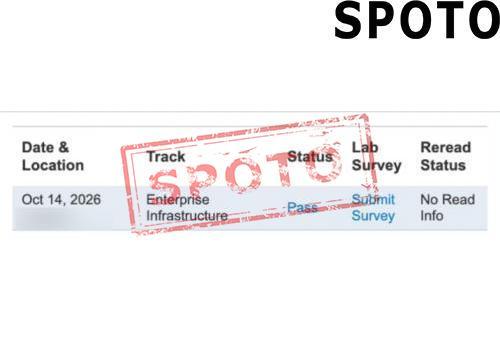
Latest Passing Reports from SPOTO Candidates
sec lab

sec lab

EI LAB

EI LAB

EI Lab

EI Lab

EI Lab

EI Lab

EI Lab

EI Lab

DC LAB

DC LAB

sec lab

sec lab

EI LAB

EI LAB

EI LAB

EI LAB

EI LAB

EI LAB

Write a Reply or Comment
Home/Blog/A Comprehensive Guide to CCIE Enterprise Infrastructure v1.1
A Comprehensive Guide to CCIE Enterprise Infrastructure v1.1
SPOTO 2 2026-05-13 10:03:21
A Comprehensive Guide to CCIE Enterprise Infrastructure v1.1

The prestigious CCIE Enterprise Infrastructure (EI) certification remains the "North Star" for network engineers worldwide. However, as we move through 2026, the definition of an "expert" has fundamentally shifted. Gone are the days when mastering the CLI of a standalone router was sufficient.

Today, the Cisco Certified Internetwork Expert must navigate a complex sea of Software-Defined Networking (SDN), Intent-Based Networking (IBN), and Programmability.

With the recent refinements in the CCIE EI v1.1 lab exam, candidates face a more integrated and "real-world" challenge than ever before. This blog explores the current state of the lab, the critical updates in 2026, and a strategic roadmap to conquering this 8-hour marathon.


1. The Anatomy of the 2026 Lab Exam

The CCIE EI lab exam continues to utilize a modular format designed to test the entire lifecycle of a network. Understanding this structure is the first step toward success.

Module 1: Design (3 Hours)

In this module, you act as a senior architect. You are provided with business requirements, constraints, and existing topologies. You must make high-level decisions regarding technology selection, capacity planning, and security policy. There is no device access; instead, you answer web-based questions (drag-and-drop, multiple-choice) that determine the "blueprint" of the network you will likely build in the next phase.

Module 2: Deploy, Operate, and Optimize (5 Hours)

This is the hands-on "heavy lifting" section. You are tasked with configuring, troubleshooting, and optimizing the network based on the design provided. It is a live environment where your ability to translate a business requirement into a functional configuration—either via CLI or a controller GUI—is tested under immense time pressure.


2. Core Technical Pivots: What Has Changed?

While the fundamental routing and switching principles remain, the 2026 update emphasizes the transition from "managing devices" to "managing fabrics."

The Dominance of Software-Defined Access (SDA)

Cisco Catalyst Center (formerly DNA Center) is now the primary interface for the campus network. In the 2026 lab, candidates must be proficient in building a fabric from scratch. This includes:

Underlay/Overlay orchestration: Understanding how LISP (Control Plane), VXLAN (Data Plane), and CTS/TrustSec (Policy Plane) work in unison.

Host Onboarding: Dynamically assigning users to Scalable Group Tags (SGTs).

Fusion Router Integration: Effectively leaking routes between the fabric and the shared services or the internet.

Catalyst SD-WAN Evolution

The integration of Cisco Catalyst SD-WAN (formerly Viptela) has matured significantly. The exam no longer just asks for basic VPN tunnels. It now focuses on:

Advanced Policy-Based Routing: Implementing Centralized and Localized policies for traffic engineering.

Direct Internet Access (DIA): Securing the branch with integrated Zscaler or Cisco Umbrella.

Cloud OnRamp: Optimizing SaaS application performance across the WAN.

Traditional Routing in a Modern Context

Don't be fooled—BGP, OSPF, and EIGRP still form the backbone of the exam. However, the context is different. You aren't just configuring BGP; you are likely configuring BGP as the routing protocol between an SD-WAN Edge and a legacy site, or as the protocol supporting a Multiprotocol Label Switching (MPLS) core.


3. The "New Core": Automation and Programmability (15%)

Automation is no longer a peripheral skill—it is the "glue" that binds the 2026 lab together. Candidates are expected to interact with REST APIs to pull data or push configurations to Catalyst Center and vManage.

Key skills tested include:

Python Scripting: Using the requests library to automate repetitive tasks.

Model-Driven Telemetry: Replacing legacy SNMP with YANG-based data models (gNMI/NETCONF/RESTCONF).

Jinja2 Templating: Generating complex configurations using data structures (YAML/JSON).

pyATS/Genie: Utilizing Cisco's official automation framework for "stateful" network validation.


4. A 16-Week Battle Plan for 2026

Preparing for the CCIE EI in 2026 requires a shift in study habits. You cannot simply memorize commands; you must understand the underlying logic of the controllers.

Phase 1: The Foundations (Weeks 1–4)

Focus on CCNP-level Routing and Switching. Ensure you can configure VRFs, OSPF areas, and BGP attributes without thinking. Mastering the CLI foundation is essential because you will lose time later if you struggle with basic routing.

Phase 2: SD-WAN and SDA Sprints (Weeks 5–10)

This is where most candidates fail. You need a dedicated lab environment (CML 2.x or a physical rack) to practice:

SDA Fabric build-up: Do it 10 times until you can do it with your eyes closed.

SD-WAN Controller Onboarding: Get comfortable with the vBond, vSmart, and vManage relationship.

Phase 3: The Automation Engine (Weeks 11–13)

Do not leave automation for the last week. Practice calling APIs. Learn how to parse a JSON response to find specific device status codes. Integrate pyATS into your labbing routine to verify your routing table after a configuration change.

Phase 4: Full-Scale Mock Exams (Weeks 14–16)

The CCIE is a test of Time Management. You must take at least three full 8-hour mock exams. This builds the mental stamina required to stay focused when things break in the 7th hour.


5. Critical Success Factors: Tips from the Field

Read the Entire Design Module: Many candidates rush through Module 1. However, the constraints you agree to in Design often dictate the configuration required in Module 2.

Verify, Verify, Verify: In the lab, a "ping" is not enough. You must verify that the traffic is following the specific path dictated by the task (e.g., via a specific SD-WAN policy).

Leverage Documentation: You have access to the Cisco Documentation during the exam. Practice finding the specific syntax for "EIGRP Over the Top" or "ZBF" in under two minutes.

Mindset Management: If a task in Module 2 is taking more than 20 minutes, skip it and come back. You need the "low-hanging fruit" points to build a buffer.


Conclusion: The CCIE Enterprise Infrastructure v1.1 update in 2026 is a reflection of the industry's move toward agility and automation. It is a formidable challenge that requires a blend of deep technical knowledge, architectural foresight, and coding proficiency.

By embracing the shift toward Software-Defined Networking and treating automation as a core competency rather than an afterthought, you can master the fabric and join the elite ranks of CCIE professionals. The road is long, the lab is hard, but the "Expert" title is a lifelong testament to your resilience and skill.

SPOTO is your strategic partner in professional evolution. We offer a synchronized, version-accurate learning ecosystem that guarantees your preparation stays perfectly aligned with current Cisco standards. By moving beyond rote memorization, we empower you to master the architectural logic required of a true expert. Achieve your CCIE status with SPOTO and take your place at the forefront of enterprise networking.
 

Latest Passing Reports from SPOTO Candidates
sec lab
EI LAB
EI Lab
EI Lab
EI Lab
DC LAB
sec lab
EI LAB
EI LAB
EI LAB
Write a Reply or Comment
Don't Risk Your Certification Exam Success – Take Real Exam Questions
Eligible to sit for Exam? 100% Exam Pass GuaranteeEligible to sit for Exam? 100% Exam Pass Guarantee
SPOTO Ebooks
Recent Posts
A Comprehensive Guide to CCIE Enterprise Infrastructure v1.1
Beyond the Script: Mastering the CCIE Automation v1.1 Lab (2026 Edition)
Navigating the Shift: A Comprehensive Guide to the CCIE Enterprise Infrastructure v1.1 Lab (2026 Update)
Master the Fabric: A Comprehensive Guide to the CCIE Data Center v3.1 (2026 Update)
Mastering the CCIE Automation v1.1: A Comprehensive 2026 Certification Blueprint
CCIE Automation v1.1 Core Essentials: The 2026 Mastery Framework
Elevating to Expert: A Strategic Blueprint for Mastering CCIE Enterprise Infrastructure v1.1
Mastering the CCIE Data Center v3.1: A Definitive 2026 Preparation Blueprint
CCIE Data Center v3.1 Mastery: A Definitive Guide to the 2026 Lab Transformation
Architecting the Future: An Advanced Blueprint for CCIE Enterprise Infrastructure (v1.1) Success
Excellent
5.0
Based on 5236 reviews
Request more information
I would like to receive email communications about product & offerings from SPOTO & its Affiliates.
I understand I can unsubscribe at any time.