Latest Cisco, PMP, AWS, CompTIA, Microsoft Materials on SALE Get Now Get Now
Home/
Blog/
Navigating the Shift: A Comprehensive Guide to the CCIE Enterprise Infrastructure v1.1 Lab (2026 Update)
SPOTO 2 2026-05-12 10:17:18
Navigating the Shift: A Comprehensive Guide to the CCIE Enterprise Infrastructure v1.1 Lab (2026 Update)

The prestigious CCIE Enterprise Infrastructure (EI) certification has long been the North Star for network engineers worldwide. However, as we move through 2026, the certification has transcended traditional routing and switching. The transition from v1.0 to v1.1—and the subsequent "delta" updates occurring in early 2026—has redefined what it means to be an expert.

Today's CCIE EI lab is no longer just about memorizing CLI commands; it is a holistic test of an engineer's ability to design, deploy, and automate a software-defined enterprise ecosystem. This blog explores the latest exam fluctuations, technological shifts, and the roadmap to success in the current 2026 landscape.


1. The v1.1 Blueprint: More than a Version Bump

While the core pillars of the CCIE EI remain, the 2026 updates (v1.1) have introduced critical shifts in software versions and technological focus. The naming conventions have shifted to align with Cisco’s rebranding: Cisco DNA Center is now frequently referred to as Cisco Catalyst Center, and vManage has evolved into Cisco Catalyst SD-WAN Manager.

The Two-Module Rigor

The exam structure remains an 8-hour marathon divided into two distinct modules:

Design (3 Hours): A scenario-based module where you act as a consultant. You cannot access live devices. You must analyze business requirements and choose the best architectural paths for SD-WAN, SDA, and traditional routing.

Deploy, Operate, and Optimize (5 Hours): The hands-on portion. Here, the "exam fluctuations" are most apparent, with increased complexity in how Software-Defined Access (SDA) interacts with legacy MPLS or BGP underlays.


2. Core Technological Fluctuations in 2026

Candidates in 2026 are reporting that the "traditional" portions of the lab are becoming more integrated with "modern" overlays. It is no longer enough to configure OSPF or BGP in isolation; you must understand how they serve as the underlay for a fabric environment.

The SDA Complexity Peak

Software-Defined Access (SDA) continues to be the "make or break" section for many. In the latest 2026 lab variants, there is a heavy emphasis on:

Multi-site Fabric: Connecting disparate fabric sites across a non-fabric IP backbone.

LISP and VXLAN Deep-Dives: Troubleshooting the control plane (LISP) and data plane (VXLAN) when endpoint registration fails.

Fusion Router Integration: The critical "hand-off" between the SDA fabric and the external network (shared services and Internet).

SD-WAN: The Catalyst Evolution

Cisco Catalyst SD-WAN (formerly Viptela) has seen significant updates in the lab. The 2026 variants shift focus away from basic connectivity toward:

Advanced Policy Orchestration: Implementing centralized control policies for traffic engineering and decentralized data policies for security.

AAR (Application-Aware Routing): Ensuring that business-critical traffic (like Voice or SaaS) meets specific SLA parameters (latency, jitter, loss) before being routed.

Cloud OnRamp: Integrating the enterprise WAN with cloud service providers (AWS/Azure).


3. The Automation Gap: From Scripting to IaC

One of the most significant changes in the 2026 lab environment is the weight of infrastructure as code (IaC). Automation now accounts for 15% of the total score, but its influence is felt everywhere.

In earlier versions, knowing a bit of Python or Netmiko might have sufficed. In the current v1.1 lab, candidates are expected to interact with REST APIs for both Catalyst Center and SD-WAN Manager. You must be comfortable with:

Python Requests Library: Authenticating and executing GET/POST/PUT requests to modify fabric settings.

JSON/YAMl Data Parsing: Handling the data structures returned by modern controllers.

Ansible/Terraform Foundations: While Python remains dominant, understanding the declarative nature of Terraform for underlay provisioning is becoming increasingly relevant.


4. Rigorous Preparation: The 16-Week Blueprint

Given the high failure rate and the complexity of 2026's lab variants, a structured approach is mandatory.

Phase 1: The Underlay Foundations (Weeks 1-4)

Master IPv4/IPv6 routing (EIGRP, OSPF, BGP), multicast, and MPLS. You cannot build a software-defined house on a shaky traditional foundation. Focus on BGP as the underlay protocol, as it is the most common scenario in modern fabric designs.

Phase 2: The Software-Defined Deep Dive (Weeks 5-10)

Spend equal time on SDA and SD-WAN.

For SDA, focus on Catalyst Center workflows: Discovery, Inventory, Provision, and Fabric Site creation.

For SD-WAN, master the template hierarchy: Feature Templates → Device Templates. Practice CLI-based troubleshooting on the vEdge/cEdge when the GUI fails to push a configuration.

Phase 3: Automation and Programmability (Weeks 11-13)

Do not leave this for the last week. Dedicate time to learning how to use the API Browser within Catalyst Center. Practice writing scripts that can pull inventory data or update an interface description across multiple devices.

Phase 4: Full-Scale Mock Labs (Weeks 14-16)

Simulate the 8-hour environment. Most candidates fail not because of a lack of knowledge, but because of poor time management. In the 2026 lab, if you spend more than 45 minutes on a single OSPF issue, you will likely run out of time for the automation or SDA sections.


5. Critical Tips for the 2026 Candidate

Verify, Don't Assume: After every configuration step in Module 2, use verification commands. The lab grading is binary; if the end-to-end connectivity isn't there, you get zero points for that section.

Read the Design Module Carefully: The Design module often contains "Easter eggs" or hints that apply to the DOO module. Pay close attention to constraints.

Master the Documentation: You have access to Cisco documentation during the exam. Practice navigating the Cisco website to find the specific command syntax for obscure features like Flexible NetFlow or IPsec VPNs.


Conclusion: The CCIE Enterprise Infrastructure v1.1 in 2026 is a formidable challenge that rewards the "versatile engineer"—someone who is as comfortable with a Python IDE as they are with a serial console cable. By focusing on the integration points between traditional routing and software-defined fabrics, and by embracing automation as a core competency, you can navigate the latest lab fluctuations and join the elite ranks of CCIE holders.

Your journey to CCIE starts here. At SPOTO, we keep our resources version-correct and fully aligned with Cisco’s evolving standards so you can study with confidence. We don't just help you pass; we help you understand the 'why' behind the architecture. Join SPOTO today, earn your CCIE, and become the networking leader the future demands."
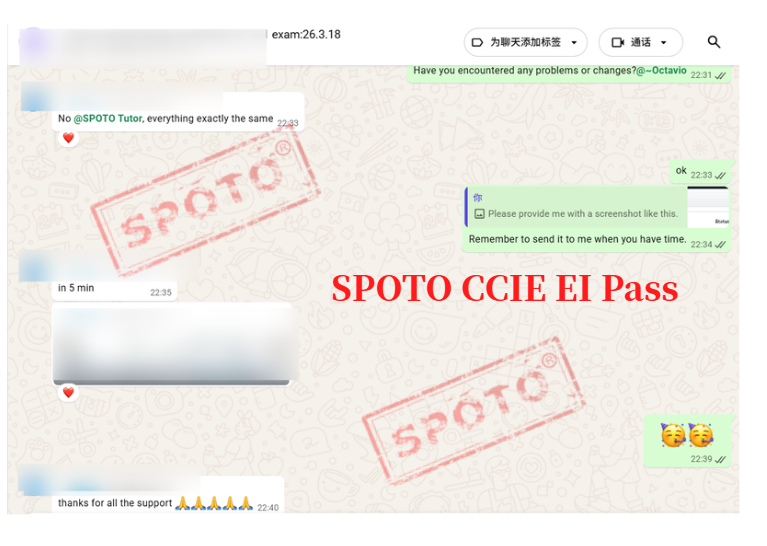
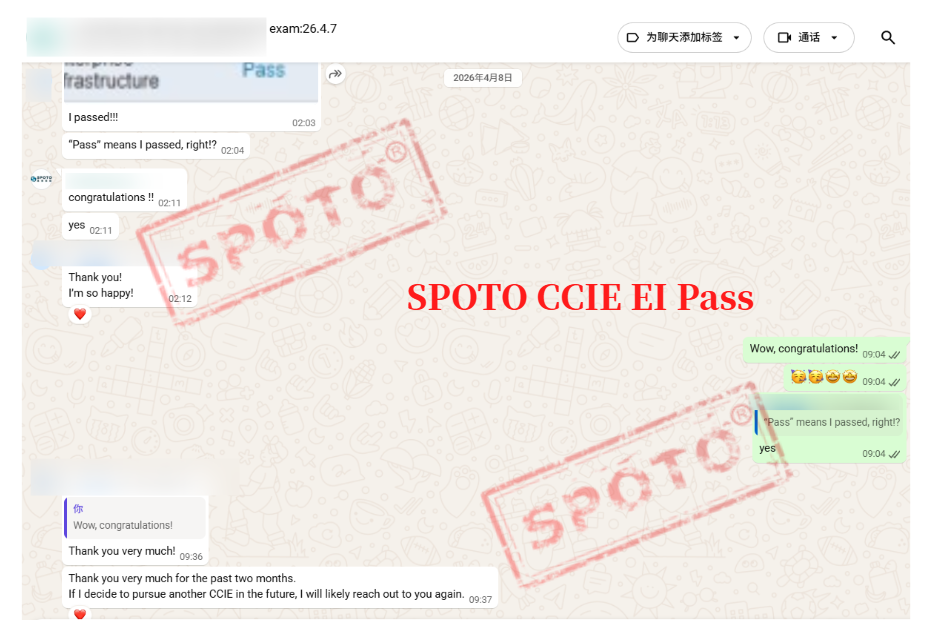
 

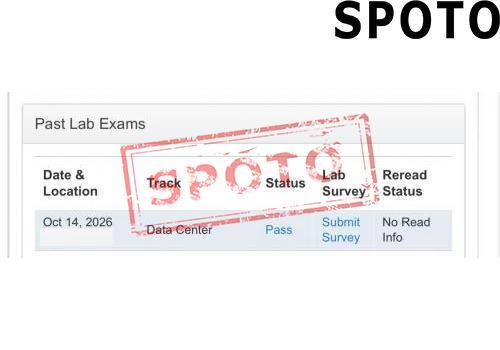
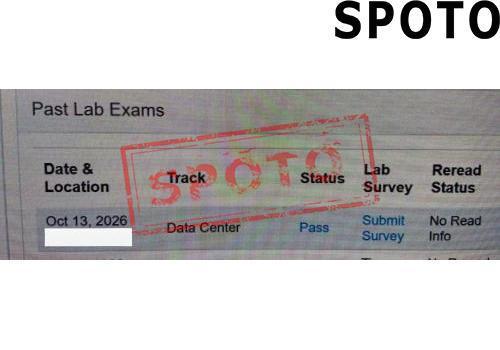
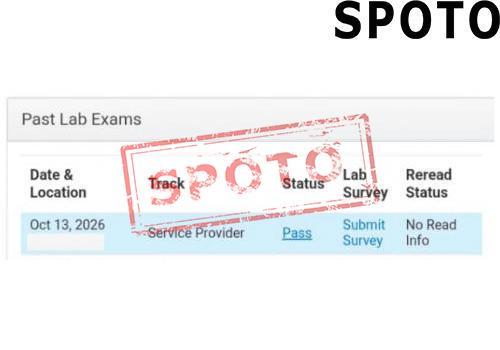
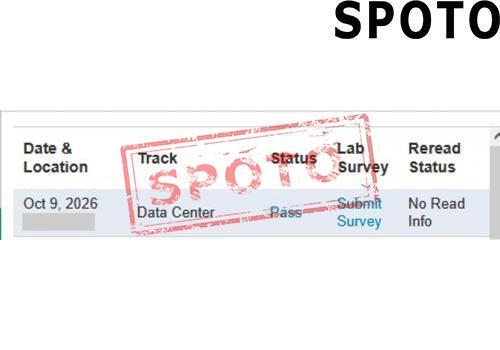
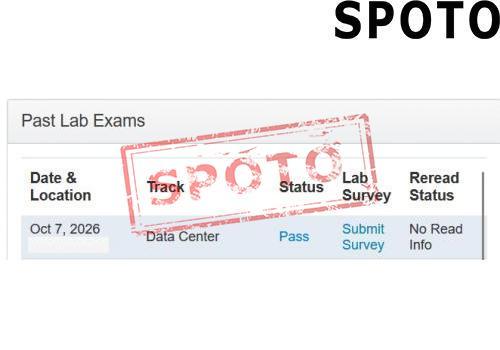
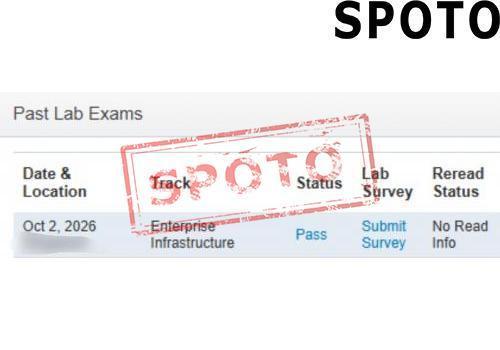
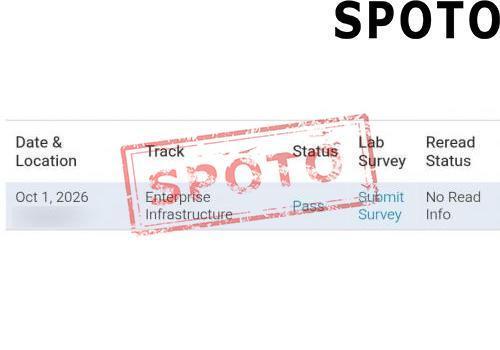
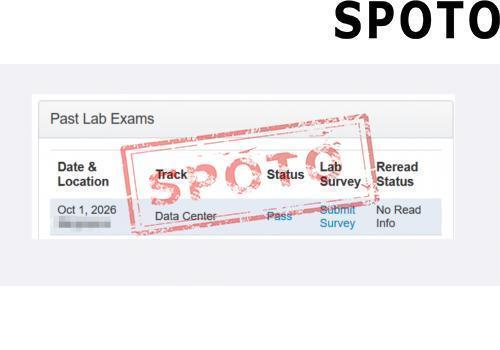
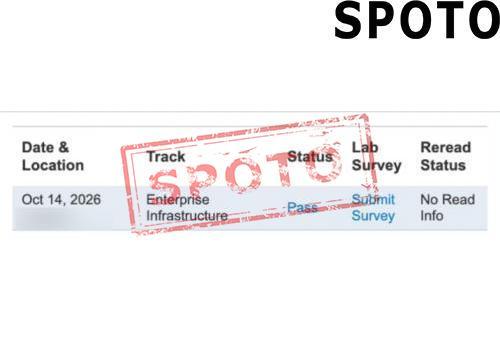
Latest Passing Reports from SPOTO Candidates
sec lab

sec lab

EI LAB

EI LAB

EI Lab

EI Lab

EI Lab

EI Lab

EI Lab

EI Lab

DC LAB

DC LAB

sec lab

sec lab

EI LAB

EI LAB

EI LAB

EI LAB

EI LAB

EI LAB

Write a Reply or Comment
Home/Blog/Navigating the Shift: A Comprehensive Guide to the CCIE Enterprise Infrastructure v1.1 Lab (2026 Update)
Navigating the Shift: A Comprehensive Guide to the CCIE Enterprise Infrastructure v1.1 Lab (2026 Update)
SPOTO 2 2026-05-12 10:17:18
Navigating the Shift: A Comprehensive Guide to the CCIE Enterprise Infrastructure v1.1 Lab (2026 Update)

The prestigious CCIE Enterprise Infrastructure (EI) certification has long been the North Star for network engineers worldwide. However, as we move through 2026, the certification has transcended traditional routing and switching. The transition from v1.0 to v1.1—and the subsequent "delta" updates occurring in early 2026—has redefined what it means to be an expert.

Today's CCIE EI lab is no longer just about memorizing CLI commands; it is a holistic test of an engineer's ability to design, deploy, and automate a software-defined enterprise ecosystem. This blog explores the latest exam fluctuations, technological shifts, and the roadmap to success in the current 2026 landscape.


1. The v1.1 Blueprint: More than a Version Bump

While the core pillars of the CCIE EI remain, the 2026 updates (v1.1) have introduced critical shifts in software versions and technological focus. The naming conventions have shifted to align with Cisco’s rebranding: Cisco DNA Center is now frequently referred to as Cisco Catalyst Center, and vManage has evolved into Cisco Catalyst SD-WAN Manager.

The Two-Module Rigor

The exam structure remains an 8-hour marathon divided into two distinct modules:

Design (3 Hours): A scenario-based module where you act as a consultant. You cannot access live devices. You must analyze business requirements and choose the best architectural paths for SD-WAN, SDA, and traditional routing.

Deploy, Operate, and Optimize (5 Hours): The hands-on portion. Here, the "exam fluctuations" are most apparent, with increased complexity in how Software-Defined Access (SDA) interacts with legacy MPLS or BGP underlays.


2. Core Technological Fluctuations in 2026

Candidates in 2026 are reporting that the "traditional" portions of the lab are becoming more integrated with "modern" overlays. It is no longer enough to configure OSPF or BGP in isolation; you must understand how they serve as the underlay for a fabric environment.

The SDA Complexity Peak

Software-Defined Access (SDA) continues to be the "make or break" section for many. In the latest 2026 lab variants, there is a heavy emphasis on:

Multi-site Fabric: Connecting disparate fabric sites across a non-fabric IP backbone.

LISP and VXLAN Deep-Dives: Troubleshooting the control plane (LISP) and data plane (VXLAN) when endpoint registration fails.

Fusion Router Integration: The critical "hand-off" between the SDA fabric and the external network (shared services and Internet).

SD-WAN: The Catalyst Evolution

Cisco Catalyst SD-WAN (formerly Viptela) has seen significant updates in the lab. The 2026 variants shift focus away from basic connectivity toward:

Advanced Policy Orchestration: Implementing centralized control policies for traffic engineering and decentralized data policies for security.

AAR (Application-Aware Routing): Ensuring that business-critical traffic (like Voice or SaaS) meets specific SLA parameters (latency, jitter, loss) before being routed.

Cloud OnRamp: Integrating the enterprise WAN with cloud service providers (AWS/Azure).


3. The Automation Gap: From Scripting to IaC

One of the most significant changes in the 2026 lab environment is the weight of infrastructure as code (IaC). Automation now accounts for 15% of the total score, but its influence is felt everywhere.

In earlier versions, knowing a bit of Python or Netmiko might have sufficed. In the current v1.1 lab, candidates are expected to interact with REST APIs for both Catalyst Center and SD-WAN Manager. You must be comfortable with:

Python Requests Library: Authenticating and executing GET/POST/PUT requests to modify fabric settings.

JSON/YAMl Data Parsing: Handling the data structures returned by modern controllers.

Ansible/Terraform Foundations: While Python remains dominant, understanding the declarative nature of Terraform for underlay provisioning is becoming increasingly relevant.


4. Rigorous Preparation: The 16-Week Blueprint

Given the high failure rate and the complexity of 2026's lab variants, a structured approach is mandatory.

Phase 1: The Underlay Foundations (Weeks 1-4)

Master IPv4/IPv6 routing (EIGRP, OSPF, BGP), multicast, and MPLS. You cannot build a software-defined house on a shaky traditional foundation. Focus on BGP as the underlay protocol, as it is the most common scenario in modern fabric designs.

Phase 2: The Software-Defined Deep Dive (Weeks 5-10)

Spend equal time on SDA and SD-WAN.

For SDA, focus on Catalyst Center workflows: Discovery, Inventory, Provision, and Fabric Site creation.

For SD-WAN, master the template hierarchy: Feature Templates → Device Templates. Practice CLI-based troubleshooting on the vEdge/cEdge when the GUI fails to push a configuration.

Phase 3: Automation and Programmability (Weeks 11-13)

Do not leave this for the last week. Dedicate time to learning how to use the API Browser within Catalyst Center. Practice writing scripts that can pull inventory data or update an interface description across multiple devices.

Phase 4: Full-Scale Mock Labs (Weeks 14-16)

Simulate the 8-hour environment. Most candidates fail not because of a lack of knowledge, but because of poor time management. In the 2026 lab, if you spend more than 45 minutes on a single OSPF issue, you will likely run out of time for the automation or SDA sections.


5. Critical Tips for the 2026 Candidate

Verify, Don't Assume: After every configuration step in Module 2, use verification commands. The lab grading is binary; if the end-to-end connectivity isn't there, you get zero points for that section.

Read the Design Module Carefully: The Design module often contains "Easter eggs" or hints that apply to the DOO module. Pay close attention to constraints.

Master the Documentation: You have access to Cisco documentation during the exam. Practice navigating the Cisco website to find the specific command syntax for obscure features like Flexible NetFlow or IPsec VPNs.


Conclusion: The CCIE Enterprise Infrastructure v1.1 in 2026 is a formidable challenge that rewards the "versatile engineer"—someone who is as comfortable with a Python IDE as they are with a serial console cable. By focusing on the integration points between traditional routing and software-defined fabrics, and by embracing automation as a core competency, you can navigate the latest lab fluctuations and join the elite ranks of CCIE holders.

Your journey to CCIE starts here. At SPOTO, we keep our resources version-correct and fully aligned with Cisco’s evolving standards so you can study with confidence. We don't just help you pass; we help you understand the 'why' behind the architecture. Join SPOTO today, earn your CCIE, and become the networking leader the future demands."
 

Latest Passing Reports from SPOTO Candidates
sec lab
EI LAB
EI Lab
EI Lab
EI Lab
DC LAB
sec lab
EI LAB
EI LAB
EI LAB
Write a Reply or Comment
Don't Risk Your Certification Exam Success – Take Real Exam Questions
Eligible to sit for Exam? 100% Exam Pass GuaranteeEligible to sit for Exam? 100% Exam Pass Guarantee
SPOTO Ebooks
Recent Posts
Navigating the Shift: A Comprehensive Guide to the CCIE Enterprise Infrastructure v1.1 Lab (2026 Update)
Master the Fabric: A Comprehensive Guide to the CCIE Data Center v3.1 (2026 Update)
Mastering the CCIE Automation v1.1: A Comprehensive 2026 Certification Blueprint
CCIE Automation v1.1 Core Essentials: The 2026 Mastery Framework
Elevating to Expert: A Strategic Blueprint for Mastering CCIE Enterprise Infrastructure v1.1
Mastering the CCIE Data Center v3.1: A Definitive 2026 Preparation Blueprint
CCIE Data Center v3.1 Mastery: A Definitive Guide to the 2026 Lab Transformation
Architecting the Future: An Advanced Blueprint for CCIE Enterprise Infrastructure (v1.1) Success
Navigating the CCIE Data Center Lab v3.1: A Definitive 2026 Strategy for Success
Elevating the Enterprise: A Strategic Blueprint for CCIE Enterprise Infrastructure (v1.1) Success
Excellent
5.0
Based on 5236 reviews
Request more information
I would like to receive email communications about product & offerings from SPOTO & its Affiliates.
I understand I can unsubscribe at any time.