Latest Cisco, PMP, AWS, CompTIA, Microsoft Materials on SALE Get Now Get Now
Home/
Blog/
Navigating the CCIE Data Center Lab v3.1: A Definitive 2026 Strategy for Success
SPOTO 2 2026-05-07 09:54:02
Navigating the CCIE Data Center Lab v3.1: A Definitive 2026 Strategy for Success

As of February 2026, the CCIE Data Center Lab has evolved into version 3.1, reflecting the industry's pivot toward highly integrated and automated environments. The 8-hour exam maintains its rigorous two-part structure: a 3-hour Design module and a 5-hour Deployment, Operation, and Optimization module.

The updated curriculum is anchored by five fundamental pillars: ACI, NX-OS, UCS, Storage, and Automation. Most notably, Automation now commands a 15% weighting, serving as the ultimate litmus test for elite-level candidates. This guide outlines the essential changes and a structured path to achieving certification in this modernized landscape.


1. Technological Shifts in the v3.1 Curriculum

Effective February 26, 2026, the blueprint was recalibrated to prioritize modern fabric technologies over legacy protocols.

L2/L3 Connectivity & Fabric: Traditional Spanning Tree and older FCoE variants have been deprecated. The exam now spotlights OSPFv3 and BGP Multi-instance within EVPN-VXLAN fabrics.

Fabric Infrastructure: Cisco ACI version 5.2+ has solidified its role as the exam's core. The requirements have shifted toward complex scenarios involving Multi-Pod ACI, Inter-VRF communication, and MP-BGP, effectively replacing older technologies like OTV.

Compute & Storage: UCS Manager 4.0+ is the new baseline for server orchestration, with a heavy emphasis on service templates and seamless ACI integration. Storage has converged toward FC/FCoE and IP-based storage (NFS/iSCSI) on the MDS 9000 platform.

Automation Stack: Legacy Puppet scripting is out. The new standard requires proficiency in Python 3.9, Ansible 2.14, and Terraform 1.5 for stateful infrastructure management.


2. Strategic Impact of Weighting Changes

With ACI-related tasks now comprising over 40% of the total exam score, architectural depth is no longer optional. The difficulty curve in 2026 has steepened due to the requirement for "cross-technology integration."

Elite candidates are expected to move away from manual CLI configurations. Success now depends on the ability to deliver infrastructure through code—for instance, using a unified Ansible playbook to simultaneously provision UCS compute resources and enforce ACI security policies.


3. A Disciplined 12–16 Week Preparation Roadmap

Phase 1: Alignment & Foundations (Weeks 1–3)

Deconstruct the v3.1 blueprint to identify skill gaps. Focus on the building blocks of ACI (tenants, bridge domains, and contracts) and core NX-OS features like vPC and BGP EVPN. Establish your lab environment immediately; use the Cisco DevNet Sandbox for ACI 5.2 access and set up a local CML 2.0+ instance for automation testing.

Phase 2: Domain Deep-Dives (Weeks 4–10)

This is the intensive technical phase. Spend 90 minutes daily on advanced ACI topics such as micro-segmentation and multi-pod interconnectivity. Dedicate an additional hour to EVPN-VXLAN, specifically ARP suppression and traffic forwarding. In Automation, move beyond basic "GET" requests; practice full CRUD operations via REST APIs and manage infrastructure state using Terraform HCL.

Phase 3: High-Pressure Simulation (Weeks 11–16)

Execute full 8-hour mock exams weekly. Use the 3-hour Design module to master professional documentation and logical planning. During the 5-hour practical module, focus on speed and accuracy. Develop a "Fast-Check Manual"—a personal repository of ACI verification commands and reusable Python snippets to accelerate your deployment.


4. The Expert's Toolkit

Official Documentation: The Cisco DevNet Documentation Center is the gold standard for API references.

Simulation Tools: Cisco Modeling Labs (CML) remains the preferred platform for local topology testing.

Software Versions: Practice exclusively on NX-OS 10.1, ACI APIC 5.2, and UCS Manager 4.0.

Automation Suite: Proficiency in VS Code, Postman, and Git is essential for managing the automation workflow.


5. Tactical Advice for the Lab

The Version Trap: Ensure your practice environment matches the exam's software versions exactly. Version mismatches are the leading cause of syntax errors and failed configurations.

Master the Fabric: ACI is the gatekeeper. You must be able to troubleshoot fabric discovery and policy enforcement without constant reference to manuals.

The Automation Edge: Use Python and Ansible to automate repetitive tasks. This grants you a significant time buffer to handle complex troubleshooting in the final hours of the lab.

Root Cause Analysis: Practice by "breaking" your lab. Disable EVPN peerings or misconfigure ACI contracts to learn how to identify root causes through telemetry and log analysis under high pressure.


Summary: The transition to CCIE Data Center v3.1 marks the end of the "configuration-centric" era and the dawn of the "Architectural Integrator." To succeed in 2026, you must seamlessly weave together compute, storage, and fabric through the lens of modern automation. By following this structured roadmap and focusing on the synergy between ACI and EVPN-VXLAN, you will be prepared to earn the industry's most prestigious data center credential.
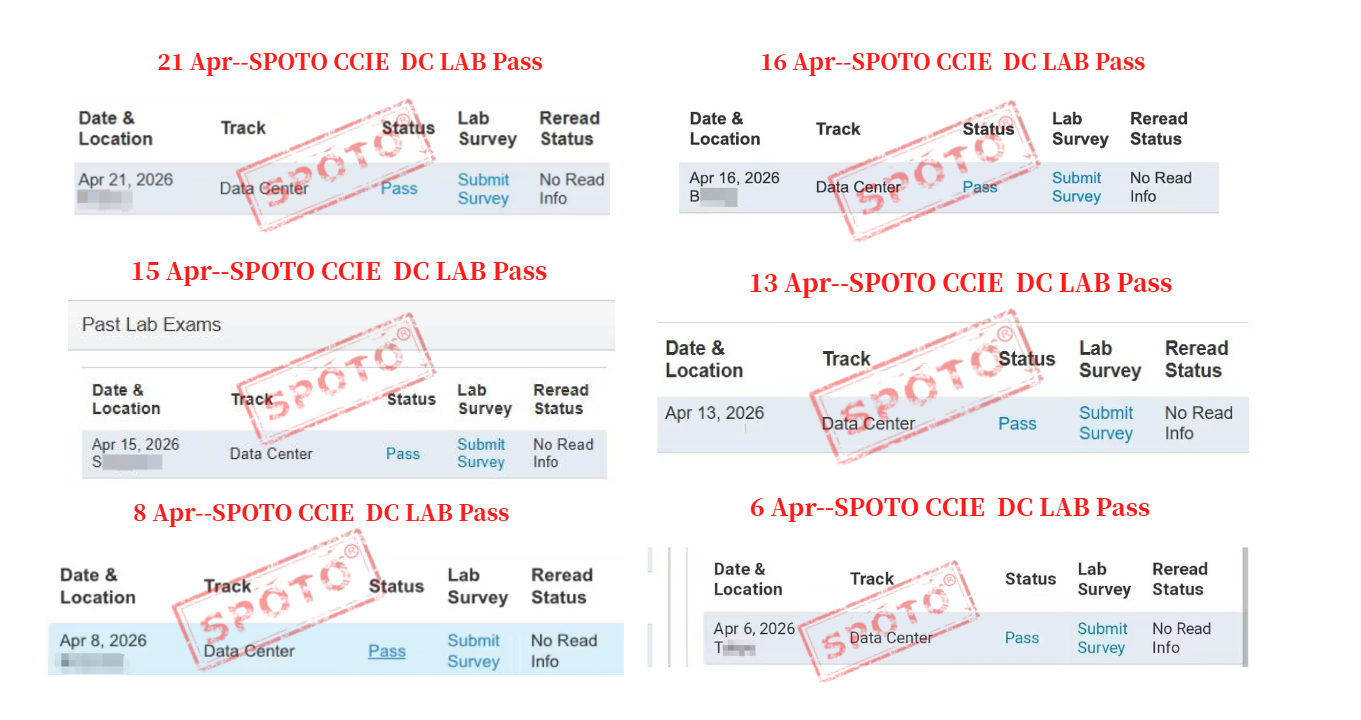
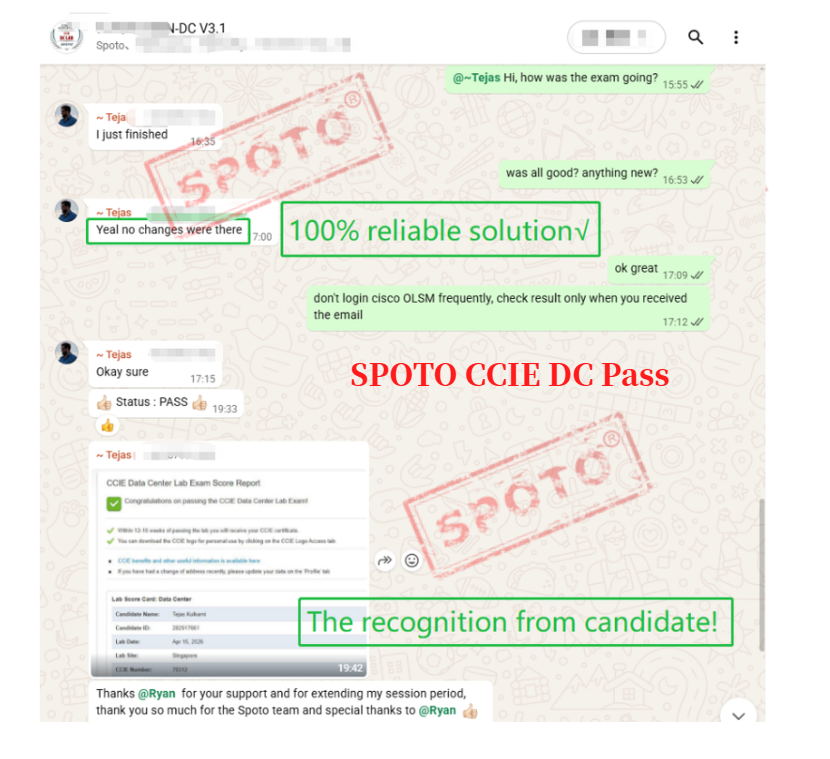
 

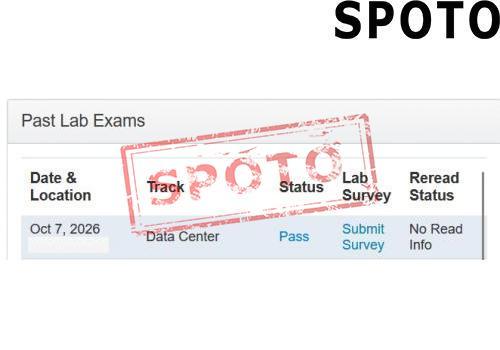
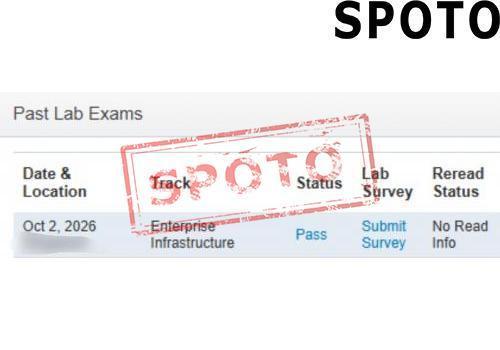
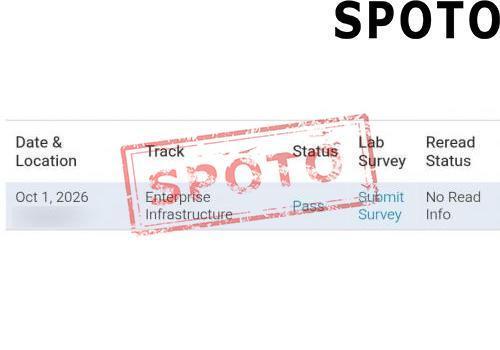
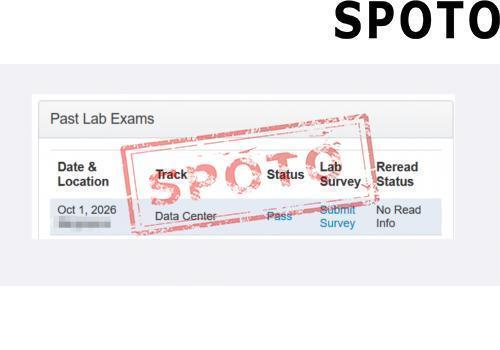
Latest Passing Reports from SPOTO Candidates
sec lab

sec lab

EI LAB

EI LAB

EI Lab

EI Lab

EI Lab

EI Lab

EI Lab

EI Lab

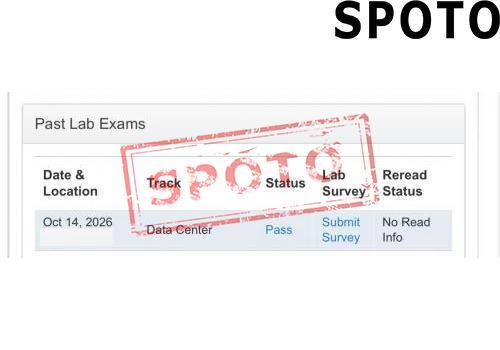
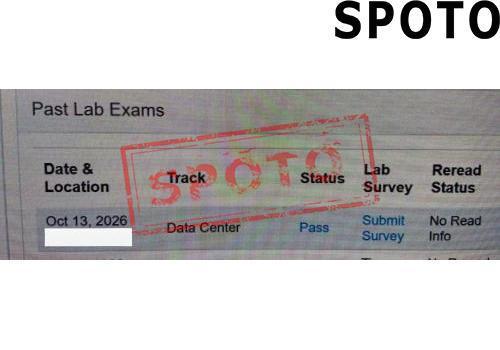
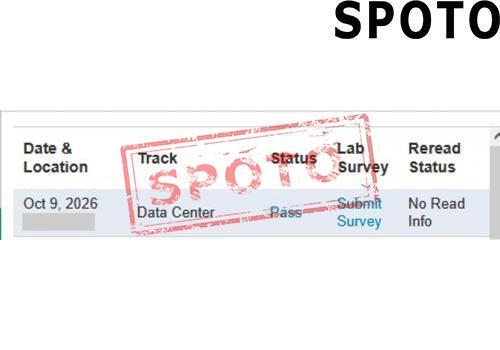
DC LAB

DC LAB

sec lab

sec lab

EI LAB

EI LAB

EI LAB

EI LAB

EI LAB

EI LAB

Write a Reply or Comment
Home/Blog/Navigating the CCIE Data Center Lab v3.1: A Definitive 2026 Strategy for Success
Navigating the CCIE Data Center Lab v3.1: A Definitive 2026 Strategy for Success
SPOTO 2 2026-05-07 09:54:02
Navigating the CCIE Data Center Lab v3.1: A Definitive 2026 Strategy for Success

As of February 2026, the CCIE Data Center Lab has evolved into version 3.1, reflecting the industry's pivot toward highly integrated and automated environments. The 8-hour exam maintains its rigorous two-part structure: a 3-hour Design module and a 5-hour Deployment, Operation, and Optimization module.

The updated curriculum is anchored by five fundamental pillars: ACI, NX-OS, UCS, Storage, and Automation. Most notably, Automation now commands a 15% weighting, serving as the ultimate litmus test for elite-level candidates. This guide outlines the essential changes and a structured path to achieving certification in this modernized landscape.


1. Technological Shifts in the v3.1 Curriculum

Effective February 26, 2026, the blueprint was recalibrated to prioritize modern fabric technologies over legacy protocols.

L2/L3 Connectivity & Fabric: Traditional Spanning Tree and older FCoE variants have been deprecated. The exam now spotlights OSPFv3 and BGP Multi-instance within EVPN-VXLAN fabrics.

Fabric Infrastructure: Cisco ACI version 5.2+ has solidified its role as the exam's core. The requirements have shifted toward complex scenarios involving Multi-Pod ACI, Inter-VRF communication, and MP-BGP, effectively replacing older technologies like OTV.

Compute & Storage: UCS Manager 4.0+ is the new baseline for server orchestration, with a heavy emphasis on service templates and seamless ACI integration. Storage has converged toward FC/FCoE and IP-based storage (NFS/iSCSI) on the MDS 9000 platform.

Automation Stack: Legacy Puppet scripting is out. The new standard requires proficiency in Python 3.9, Ansible 2.14, and Terraform 1.5 for stateful infrastructure management.


2. Strategic Impact of Weighting Changes

With ACI-related tasks now comprising over 40% of the total exam score, architectural depth is no longer optional. The difficulty curve in 2026 has steepened due to the requirement for "cross-technology integration."

Elite candidates are expected to move away from manual CLI configurations. Success now depends on the ability to deliver infrastructure through code—for instance, using a unified Ansible playbook to simultaneously provision UCS compute resources and enforce ACI security policies.


3. A Disciplined 12–16 Week Preparation Roadmap

Phase 1: Alignment & Foundations (Weeks 1–3)

Deconstruct the v3.1 blueprint to identify skill gaps. Focus on the building blocks of ACI (tenants, bridge domains, and contracts) and core NX-OS features like vPC and BGP EVPN. Establish your lab environment immediately; use the Cisco DevNet Sandbox for ACI 5.2 access and set up a local CML 2.0+ instance for automation testing.

Phase 2: Domain Deep-Dives (Weeks 4–10)

This is the intensive technical phase. Spend 90 minutes daily on advanced ACI topics such as micro-segmentation and multi-pod interconnectivity. Dedicate an additional hour to EVPN-VXLAN, specifically ARP suppression and traffic forwarding. In Automation, move beyond basic "GET" requests; practice full CRUD operations via REST APIs and manage infrastructure state using Terraform HCL.

Phase 3: High-Pressure Simulation (Weeks 11–16)

Execute full 8-hour mock exams weekly. Use the 3-hour Design module to master professional documentation and logical planning. During the 5-hour practical module, focus on speed and accuracy. Develop a "Fast-Check Manual"—a personal repository of ACI verification commands and reusable Python snippets to accelerate your deployment.


4. The Expert's Toolkit

Official Documentation: The Cisco DevNet Documentation Center is the gold standard for API references.

Simulation Tools: Cisco Modeling Labs (CML) remains the preferred platform for local topology testing.

Software Versions: Practice exclusively on NX-OS 10.1, ACI APIC 5.2, and UCS Manager 4.0.

Automation Suite: Proficiency in VS Code, Postman, and Git is essential for managing the automation workflow.


5. Tactical Advice for the Lab

The Version Trap: Ensure your practice environment matches the exam's software versions exactly. Version mismatches are the leading cause of syntax errors and failed configurations.

Master the Fabric: ACI is the gatekeeper. You must be able to troubleshoot fabric discovery and policy enforcement without constant reference to manuals.

The Automation Edge: Use Python and Ansible to automate repetitive tasks. This grants you a significant time buffer to handle complex troubleshooting in the final hours of the lab.

Root Cause Analysis: Practice by "breaking" your lab. Disable EVPN peerings or misconfigure ACI contracts to learn how to identify root causes through telemetry and log analysis under high pressure.


Summary: The transition to CCIE Data Center v3.1 marks the end of the "configuration-centric" era and the dawn of the "Architectural Integrator." To succeed in 2026, you must seamlessly weave together compute, storage, and fabric through the lens of modern automation. By following this structured roadmap and focusing on the synergy between ACI and EVPN-VXLAN, you will be prepared to earn the industry's most prestigious data center credential.
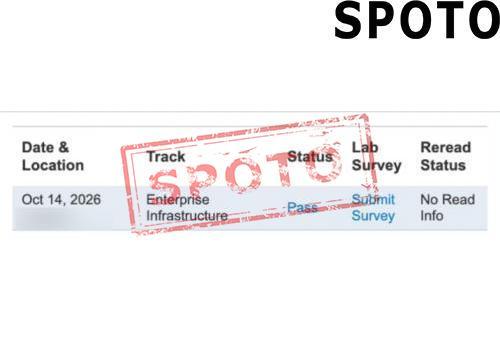
 

Latest Passing Reports from SPOTO Candidates
sec lab
EI LAB
EI Lab
EI Lab
EI Lab
DC LAB
sec lab
EI LAB
EI LAB
EI LAB
Write a Reply or Comment
Don't Risk Your Certification Exam Success – Take Real Exam Questions
Eligible to sit for Exam? 100% Exam Pass GuaranteeEligible to sit for Exam? 100% Exam Pass Guarantee
SPOTO Ebooks
Recent Posts
Navigating the Shift: A Comprehensive Guide to the CCIE Enterprise Infrastructure v1.1 Lab (2026 Update)
Master the Fabric: A Comprehensive Guide to the CCIE Data Center v3.1 (2026 Update)
Mastering the CCIE Automation v1.1: A Comprehensive 2026 Certification Blueprint
CCIE Automation v1.1 Core Essentials: The 2026 Mastery Framework
Elevating to Expert: A Strategic Blueprint for Mastering CCIE Enterprise Infrastructure v1.1
Mastering the CCIE Data Center v3.1: A Definitive 2026 Preparation Blueprint
CCIE Data Center v3.1 Mastery: A Definitive Guide to the 2026 Lab Transformation
Architecting the Future: An Advanced Blueprint for CCIE Enterprise Infrastructure (v1.1) Success
Navigating the CCIE Data Center Lab v3.1: A Definitive 2026 Strategy for Success
Elevating the Enterprise: A Strategic Blueprint for CCIE Enterprise Infrastructure (v1.1) Success
Excellent
5.0
Based on 5236 reviews
Request more information
I would like to receive email communications about product & offerings from SPOTO & its Affiliates.
I understand I can unsubscribe at any time.