Latest Cisco, PMP, AWS, CompTIA, Microsoft Materials on SALE Get Now Get Now
Home/
Blog/
The Introduction and Guide to the Certified Information Security Manager® (CISM®) Exam in 2026
SPOTO 2 2026-04-14 11:00:23
The Introduction and Guide to the Certified Information Security Manager® (CISM®) Exam in 2026

1. CISM Certification Positioning

CISM is a globally recognized authoritative certification for information security management, launched by ISACA. It focuses on the core competencies of information security managers, emphasizing managing information security risks from a business perspective rather than a purely technical one.

In 2026, the value of the CISM certification further increased, becoming a core reference standard for companies recruiting information security managers, Chief Information Security Officers (CISOs), and other management positions. CISM holders are particularly competitive in industries with stringent compliance requirements, such as finance, healthcare, and government.


2. Latest Exam Information for 2026

Exam Format: 150 multiple-choice questions, 4-hour computer-based exam

Passing Standard: 450 out of 800

Exam Fee: $575 for ISACA members, $760 for non-members

Validity: Certification valid for 3 years, requires continuing professional education (CPE) to maintain validity

Prerequisites: 5 years of relevant work experience in information security management, including at least 3 years in 3 or more of the four CISM domains. Candidates can take the exam first and then complete the required work experience within 5 years of passing; otherwise, the certification will be invalid. No mandatory training is required, but officially recommended to complete the authorized training course to improve the pass rate.

Key Updates to the 2026 Exam Syllabus: A new exam syllabus will be implemented on November 3, 2026, emphasizing security strategy and plan development and adding content on enterprise and information security architecture technologies. Existing textbooks are valid until October 2026; new textbooks will be released in September 2026. The exam in the first half of 2026 will use the old syllabus, but changes to the syllabus in the second half of the year need to be monitored.


3. Detailed Explanation of the Four Core Knowledge Areas in 2026

(1) Information Security Governance (17%)

Focusing on aligning security strategy with business objectives is the core of CISM's management thinking.

Governance Framework Establishment: Master international standards such as COBIT and ISO/IEC 27001, design a security governance structure suitable for the company's scale, and clearly define the responsibilities of the board of directors, senior management, and security department.

Strategic Planning: Develop an information security strategy consistent with business objectives, establish a 3-5 year medium-to-long-term plan, clarify resource requirements, milestones, and KPI indicators, and obtain senior management support and approval.

Policy and Compliance Management: Develop a layered security policy system to ensure compliance with domestic and international regulations such as GDPR, Cybersecurity Law 3.0, and the Data Security Law, and establish a compliance assessment mechanism.

Risk Management Integration: Embed information security risk management into the company's overall risk management process, establish a Risk Appetite Statement, and ensure that risk decisions are consistent with business priorities.

Performance Evaluation: Design security performance indicators, report regularly to the board of directors and senior management, and demonstrate the return on investment (ROI) for security.

(2) Information Security Risk Management (20%)

The core principle is to control risks within an acceptable level for the organization, emphasizing full lifecycle risk management.

Risk Identification: Master asset inventory methods, identify critical information assets, analyze internal and external threats and vulnerabilities, and establish a risk register.

Risk Assessment: Be proficient in qualitative and quantitative assessment methods, combine Business Impact Analysis (BIA) to determine risk priorities, and focus on the risk exposure of high-value assets.

Risk Handling Strategy: Master the application scenarios of the four MATA risk handling options, formulate risk handling plans and assign responsibilities, and ensure that risk handling is aligned with business objectives.

Risk Monitoring and Reporting: Establish a continuous risk monitoring mechanism, regularly update risk assessment results, and provide management with a risk dashboard to support data-driven risk decision-making.

Third-Party Risk Management: Design supplier risk assessment processes, conduct due diligence on key suppliers, establish contract security clauses, ensure supply chain security, and comply with the 2026 global supply chain security compliance requirements.

(3) Information Security Program Development and Management (33%)

This is the core area with the highest percentage, focusing on the implementation and continuous optimization of security plans.

Plan Framework Design: Establish a comprehensive security plan covering technology, processes, and personnel; clarify the organizational structure; and define roles and responsibilities.

Resource Management: Develop a security budget; rationally allocate human, technical, and financial resources; prioritize high-risk areas; and establish a resource gap-filling mechanism.

Security Architecture Design: Design a defense-in-depth architecture covering network security, endpoint security, application security, and data security. In 2026, the focus will be on cloud security, zero-trust architecture, and AI security integration.

Control Implementation: Select and deploy appropriate security control measures, such as access control, encryption, intrusion detection, and security awareness training, to ensure the effectiveness of controls.

Security Awareness and Training: Develop a tiered training program, utilizing interactive methods such as simulated phishing and case studies to improve employee security literacy and establish a security culture.

Supplier Management: Establish a supplier security management process, encompassing the entire lifecycle from selection and contract signing to continuous monitoring, ensuring third-party services meet organizational security requirements and reducing supply chain risks.

(4) Information Security Incident Management (30%)

Emphasis is placed on rapid response, minimizing losses, and rapid recovery, establishing a comprehensive incident management system.

Incident Preparation: Develop a detailed Incident Response Plan (IRP), establish a Computer Security Incident Response Team (CSIRT), clarify role assignments, prepare response tools and resources, and conduct regular desktop and practical drills.

Incident Detection and Analysis: Establish an incident detection mechanism, master the PICERL process, and quickly determine the incident type, scope of impact, and severity.

Containment, Eradication, and Recovery: Take targeted measures based on the incident type to contain the escalation of the situation, eradicate the root cause of the threat, restore affected systems, and ensure a secure and residue-free recovery process.

Incident Communication: Establish internal and external communication mechanisms, develop communication templates, ensure accurate, timely, and consistent information, and maintain the organization's reputation.

Post-Incident Handling and Improvement: Conduct Root Cause Analysis (RCA), update security controls, improve the IRP, incorporate lessons learned into security training, and continuously improve incident response capabilities.

New key areas for 2026: Strengthen response strategies for complex events such as ransomware and large-scale data breaches, establish collaborative mechanisms with law enforcement agencies and industry organizations, and enhance crisis management capabilities.


Summary: CISM certification is a career watershed for information security managers. Preparation for the 2026 exam should focus on developing management thinking, managing the entire risk lifecycle, implementing security plans, and improving incident response capabilities.

Through phased learning, practical case studies, and mock exam training, SPOTO not only helps you pass the exam but also enhances your practical work skills, enabling you to create security value for your organization and achieve a leap in career development!
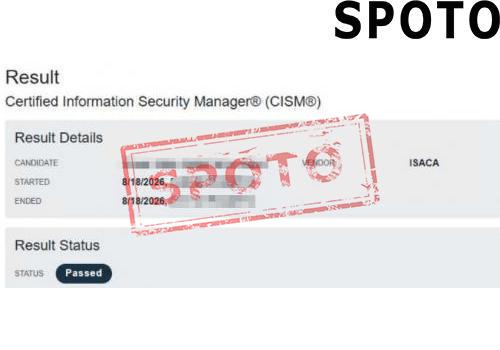
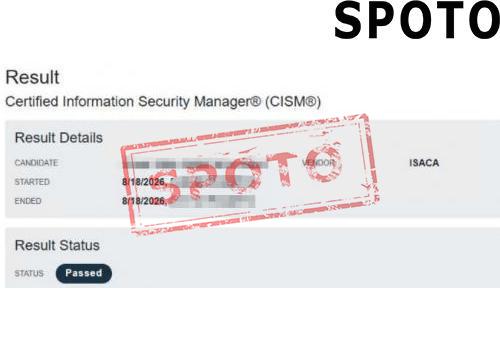
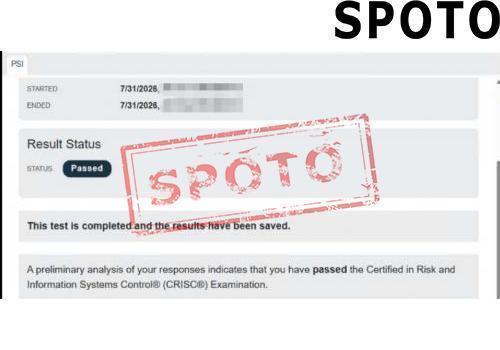
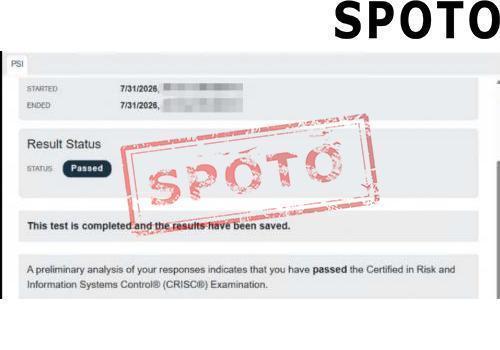
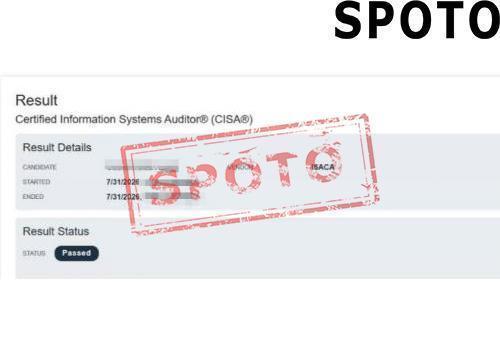
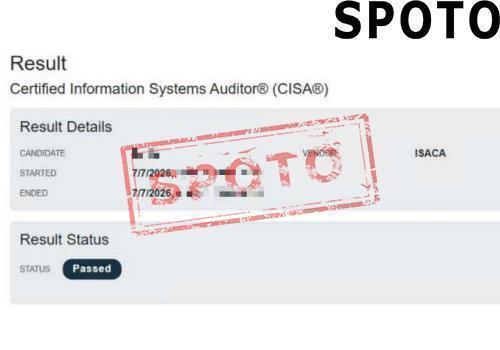
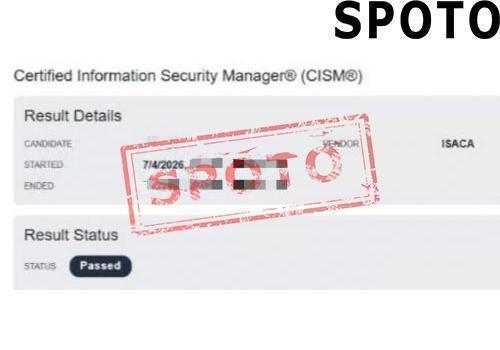
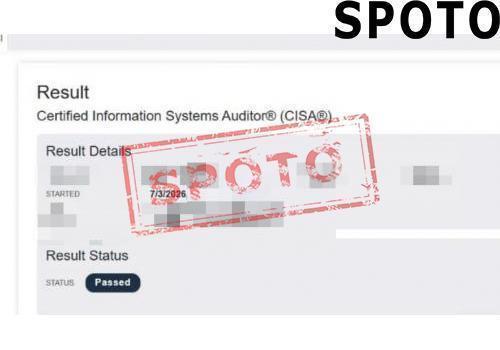
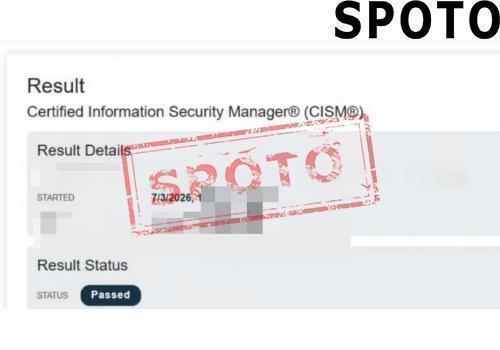
Latest Passing Reports from SPOTO Candidates
ISACA-CISA-P

ISACA-CISA-P

ISACA-CISM-P

ISACA-CISM-P

ISACA-CISA-P

ISACA-CISA-P

ISACA-CISM-P

ISACA-CISM-P

ISACA-COBIT-P

ISACA-COBIT-P

ISACA-CISM-P

ISACA-CISM-P

ISACA-CISM-P

ISACA-CISM-P

ISACA-CISM-P

ISACA-CISM-P

ISACA-CISA-P

ISACA-CISA-P

ISACA-CISM-P

ISACA-CISM-P

Write a Reply or Comment
Home/Blog/The Introduction and Guide to the Certified Information Security Manager® (CISM®) Exam in 2026
The Introduction and Guide to the Certified Information Security Manager® (CISM®) Exam in 2026
SPOTO 2 2026-04-14 11:00:23
The Introduction and Guide to the Certified Information Security Manager® (CISM®) Exam in 2026

1. CISM Certification Positioning

CISM is a globally recognized authoritative certification for information security management, launched by ISACA. It focuses on the core competencies of information security managers, emphasizing managing information security risks from a business perspective rather than a purely technical one.

In 2026, the value of the CISM certification further increased, becoming a core reference standard for companies recruiting information security managers, Chief Information Security Officers (CISOs), and other management positions. CISM holders are particularly competitive in industries with stringent compliance requirements, such as finance, healthcare, and government.


2. Latest Exam Information for 2026

Exam Format: 150 multiple-choice questions, 4-hour computer-based exam

Passing Standard: 450 out of 800

Exam Fee: $575 for ISACA members, $760 for non-members

Validity: Certification valid for 3 years, requires continuing professional education (CPE) to maintain validity

Prerequisites: 5 years of relevant work experience in information security management, including at least 3 years in 3 or more of the four CISM domains. Candidates can take the exam first and then complete the required work experience within 5 years of passing; otherwise, the certification will be invalid. No mandatory training is required, but officially recommended to complete the authorized training course to improve the pass rate.

Key Updates to the 2026 Exam Syllabus: A new exam syllabus will be implemented on November 3, 2026, emphasizing security strategy and plan development and adding content on enterprise and information security architecture technologies. Existing textbooks are valid until October 2026; new textbooks will be released in September 2026. The exam in the first half of 2026 will use the old syllabus, but changes to the syllabus in the second half of the year need to be monitored.


3. Detailed Explanation of the Four Core Knowledge Areas in 2026

(1) Information Security Governance (17%)

Focusing on aligning security strategy with business objectives is the core of CISM's management thinking.

Governance Framework Establishment: Master international standards such as COBIT and ISO/IEC 27001, design a security governance structure suitable for the company's scale, and clearly define the responsibilities of the board of directors, senior management, and security department.

Strategic Planning: Develop an information security strategy consistent with business objectives, establish a 3-5 year medium-to-long-term plan, clarify resource requirements, milestones, and KPI indicators, and obtain senior management support and approval.

Policy and Compliance Management: Develop a layered security policy system to ensure compliance with domestic and international regulations such as GDPR, Cybersecurity Law 3.0, and the Data Security Law, and establish a compliance assessment mechanism.

Risk Management Integration: Embed information security risk management into the company's overall risk management process, establish a Risk Appetite Statement, and ensure that risk decisions are consistent with business priorities.

Performance Evaluation: Design security performance indicators, report regularly to the board of directors and senior management, and demonstrate the return on investment (ROI) for security.

(2) Information Security Risk Management (20%)

The core principle is to control risks within an acceptable level for the organization, emphasizing full lifecycle risk management.

Risk Identification: Master asset inventory methods, identify critical information assets, analyze internal and external threats and vulnerabilities, and establish a risk register.

Risk Assessment: Be proficient in qualitative and quantitative assessment methods, combine Business Impact Analysis (BIA) to determine risk priorities, and focus on the risk exposure of high-value assets.

Risk Handling Strategy: Master the application scenarios of the four MATA risk handling options, formulate risk handling plans and assign responsibilities, and ensure that risk handling is aligned with business objectives.

Risk Monitoring and Reporting: Establish a continuous risk monitoring mechanism, regularly update risk assessment results, and provide management with a risk dashboard to support data-driven risk decision-making.

Third-Party Risk Management: Design supplier risk assessment processes, conduct due diligence on key suppliers, establish contract security clauses, ensure supply chain security, and comply with the 2026 global supply chain security compliance requirements.

(3) Information Security Program Development and Management (33%)

This is the core area with the highest percentage, focusing on the implementation and continuous optimization of security plans.

Plan Framework Design: Establish a comprehensive security plan covering technology, processes, and personnel; clarify the organizational structure; and define roles and responsibilities.

Resource Management: Develop a security budget; rationally allocate human, technical, and financial resources; prioritize high-risk areas; and establish a resource gap-filling mechanism.

Security Architecture Design: Design a defense-in-depth architecture covering network security, endpoint security, application security, and data security. In 2026, the focus will be on cloud security, zero-trust architecture, and AI security integration.

Control Implementation: Select and deploy appropriate security control measures, such as access control, encryption, intrusion detection, and security awareness training, to ensure the effectiveness of controls.

Security Awareness and Training: Develop a tiered training program, utilizing interactive methods such as simulated phishing and case studies to improve employee security literacy and establish a security culture.

Supplier Management: Establish a supplier security management process, encompassing the entire lifecycle from selection and contract signing to continuous monitoring, ensuring third-party services meet organizational security requirements and reducing supply chain risks.

(4) Information Security Incident Management (30%)

Emphasis is placed on rapid response, minimizing losses, and rapid recovery, establishing a comprehensive incident management system.

Incident Preparation: Develop a detailed Incident Response Plan (IRP), establish a Computer Security Incident Response Team (CSIRT), clarify role assignments, prepare response tools and resources, and conduct regular desktop and practical drills.

Incident Detection and Analysis: Establish an incident detection mechanism, master the PICERL process, and quickly determine the incident type, scope of impact, and severity.

Containment, Eradication, and Recovery: Take targeted measures based on the incident type to contain the escalation of the situation, eradicate the root cause of the threat, restore affected systems, and ensure a secure and residue-free recovery process.

Incident Communication: Establish internal and external communication mechanisms, develop communication templates, ensure accurate, timely, and consistent information, and maintain the organization's reputation.

Post-Incident Handling and Improvement: Conduct Root Cause Analysis (RCA), update security controls, improve the IRP, incorporate lessons learned into security training, and continuously improve incident response capabilities.

New key areas for 2026: Strengthen response strategies for complex events such as ransomware and large-scale data breaches, establish collaborative mechanisms with law enforcement agencies and industry organizations, and enhance crisis management capabilities.


Summary: CISM certification is a career watershed for information security managers. Preparation for the 2026 exam should focus on developing management thinking, managing the entire risk lifecycle, implementing security plans, and improving incident response capabilities.

Through phased learning, practical case studies, and mock exam training, SPOTO not only helps you pass the exam but also enhances your practical work skills, enabling you to create security value for your organization and achieve a leap in career development!
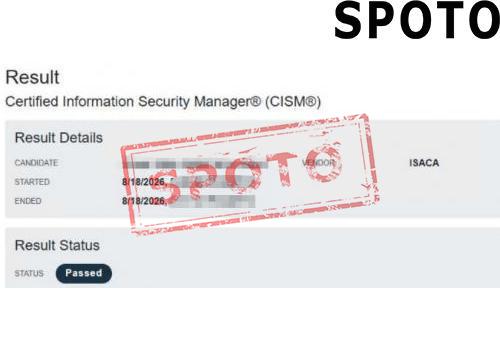
Latest Passing Reports from SPOTO Candidates
ISACA-CISA-P
ISACA-CISM-P
ISACA-CISA-P
ISACA-CISM-P
ISACA-COBIT-P
ISACA-CISM-P
ISACA-CISM-P
ISACA-CISM-P
ISACA-CISA-P
ISACA-CISM-P
Write a Reply or Comment
Don't Risk Your Certification Exam Success – Take Real Exam Questions
Eligible to sit for Exam? 100% Exam Pass GuaranteeEligible to sit for Exam? 100% Exam Pass Guarantee
SPOTO Ebooks
Recent Posts
Cisco 500-701 VID Exam: The latest knowledge points you need to master in 2026
The Introduction and Guide to the Certified Information Security Manager® (CISM®) Exam in 2026
Cisco 500-325 CSA Exam: The latest knowledge points you need to master in 2026
The Introduction and Guide to the Certified Information Systems Auditor (CISA) Exam in 2026
Google Professional Cloud Architect Exam: The truth you need to know in 2026
ISACA CISA Certification: The Success Guide you need to know in 2026
Cisco Collaboration SaaS 700-680 Certification: The Success Guide you need to know in 2026
AWS Exam: The truth you need to know in 2026 (Path to Advancement, Salary, Core Values)
The Introduction and Guide to the AWS DVA-C02 Exam in 2026
Cisco Exam: The truth you need to know in 2026 (Path to Advancement, Salary, Core Values)
Excellent
5.0
Based on 5236 reviews
Request more information
I would like to receive email communications about product & offerings from SPOTO & its Affiliates.
I understand I can unsubscribe at any time.