Latest Cisco, PMP, AWS, CompTIA, Microsoft Materials on SALE Get Now Get Now
Home/
Blog/
Certification for cross-system integration of multiple related ITIL practices: ITIL 4 Specialist-CAI
SPOTO 2 2026-02-27 15:07:03
Certification for cross-system integration of multiple related ITIL practices: ITIL 4 Specialist-CAI

1. Introduction to the ITIL4-S-CAI certification

The ITIL 4 Specialist: Collaborate, Assure and Improve (ITIL 4-CAI) is an intermediate-level expert certification offered by AXELOS, UK. It constitutes one of the four mandatory core modules within the ITIL 4 Managing Professional (MP) track, and stands out as the only comprehensive expert certification within this path dedicated to "cross-organizational collaboration, end-to-end service quality assurance, and systematic continuous improvement."

Unlike practitioner-level certifications that concentrate on isolated practices, CAI validates a holistic management capability that spans multiple practices. It directly addresses three critical pain points often encountered in enterprise ITSM implementation: inefficient collaboration across teams or organizations, the challenge of sustaining service quality and compliance over the long term, and the inability to close the loop on continuous improvement initiatives. This certification serves as a key qualification for professionals transitioning from a "single-process executor" to an "ITSM system manager."


2. The Competitive Edge of ITIL4-S-CAI Certification

The ITIL 4-CAI certification is not only one of the four essential modules for achieving the ITIL 4 Managing Professional (MP) designation, but also a prerequisite for advancing to higher-level ITIL certifications. It is widely recognized by Fortune 500 companies as a core reference for recruiting ITSM management talents, marking an indispensable step in ITSM career progression.

This certification empowers professionals to transcend the boundaries of individual processes, enabling them to grasp the end-to-end service management logic encompassing "collaboration, assurance, and improvement." It equips individuals with the managerial competence to systematically design, build, and optimize an enterprise's ITSM framework.

By tackling prevalent organizational issues such as "process silos, poor cross-team collaboration, insufficient service assurance, lack of closed-loop improvement, and misalignment between IT and business," the methodologies learned can be directly applied to enhance enterprise ITSM systems.

Furthermore, the CAI certification integrates the systematic capabilities of five core practices—including Relationship Management, Supplier Management, and Service Level Management (SLM)—into a practical service management framework. This integration facilitates a leap from "discrete skills" to "systemic capabilities."

Finally, it aligns with the demands of digital transformation, keeping pace with trends like enterprise Agile/DevOps adoption, multi-cloud management, and digital service delivery. It equips professionals with the methods for cross-party collaboration, service assurance, and continuous improvement in contemporary IT environments.


3. Overview of the ITIL4-S-CAI Certification

The ITIL 4-CAI certification is positioned as a strategic integration credential for senior practitioners and managers within the ITIL 4 framework. In contrast to specialized certifications focusing on a single practice, it aims to cultivate strategic leadership abilities, enabling candidates to collaboratively apply multiple core practices to directly drive and enhance the service value stream.

This certification establishes a complete closed-loop process, from strategic collaboration to value realization. Its core curriculum is built upon three pillars: Collaboration and Stakeholder Management, Service Assurance and Compliance Management, and Continuous Improvement Framework and Implementation, which collectively account for up to 85% of the exam content.

Candidates are required to systematically integrate practices such as Relationship Management, Supplier Management, Service Level Management, and Information Security Management to address strategic challenges, including efficient collaboration across internal and external channels, ensuring controllable service quality, and driving continuous optimization.

Building on this foundation, the certification emphasizes cross-practice integration and value stream optimization. It aims to dismantle process silos, achieve synergy among multiple practices, and optimize end-to-end business value streams. Additionally, the integration of digital transformation and modern practices—such as Agile, DevOps, and multi-cloud—ensures that strategic designs are adaptable to evolving IT landscapes.


4. What are the requirements to be an ITIL4-S-CAI certification holder?

(1) Qualification prerequisites:

Candidates must hold a valid ITIL 4 Foundation certificate and have completed official training from an AXELOS Accredited Training Organization (ATO). Without an official training record, exam registration is not permitted.

It is recommended that candidates possess one or two ITIL 4 Practitioner certifications, demonstrating practical understanding of core practices.

Having 2-3 years of experience in ITSM operations, service management, process optimization, or cross-team collaboration, along with familiarity with the full spectrum of enterprise IT services and a basic grasp of aligning business needs with IT services, will significantly enhance the likelihood of exam success.

(2) Training and Examination:

The ITIL 4-CAI exam consists of 40 multiple-choice questions. Over 80% of these are comprehensive scenario-based questions reflecting real-world business situations; there are no purely theoretical memorization questions.

The exam duration is 90 minutes for native English speakers. Non-native English speakers may request an extension to 120 minutes.

The maximum score is 40 points, with a passing score of 28 or above. The scoring is globally standardized without a fixed pass rate. The exam fee is approximately $400-$500.

(3) Maintaining the Certification:

The ITIL 4-CAI certificate is valid for three years.To renew, holders must complete AXELOS-accredited Continuing Professional Development (CPD) credits or pass a higher-level ITIL 4 certification before the expiration date, which will automatically renew the certificate.


5. Comparable Certifications to ITIL 4 Specialist Collaborate, Assure and Improve Certification

  • ITIL 4 Specialist: Drive Stakeholder Value (DSV)
  • ITIL 4 Strategist: Direct, Plan and Improve (DPI)
  • DevOps Institute: DevOps Leader (DOL)
  • SAFe Release Train Engineer (RTE)
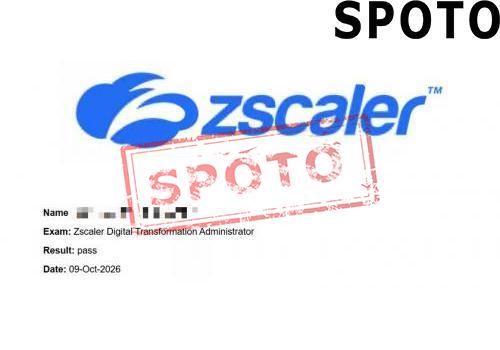
 

Latest Passing Reports from SPOTO Candidates
H12-821-E-P

H12-821-E-P

IIBA-CCBA-P

IIBA-CCBA-P

CAS-005-P

CAS-005-P

220-1201-P

220-1201-P

NETSEC-PRO

NETSEC-PRO

FCP-FWBAD74-P

FCP-FWBAD74-P

H12-811-E

H12-811-E

FCP-FGTAD76

FCP-FGTAD76

P2-7-FDN-P

P2-7-FDN-P

PMI-PMP-012

PMI-PMP-012

Write a Reply or Comment
Home/Blog/Certification for cross-system integration of multiple related ITIL practices: ITIL 4 Specialist-CAI
Certification for cross-system integration of multiple related ITIL practices: ITIL 4 Specialist-CAI
SPOTO 2 2026-02-27 15:07:03
Certification for cross-system integration of multiple related ITIL practices: ITIL 4 Specialist-CAI

1. Introduction to the ITIL4-S-CAI certification

The ITIL 4 Specialist: Collaborate, Assure and Improve (ITIL 4-CAI) is an intermediate-level expert certification offered by AXELOS, UK. It constitutes one of the four mandatory core modules within the ITIL 4 Managing Professional (MP) track, and stands out as the only comprehensive expert certification within this path dedicated to "cross-organizational collaboration, end-to-end service quality assurance, and systematic continuous improvement."

Unlike practitioner-level certifications that concentrate on isolated practices, CAI validates a holistic management capability that spans multiple practices. It directly addresses three critical pain points often encountered in enterprise ITSM implementation: inefficient collaboration across teams or organizations, the challenge of sustaining service quality and compliance over the long term, and the inability to close the loop on continuous improvement initiatives. This certification serves as a key qualification for professionals transitioning from a "single-process executor" to an "ITSM system manager."


2. The Competitive Edge of ITIL4-S-CAI Certification

The ITIL 4-CAI certification is not only one of the four essential modules for achieving the ITIL 4 Managing Professional (MP) designation, but also a prerequisite for advancing to higher-level ITIL certifications. It is widely recognized by Fortune 500 companies as a core reference for recruiting ITSM management talents, marking an indispensable step in ITSM career progression.

This certification empowers professionals to transcend the boundaries of individual processes, enabling them to grasp the end-to-end service management logic encompassing "collaboration, assurance, and improvement." It equips individuals with the managerial competence to systematically design, build, and optimize an enterprise's ITSM framework.

By tackling prevalent organizational issues such as "process silos, poor cross-team collaboration, insufficient service assurance, lack of closed-loop improvement, and misalignment between IT and business," the methodologies learned can be directly applied to enhance enterprise ITSM systems.

Furthermore, the CAI certification integrates the systematic capabilities of five core practices—including Relationship Management, Supplier Management, and Service Level Management (SLM)—into a practical service management framework. This integration facilitates a leap from "discrete skills" to "systemic capabilities."

Finally, it aligns with the demands of digital transformation, keeping pace with trends like enterprise Agile/DevOps adoption, multi-cloud management, and digital service delivery. It equips professionals with the methods for cross-party collaboration, service assurance, and continuous improvement in contemporary IT environments.


3. Overview of the ITIL4-S-CAI Certification

The ITIL 4-CAI certification is positioned as a strategic integration credential for senior practitioners and managers within the ITIL 4 framework. In contrast to specialized certifications focusing on a single practice, it aims to cultivate strategic leadership abilities, enabling candidates to collaboratively apply multiple core practices to directly drive and enhance the service value stream.

This certification establishes a complete closed-loop process, from strategic collaboration to value realization. Its core curriculum is built upon three pillars: Collaboration and Stakeholder Management, Service Assurance and Compliance Management, and Continuous Improvement Framework and Implementation, which collectively account for up to 85% of the exam content.

Candidates are required to systematically integrate practices such as Relationship Management, Supplier Management, Service Level Management, and Information Security Management to address strategic challenges, including efficient collaboration across internal and external channels, ensuring controllable service quality, and driving continuous optimization.

Building on this foundation, the certification emphasizes cross-practice integration and value stream optimization. It aims to dismantle process silos, achieve synergy among multiple practices, and optimize end-to-end business value streams. Additionally, the integration of digital transformation and modern practices—such as Agile, DevOps, and multi-cloud—ensures that strategic designs are adaptable to evolving IT landscapes.


4. What are the requirements to be an ITIL4-S-CAI certification holder?

(1) Qualification prerequisites:

Candidates must hold a valid ITIL 4 Foundation certificate and have completed official training from an AXELOS Accredited Training Organization (ATO). Without an official training record, exam registration is not permitted.

It is recommended that candidates possess one or two ITIL 4 Practitioner certifications, demonstrating practical understanding of core practices.

Having 2-3 years of experience in ITSM operations, service management, process optimization, or cross-team collaboration, along with familiarity with the full spectrum of enterprise IT services and a basic grasp of aligning business needs with IT services, will significantly enhance the likelihood of exam success.

(2) Training and Examination:

The ITIL 4-CAI exam consists of 40 multiple-choice questions. Over 80% of these are comprehensive scenario-based questions reflecting real-world business situations; there are no purely theoretical memorization questions.

The exam duration is 90 minutes for native English speakers. Non-native English speakers may request an extension to 120 minutes.

The maximum score is 40 points, with a passing score of 28 or above. The scoring is globally standardized without a fixed pass rate. The exam fee is approximately $400-$500.

(3) Maintaining the Certification:

The ITIL 4-CAI certificate is valid for three years.To renew, holders must complete AXELOS-accredited Continuing Professional Development (CPD) credits or pass a higher-level ITIL 4 certification before the expiration date, which will automatically renew the certificate.


5. Comparable Certifications to ITIL 4 Specialist Collaborate, Assure and Improve Certification

  • ITIL 4 Specialist: Drive Stakeholder Value (DSV)
  • ITIL 4 Strategist: Direct, Plan and Improve (DPI)
  • DevOps Institute: DevOps Leader (DOL)
  • SAFe Release Train Engineer (RTE)
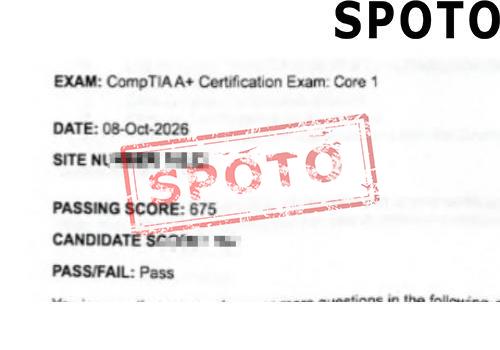
 

Latest Passing Reports from SPOTO Candidates
H12-821-E-P
IIBA-CCBA-P
CAS-005-P
220-1201-P
NETSEC-PRO
FCP-FWBAD74-P
H12-811-E
FCP-FGTAD76
P2-7-FDN-P
PMI-PMP-012
Write a Reply or Comment
Don't Risk Your Certification Exam Success – Take Real Exam Questions
Eligible to sit for Exam? 100% Exam Pass GuaranteeEligible to sit for Exam? 100% Exam Pass Guarantee
SPOTO Ebooks
Recent Posts
Certification for cross-system integration of multiple related ITIL practices: ITIL 4 Specialist-CAI
The Complete Guide to the CCNA Exam 2026
The Complete Guide to the PMP Exam 2026
Intermediate-level practical certification in service operations: ITIL4P-SRM
Practical certification focusing on the full lifecycle management of external IT resources: ITIL4P-SUM
Want to obtain the Fortinet NSE 7-FortiSASE 25 Enterprise Administrator certification? You'll need the following knowledge base in 2026:
Knowledge framework required to obtain AWS SAA-C03 certification in 2026
Core knowledge required to obtain Juniper certification in 2026
Core knowledge required to obtain Google Professional Data Engineer certification in 2026
Core knowledge required to obtain AZ-104 certification in 2026
Excellent
5.0
Based on 5236 reviews
Request more information
I would like to receive email communications about product & offerings from SPOTO & its Affiliates.
I understand I can unsubscribe at any time.