Latest Cisco, PMP, AWS, CompTIA, Microsoft Materials on SALE Get Now Get Now
Home/
Blog/
CCIE Enterprise Infrastructure (EI v1.1) In-Depth Preparation Guide: From Protocol Expertise to Architectural Engineering
SPOTO 2 2026-04-22 11:15:52
CCIE Enterprise Infrastructure (EI v1.1) In-Depth Preparation Guide: From Protocol Expertise to Architectural Engineering

The revision of CCIE EI v1.1 is not merely a simple version update; rather, it represents Cisco's recalibration of the competency model for enterprise network engineers amidst the sweeping wave of "Software-Defined Everything" (SDx).

Following this revision, the exam will more rigorously assess your ability to provide business support within complex, hybrid, and automated environments.


1. Engineering-Centric Restructuring of the Core Knowledge Graph

v1.1 does not simply involve the removal of technologies such as VTP or GRE; more fundamentally, it reshapes the entire knowledge framework.

(1) An Engineering Perspective on Software-Defined Architectures (25%)

Full-Lifecycle Management of SD-Access: v1.1 no longer assesses the isolated task of "how to configure the fabric"; instead, it treats the fabric as a complete lifecycle to be managed through "six key sub-tasks." The newly added "Fabric in a Box" feature—now a standard requirement for small branch offices—demands that you demonstrate expert proficiency in enabling a full suite of SDA functionalities using a limited set of physical devices.

SDA 360-Degree Assurance: This represents a monumental leap forward in operational and maintenance philosophy. The exam will require you to go beyond mere "deployment"; you must also utilize the performance metrics dashboards within DNA Center 2.3 to analyze and diagnose issues—such as roaming latency or authentication failures—for specific client devices.

SD-WAN and Multi-Cloud Integration: Traditional SD-WAN deployments are now considered foundational knowledge; current exam questions place a much greater emphasis on "Cloud OnRamp" capabilities. For instance, you may be required to configure VPN transport connections at the cloud edge (e.g., on AWS or Azure) and ensure that the OMP protocol accurately learns and propagates business routes originating from the cloud environment.

(2) Practical Implementation of Automation and Programmability (20%)

Automation has emerged as the definitive differentiator between a CCIE and a CCNP.

From Data Ingestion to Architectural Generation: YAML is more than just a data format; it serves as the vital counterpart to Jinja2. During your exam preparation, attempt to construct a workflow similar to the following: extract device-specific information from a CSV file; use the Jinja2 template engine to batch-generate configuration files (.conf) containing OSPF, BGP, and VRF settings; and finally, use Ansible to batch-push these configurations to a virtual network topology.

In-Depth, Hands-On API Application: Move beyond the basics—stop limiting yourself to simple GET requests. v1.1 assesses the business logic behind POST and PUT operations—for instance, how to dynamically modify Application-Aware Routing (AAR) policies via the vManage API, or how to leverage the DNA Center API to perform the bulk discovery and management of devices.


2. Practical Deep Dive into Key Technologies and Identifying Pitfalls

(1) Network Infrastructure: High Availability and Routing Control

Multi-Chassis EtherChannel (MEC): In a Catalyst 9000 environment, MEC configurations are highly susceptible to issues—such as routing loops or connectivity failures—caused by mismatched LACP negotiation parameters. It is imperative that you practice performing non-disruptive changes within a StackWise Virtual architecture.

Inter-VRF Route Leaking: This constitutes a fundamental building block of complex enterprise networks. Focus your study on how to utilize import/export maps to exercise granular control over routing attributes—specifically, the fine-grained operations required when implementing route filtering policies.

(2) Streamlined Transport Technologies

Although the exam scope for technologies such as DMVPN has been reduced, this does not imply that they have become simpler. On the contrary, in version 1.1, should you encounter a DMVPN Phase 3 scenario, examiners will expect you to rapidly troubleshoot NHRP registration failures or tunnel encryption negotiation errors within an extremely short timeframe. Focus your efforts on the core operational and troubleshooting scenarios associated with these technologies.


3. Exam Preparation Strategy: Building a "Full-Lifecycle Hands-On" Framework

(1) Domain Prioritization and In-Depth Mastery

Phase 1: Console Proficiency (Weeks 1–3): Do not simply memorize command-line syntax. Instead, repeatedly invoke vManage and DNA Center API endpoints within the DevNet Sandbox to understand the underlying architectural logic behind every JSON response.

Phase 2: Scenario Simulation and Troubleshooting (Weeks 4–8): This is the most challenging phase. Utilize CML 2.0+ to construct comprehensive topologies that incorporate both SDA and SD-WAN components. Deliberately misconfigure OMP policies or Fabric border interfaces, and practice how to rapidly pinpoint and resolve these conflicts within a 5-hour timeframe.

Phase 3: Automation and Templating (Weeks 9–12): Establish your own library of automation code; translate frequently used interface configurations, policy deployments, and health checks into Jinja2 templates, and perform regression testing on these templates within your simulated lab environment.

(2) Key Mindsets and Techniques for Exam Preparation

Focus on "Business Continuity": For any configuration changes made during the exam, you must first assess their potential impact on existing network traffic. Prior to the deployment phase, cultivate the habit of performing automated verification—adopting a "test before going live" approach.

Version Compatibility Verification: Before applying any configurations, you must cross-reference software versions using the `show version`command and the controller's graphical interface to prevent task failures caused by CLI syntax discrepancies specific to IOS XE 17.9.

Approach the "Design Module" with Composure: The initial 3-hour Design Module dictates the trajectory of the subsequent 5-hour deployment phase. Treat your design blueprint as a binding "contract"; all subsequent deployment tasks must strictly adhere to this architecture to avoid configuration chaos resulting from arbitrary logical changes made during the implementation process.


Summary: The significance of CCIE EI v1.1 lies in its deep integration of enterprise network engineering with modern DevOps principles. By eliminating cumbersome technical minutiae, the curriculum redirects candidates' focus toward business-driven network orchestration and intelligent operations.

For candidates, true proficiency in today's increasingly complex enterprise networking landscape can only be achieved by mastering a holistic view of software-defined architectures and skillfully leveraging automation tools to resolve real-world performance and security challenges.

Keeping pace with the latest syllabus updates, SPOTO has taken the lead in releasing the newest question banks and detailed analyses of key exam topics. Say goodbye to aimless studying; let our seasoned experts break down the core exam concepts for you, helping you achieve your ultimate goal: passing on your very first attempt!
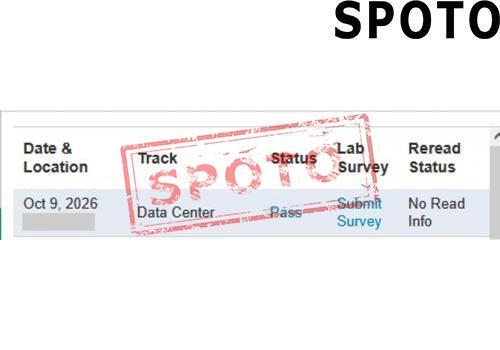
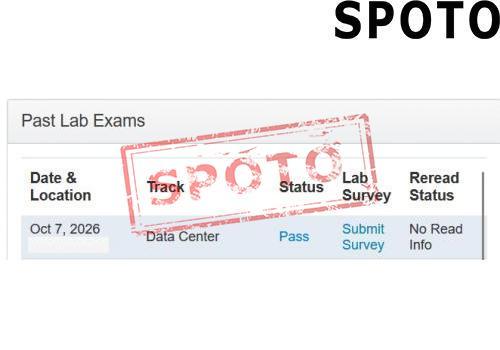
 

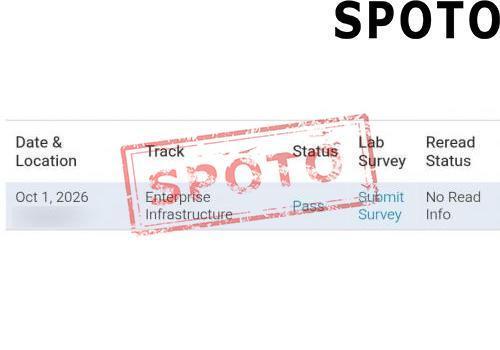
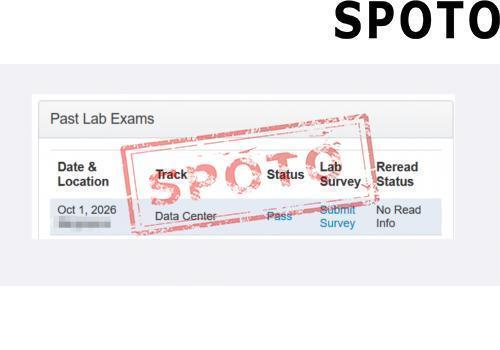
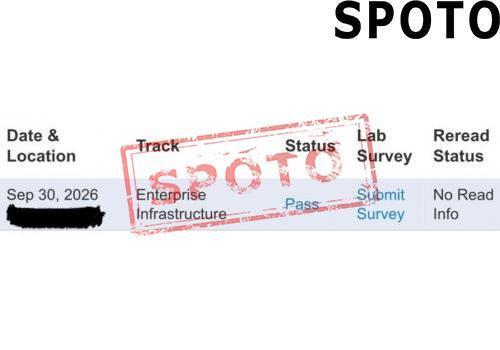
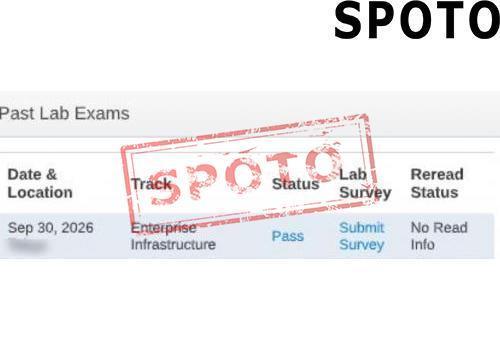
Latest Passing Reports from SPOTO Candidates
EI LAB

EI LAB

EI LAB

EI LAB

DC LAB

DC LAB

sec lab

sec lab

dc lab

dc lab

ccde lab

ccde lab

EI lab

EI lab

DC lab

DC lab

EI Lab

EI Lab

EI Lab

EI Lab

Write a Reply or Comment
Home/Blog/CCIE Enterprise Infrastructure (EI v1.1) In-Depth Preparation Guide: From Protocol Expertise to Architectural Engineering
CCIE Enterprise Infrastructure (EI v1.1) In-Depth Preparation Guide: From Protocol Expertise to Architectural Engineering
SPOTO 2 2026-04-22 11:15:52
CCIE Enterprise Infrastructure (EI v1.1) In-Depth Preparation Guide: From Protocol Expertise to Architectural Engineering

The revision of CCIE EI v1.1 is not merely a simple version update; rather, it represents Cisco's recalibration of the competency model for enterprise network engineers amidst the sweeping wave of "Software-Defined Everything" (SDx).

Following this revision, the exam will more rigorously assess your ability to provide business support within complex, hybrid, and automated environments.


1. Engineering-Centric Restructuring of the Core Knowledge Graph

v1.1 does not simply involve the removal of technologies such as VTP or GRE; more fundamentally, it reshapes the entire knowledge framework.

(1) An Engineering Perspective on Software-Defined Architectures (25%)

Full-Lifecycle Management of SD-Access: v1.1 no longer assesses the isolated task of "how to configure the fabric"; instead, it treats the fabric as a complete lifecycle to be managed through "six key sub-tasks." The newly added "Fabric in a Box" feature—now a standard requirement for small branch offices—demands that you demonstrate expert proficiency in enabling a full suite of SDA functionalities using a limited set of physical devices.

SDA 360-Degree Assurance: This represents a monumental leap forward in operational and maintenance philosophy. The exam will require you to go beyond mere "deployment"; you must also utilize the performance metrics dashboards within DNA Center 2.3 to analyze and diagnose issues—such as roaming latency or authentication failures—for specific client devices.

SD-WAN and Multi-Cloud Integration: Traditional SD-WAN deployments are now considered foundational knowledge; current exam questions place a much greater emphasis on "Cloud OnRamp" capabilities. For instance, you may be required to configure VPN transport connections at the cloud edge (e.g., on AWS or Azure) and ensure that the OMP protocol accurately learns and propagates business routes originating from the cloud environment.

(2) Practical Implementation of Automation and Programmability (20%)

Automation has emerged as the definitive differentiator between a CCIE and a CCNP.

From Data Ingestion to Architectural Generation: YAML is more than just a data format; it serves as the vital counterpart to Jinja2. During your exam preparation, attempt to construct a workflow similar to the following: extract device-specific information from a CSV file; use the Jinja2 template engine to batch-generate configuration files (.conf) containing OSPF, BGP, and VRF settings; and finally, use Ansible to batch-push these configurations to a virtual network topology.

In-Depth, Hands-On API Application: Move beyond the basics—stop limiting yourself to simple GET requests. v1.1 assesses the business logic behind POST and PUT operations—for instance, how to dynamically modify Application-Aware Routing (AAR) policies via the vManage API, or how to leverage the DNA Center API to perform the bulk discovery and management of devices.


2. Practical Deep Dive into Key Technologies and Identifying Pitfalls

(1) Network Infrastructure: High Availability and Routing Control

Multi-Chassis EtherChannel (MEC): In a Catalyst 9000 environment, MEC configurations are highly susceptible to issues—such as routing loops or connectivity failures—caused by mismatched LACP negotiation parameters. It is imperative that you practice performing non-disruptive changes within a StackWise Virtual architecture.

Inter-VRF Route Leaking: This constitutes a fundamental building block of complex enterprise networks. Focus your study on how to utilize import/export maps to exercise granular control over routing attributes—specifically, the fine-grained operations required when implementing route filtering policies.

(2) Streamlined Transport Technologies

Although the exam scope for technologies such as DMVPN has been reduced, this does not imply that they have become simpler. On the contrary, in version 1.1, should you encounter a DMVPN Phase 3 scenario, examiners will expect you to rapidly troubleshoot NHRP registration failures or tunnel encryption negotiation errors within an extremely short timeframe. Focus your efforts on the core operational and troubleshooting scenarios associated with these technologies.


3. Exam Preparation Strategy: Building a "Full-Lifecycle Hands-On" Framework

(1) Domain Prioritization and In-Depth Mastery

Phase 1: Console Proficiency (Weeks 1–3): Do not simply memorize command-line syntax. Instead, repeatedly invoke vManage and DNA Center API endpoints within the DevNet Sandbox to understand the underlying architectural logic behind every JSON response.

Phase 2: Scenario Simulation and Troubleshooting (Weeks 4–8): This is the most challenging phase. Utilize CML 2.0+ to construct comprehensive topologies that incorporate both SDA and SD-WAN components. Deliberately misconfigure OMP policies or Fabric border interfaces, and practice how to rapidly pinpoint and resolve these conflicts within a 5-hour timeframe.

Phase 3: Automation and Templating (Weeks 9–12): Establish your own library of automation code; translate frequently used interface configurations, policy deployments, and health checks into Jinja2 templates, and perform regression testing on these templates within your simulated lab environment.

(2) Key Mindsets and Techniques for Exam Preparation

Focus on "Business Continuity": For any configuration changes made during the exam, you must first assess their potential impact on existing network traffic. Prior to the deployment phase, cultivate the habit of performing automated verification—adopting a "test before going live" approach.

Version Compatibility Verification: Before applying any configurations, you must cross-reference software versions using the `show version`command and the controller's graphical interface to prevent task failures caused by CLI syntax discrepancies specific to IOS XE 17.9.

Approach the "Design Module" with Composure: The initial 3-hour Design Module dictates the trajectory of the subsequent 5-hour deployment phase. Treat your design blueprint as a binding "contract"; all subsequent deployment tasks must strictly adhere to this architecture to avoid configuration chaos resulting from arbitrary logical changes made during the implementation process.


Summary: The significance of CCIE EI v1.1 lies in its deep integration of enterprise network engineering with modern DevOps principles. By eliminating cumbersome technical minutiae, the curriculum redirects candidates' focus toward business-driven network orchestration and intelligent operations.

For candidates, true proficiency in today's increasingly complex enterprise networking landscape can only be achieved by mastering a holistic view of software-defined architectures and skillfully leveraging automation tools to resolve real-world performance and security challenges.

Keeping pace with the latest syllabus updates, SPOTO has taken the lead in releasing the newest question banks and detailed analyses of key exam topics. Say goodbye to aimless studying; let our seasoned experts break down the core exam concepts for you, helping you achieve your ultimate goal: passing on your very first attempt!
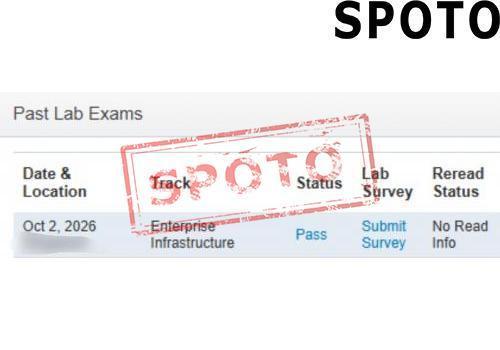
 

Latest Passing Reports from SPOTO Candidates
EI LAB
EI LAB
DC LAB
sec lab
dc lab
ccde lab
EI lab
DC lab
EI Lab
EI Lab
Write a Reply or Comment
Don't Risk Your Certification Exam Success – Take Real Exam Questions
Eligible to sit for Exam? 100% Exam Pass GuaranteeEligible to sit for Exam? 100% Exam Pass Guarantee
SPOTO Ebooks
Recent Posts
CCIE Enterprise Infrastructure (EI v1.1) In-Depth Preparation Guide: From Protocol Expertise to Architectural Engineering
CCIE Automation (v1.1): Core Exam Changes and Advanced Preparation Strategies
CCIE Automation: An In-Depth Preparation Strategy for the New 2026 Certification Framework
CCIE Data Center (v3.1) Lab Exam In-Depth Analysis: Technical Evolution and Comprehensive Preparation Guide
CCIE EI LAB Exam: Latest Question Changes and Exam Impact Analysis
CCIE Automation Certification: Latest Question Changes and Exam Impact Analysis
CCIE DC LAB (v3.1) Exam: Latest Question Changes and Exam Impact Analysis
2026 Microsoft AZ-104 Exam Update: What You Need to Prepare?
2026 CCNA Exam Update: The Latest Changes You Need to Know
2026 AZ-400 Exam Update: How to Adjust Your Preparation Strategy?
Excellent
5.0
Based on 5236 reviews
Request more information
I would like to receive email communications about product & offerings from SPOTO & its Affiliates.
I understand I can unsubscribe at any time.