Latest Cisco, PMP, AWS, CompTIA, Microsoft Materials on SALE Get Now Get Now
Home/
Blog/
CCIE Automation: An In-Depth Preparation Strategy for the New 2026 Certification Framework
SPOTO 2 2026-04-21 11:24:40
CCIE Automation: An In-Depth Preparation Strategy for the New 2026 Certification Framework

With the brand consolidation of the Cisco certification ecosystem, CCIE Automation has emerged as a dual benchmark for measuring an engineer's "architectural design capabilities" and their ability to translate "software engineering principles into practical implementation."

Facing the v1.1 exam environment of 2026, candidates must not only master the tools at their disposal but also deeply understand the architectural significance of these tools within enterprise-scale networks.


1. An In-Depth Analysis of the Certification

CCIE Automation is not merely a renaming of the DevNet Expert certification; it represents Cisco's strategic recognition of the evolution of network automation—shifting from a model of "script-based support" to that of a "productivity platform."

Tiered Learning Benefits: Through the progressive learning path offered by the CCNA and CCNP Automation tracks, you should shift your primary focus during the CCIE phase from simply "mastering APIs" to "designing a comprehensive automation ecosystem."

Stability Amidst Challenges: While the lab content for v1.1 remains largely consistent at the blueprint level, the examiners' requirements regarding "code robustness," "error handling," and "configuration consistency across multiple sources" have been significantly elevated during the grading process.


2. Evolution of the Core Technology Stack and Deepening Practical Skills

(1) Engineering Infrastructure as Code (IaC)

Simple, standalone Terraform scripts are no longer sufficient to tackle CCIE-level exam challenges; you must master the following engineering dimensions:

Modular Management: The ability to write reusable Terraform modules and manage variations across different production environments using variables.

State Storage and Concurrency Control: An understanding of how to handle Terraform State files—specifically locking and backup procedures—within a collaborative, multi-user environment.

CI/CD Integration: Building automated pipelines using tools such as GitLab Runner or Jenkins, with a specific focus on resolving Git conflicts, managing revert processes, and ensuring adequate automated test coverage.

(2) Advanced Modeling for Network Service Orchestration

In the realm of network programmability, Cisco NSO and model-driven automation take center stage:

YANG Modeling Fundamentals: Beyond merely invoking NETCONF operations, you must possess a deep understanding of how OpenConfig and IETF models abstract and standardize device attributes across different vendors.

NSO Service Lifecycle: Mastering the complete closed-loop process—from Service Definition and Template Mapping to the final configuration deployment—with particular emphasis on automated Conflict Resolution for configuration discrepancies.

(3) AIOps (AI-Driven Operations) Outlook

LLM Network Agents: This represents the most forward-looking direction within the updated exam syllabus. Candidates are required to learn how to utilize LLM APIs to process massive volumes of log data and analyze anomalous traffic, integrating this logic into automated systems to achieve a transition from "rule-driven" to "intent-driven" operations.

Intelligent Troubleshooting: Practice writing scripts to automatically collect pyATS test data, and leverage AI assistance to analyze and compare deviations between the "expected state" and the "actual state."


3. Differentiated Exam Preparation Guide: From "Competence" to "Mastery"

(1) Advanced Lab Strategies (8-Hour Intensive Drill)

Design Module (First 3 Hours): This is the critical phase that determines success or failure. Do not rush to write code; instead, spend the first 30 minutes modeling the entire network architecture and finalizing your tool selection. For example: Why choose Ansible for this specific scenario rather than using Python to call APIs directly?

Deployment Module (Final 5 Hours): Treat the exam environment as if it were a production environment. Always adhere to the following sequence: first, back up the environment's state; second, implement the changes; and finally, execute automated regression tests.

Enhanced Fault Isolation: During practice sessions, deliberately break dependencies within your automation scripts—such as libraries, configuration files, or API connections—to simulate the pressure of troubleshooting within a 5-hour window. This cultivates the ability to remain calm and effective under strict time constraints.

(2) Software and Hardware Environment Version Checklist

To ensure the accuracy of your exam preparation environment, please verify the following versions:

CML 2.x: Used for building full-featured virtual network topologies.

Nexus OS / IOS-XE: Ensure that the versions align with the latest exam blueprint.

Automation Environment: Pre-installed with Python 3.10+, Ansible 2.15+, Terraform v1.5+, and NSO 6.x.


4. Throughout your exam preparation, please consistently adhere to the following principles:

Code Standardization: Follow the PEP 8 standard when writing scripts. Code comments should explain the underlying business logic rather than merely describing the function of the code itself.

Security First: When exam tasks involve key management, you must utilize environment variables or encrypted storage solutions. Hardcoding API credentials in plain text directly within scripts is strictly prohibited.

Closed-Loop Testing: Upon the completion of any automation task, you must configure corresponding "Verification Tasks" to confirm that the implemented changes fully align with the original design objectives.


Summary: The CCIE Automation v1.1 exam is not merely a technical skills contest, but rather an assessment of your capabilities in systems engineering. By engaging in a systematic study of CI/CD, network orchestration, IaC, and AI-driven diagnostics, you are not simply preparing for an exam; you are, more importantly, constructing your own personal methodology for automation engineering.

Throughout the remainder of your exam preparation cycle, we recommend shifting your focus from the mere "accumulation of knowledge points" to the actual "construction of automation systems." By continuously refactoring practice exercises within the Cisco DevNet Sandbox, you can internalize an automation-centric mindset, transforming it into a professional instinct.

SPOTO has promptly updated course materials and question banks in accordance with the latest exam versions. We provide the most up-to-date explanations of key concepts and detailed analyses of practice questions to help you pass the exam successfully on your very first attempt!
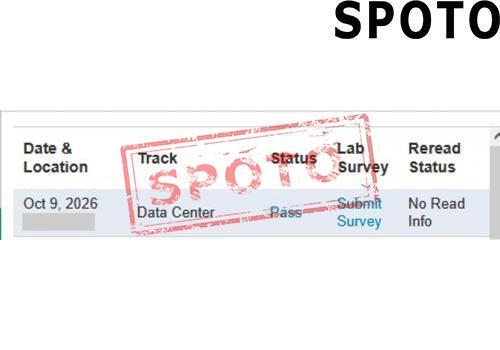
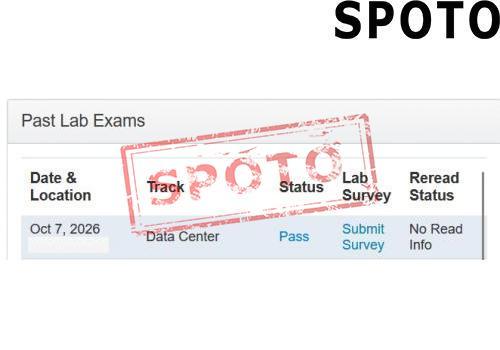
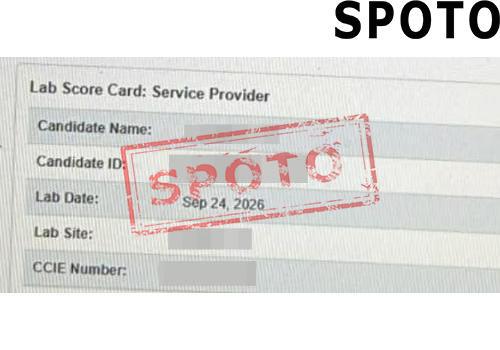
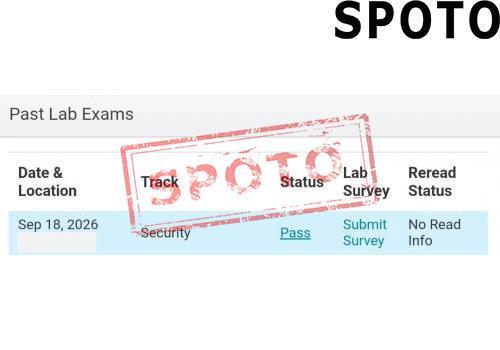
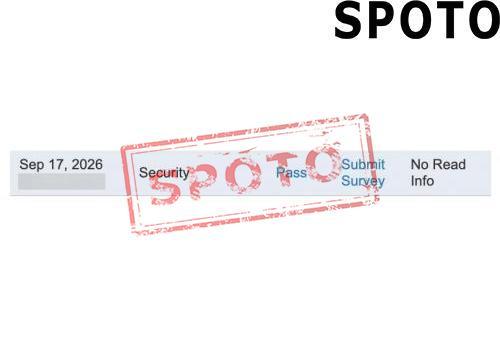
Latest Passing Reports from SPOTO Candidates
EI LAB

EI LAB

EI LAB

EI LAB

DC LAB

DC LAB

sec lab

sec lab

dc lab

dc lab

ccde lab

ccde lab

EI lab

EI lab

DC lab

DC lab

EI Lab

EI Lab

EI Lab

EI Lab

Write a Reply or Comment
Don't Risk Your Certification Exam Success – Take Real Exam Questions
Eligible to sit for Exam? 100% Exam Pass Guarantee
SPOTO Ebooks
Recent Posts
Excellent
5.0
Based on 5236 reviews
Request more information
I would like to receive email communications about product & offerings from SPOTO & its Affiliates.
I understand I can unsubscribe at any time.
Home/Blog/CCIE Automation: An In-Depth Preparation Strategy for the New 2026 Certification Framework
CCIE Automation: An In-Depth Preparation Strategy for the New 2026 Certification Framework
SPOTO 2 2026-04-21 11:24:40
CCIE Automation: An In-Depth Preparation Strategy for the New 2026 Certification Framework

With the brand consolidation of the Cisco certification ecosystem, CCIE Automation has emerged as a dual benchmark for measuring an engineer's "architectural design capabilities" and their ability to translate "software engineering principles into practical implementation."

Facing the v1.1 exam environment of 2026, candidates must not only master the tools at their disposal but also deeply understand the architectural significance of these tools within enterprise-scale networks.


1. An In-Depth Analysis of the Certification

CCIE Automation is not merely a renaming of the DevNet Expert certification; it represents Cisco's strategic recognition of the evolution of network automation—shifting from a model of "script-based support" to that of a "productivity platform."

Tiered Learning Benefits: Through the progressive learning path offered by the CCNA and CCNP Automation tracks, you should shift your primary focus during the CCIE phase from simply "mastering APIs" to "designing a comprehensive automation ecosystem."

Stability Amidst Challenges: While the lab content for v1.1 remains largely consistent at the blueprint level, the examiners' requirements regarding "code robustness," "error handling," and "configuration consistency across multiple sources" have been significantly elevated during the grading process.


2. Evolution of the Core Technology Stack and Deepening Practical Skills

(1) Engineering Infrastructure as Code (IaC)

Simple, standalone Terraform scripts are no longer sufficient to tackle CCIE-level exam challenges; you must master the following engineering dimensions:

Modular Management: The ability to write reusable Terraform modules and manage variations across different production environments using variables.

State Storage and Concurrency Control: An understanding of how to handle Terraform State files—specifically locking and backup procedures—within a collaborative, multi-user environment.

CI/CD Integration: Building automated pipelines using tools such as GitLab Runner or Jenkins, with a specific focus on resolving Git conflicts, managing revert processes, and ensuring adequate automated test coverage.

(2) Advanced Modeling for Network Service Orchestration

In the realm of network programmability, Cisco NSO and model-driven automation take center stage:

YANG Modeling Fundamentals: Beyond merely invoking NETCONF operations, you must possess a deep understanding of how OpenConfig and IETF models abstract and standardize device attributes across different vendors.

NSO Service Lifecycle: Mastering the complete closed-loop process—from Service Definition and Template Mapping to the final configuration deployment—with particular emphasis on automated Conflict Resolution for configuration discrepancies.

(3) AIOps (AI-Driven Operations) Outlook

LLM Network Agents: This represents the most forward-looking direction within the updated exam syllabus. Candidates are required to learn how to utilize LLM APIs to process massive volumes of log data and analyze anomalous traffic, integrating this logic into automated systems to achieve a transition from "rule-driven" to "intent-driven" operations.

Intelligent Troubleshooting: Practice writing scripts to automatically collect pyATS test data, and leverage AI assistance to analyze and compare deviations between the "expected state" and the "actual state."


3. Differentiated Exam Preparation Guide: From "Competence" to "Mastery"

(1) Advanced Lab Strategies (8-Hour Intensive Drill)

Design Module (First 3 Hours): This is the critical phase that determines success or failure. Do not rush to write code; instead, spend the first 30 minutes modeling the entire network architecture and finalizing your tool selection. For example: Why choose Ansible for this specific scenario rather than using Python to call APIs directly?

Deployment Module (Final 5 Hours): Treat the exam environment as if it were a production environment. Always adhere to the following sequence: first, back up the environment's state; second, implement the changes; and finally, execute automated regression tests.

Enhanced Fault Isolation: During practice sessions, deliberately break dependencies within your automation scripts—such as libraries, configuration files, or API connections—to simulate the pressure of troubleshooting within a 5-hour window. This cultivates the ability to remain calm and effective under strict time constraints.

(2) Software and Hardware Environment Version Checklist

To ensure the accuracy of your exam preparation environment, please verify the following versions:

CML 2.x: Used for building full-featured virtual network topologies.

Nexus OS / IOS-XE: Ensure that the versions align with the latest exam blueprint.

Automation Environment: Pre-installed with Python 3.10+, Ansible 2.15+, Terraform v1.5+, and NSO 6.x.


4. Throughout your exam preparation, please consistently adhere to the following principles:

Code Standardization: Follow the PEP 8 standard when writing scripts. Code comments should explain the underlying business logic rather than merely describing the function of the code itself.

Security First: When exam tasks involve key management, you must utilize environment variables or encrypted storage solutions. Hardcoding API credentials in plain text directly within scripts is strictly prohibited.

Closed-Loop Testing: Upon the completion of any automation task, you must configure corresponding "Verification Tasks" to confirm that the implemented changes fully align with the original design objectives.


Summary: The CCIE Automation v1.1 exam is not merely a technical skills contest, but rather an assessment of your capabilities in systems engineering. By engaging in a systematic study of CI/CD, network orchestration, IaC, and AI-driven diagnostics, you are not simply preparing for an exam; you are, more importantly, constructing your own personal methodology for automation engineering.

Throughout the remainder of your exam preparation cycle, we recommend shifting your focus from the mere "accumulation of knowledge points" to the actual "construction of automation systems." By continuously refactoring practice exercises within the Cisco DevNet Sandbox, you can internalize an automation-centric mindset, transforming it into a professional instinct.

SPOTO has promptly updated course materials and question banks in accordance with the latest exam versions. We provide the most up-to-date explanations of key concepts and detailed analyses of practice questions to help you pass the exam successfully on your very first attempt!
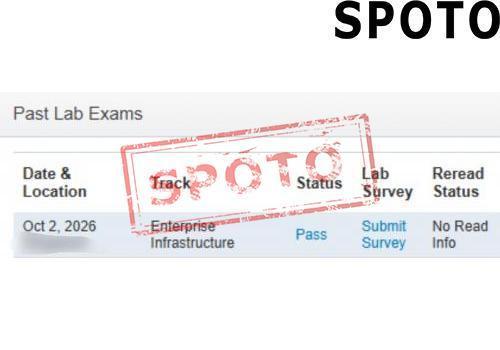
Latest Passing Reports from SPOTO Candidates
EI LAB
EI LAB
DC LAB
sec lab
dc lab
ccde lab
EI lab
DC lab
EI Lab
EI Lab
Write a Reply or Comment
Don't Risk Your Certification Exam Success – Take Real Exam Questions
Eligible to sit for Exam? 100% Exam Pass GuaranteeEligible to sit for Exam? 100% Exam Pass Guarantee
SPOTO Ebooks
Recent Posts
CCIE Automation: An In-Depth Preparation Strategy for the New 2026 Certification Framework
CCIE Data Center (v3.1) Lab Exam In-Depth Analysis: Technical Evolution and Comprehensive Preparation Guide
CCIE EI LAB Exam: Latest Question Changes and Exam Impact Analysis
CCIE Automation Certification: Latest Question Changes and Exam Impact Analysis
CCIE DC LAB (v3.1) Exam: Latest Question Changes and Exam Impact Analysis
2026 Microsoft AZ-104 Exam Update: What You Need to Prepare?
2026 CCNA Exam Update: The Latest Changes You Need to Know
2026 AZ-400 Exam Update: How to Adjust Your Preparation Strategy?
The Complete Guide to the CompTIA PenTest+ Exam in 2026
Why you choose CompTIA Cybersecurity Analyst (CySA+) as your advanced certification?
Excellent
5.0
Based on 5236 reviews
Request more information
I would like to receive email communications about product & offerings from SPOTO & its Affiliates.
I understand I can unsubscribe at any time.