Table of Contents
- 1. Introduction to the Association of Chartered Certified Accountants certification
- 2. The Competitive Edge of Association of Chartered Certified Accountants (ACCA) Certification
- 3. Core Components of the Association of Chartered Certified Certification
- 4. What are the requirements to be an Association of Chartered Certified Accountants (ACCA)?
- 5. Comparable Certifications to Association of Chartered Certified Accountants (ACCA) Certification
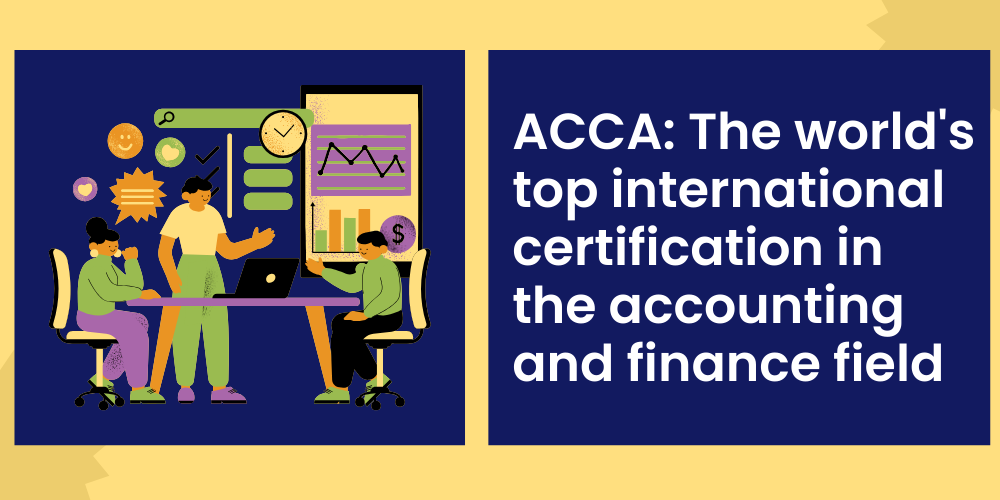
The Association of Chartered Certified Accountants trains accounting and business management professionals and helps practitioners transition to senior management positions.
1. Introduction to the Association of Chartered Certified Accountants certification
The Association of Chartered Certified Accountants (ACCA) is one of the largest and most recognized international professional accounting organizations in the world, and its ACCA qualification certificate is the top international qualification in the field of finance and accounting, focusing on verifying practitioners' comprehensive professional abilities and international business perspectives in areas such as financial accounting, management accounting, auditing, taxation, financial management, and business strategy.
The ACCA qualification is known as the "passport of the finance and accounting industry," aiming to cultivate composite finance and accounting talents with global financial thinking, strategic decision-making ability, and business insight. It is the core ladder for the transformation from "basic finance and accounting practitioners" to "international high-end finance and accounting management talents."
In the context of economic globalization, the demand for accounting talents in enterprises has shifted from traditional bookkeeping and accounting to comprehensive abilities such as strategic planning, risk management, business decision-making, and international compliance.
The core positioning of ACCA is to cultivate "international and versatile experts in finance, accounting, and business management." It is not just about bookkeeping and accounting, but can provide full process professional services such as financial reporting, tax planning, audit verification, risk management, strategic financial analysis, etc. for enterprises. It is suitable for high-end finance and accounting talents in various scenarios such as multinational enterprises, financial institutions, and accounting firms.
ACCA holders who serve as finance managers in multinational corporations are capable of preparing consolidated financial statements and complying with international financial reporting standards, as well as conducting cost control and budget management through management accounting tools; simultaneously participating in cross-border tax planning for enterprises to avoid international tax risks; they can also provide financial support for market expansion and investment decisions to management based on financial data, becoming a core participant in corporate strategy formulation.
2. The Competitive Edge of Association of Chartered Certified Accountants (ACCA) Certification
The ACCA qualification is recognized in over 180 countries and regions worldwide, and is mutually recognized with more than 70 accounting organizations worldwide. It is a core screening criterion for multinational corporations and international accounting firms to recruit accounting talents, and holders can practice globally. Internationally, ACCA holders have a salary premium of about 30%-50% for accounting positions in Europe, America, Southeast Asia, and other regions, with a clear career development path.
The ACCA knowledge system integrates multiple fields such as finance and accounting, law, taxation, strategy, and management. After passing the exam, it can be proven that the individual possesses comprehensive abilities of "financial accounting + strategic decision-making + international compliance" and is capable of handling high-end positions such as multinational corporate finance directors, accounting firm partners, and financial institution investment analysts, rather than just being an executive level finance and accounting personnel.
ACCA members can join over 1.8 million professional accounting communities worldwide to access the latest international financial standards, industry research reports, and career development opportunities; prioritize participation in ACCA's international finance and accounting summits and industry seminars, connect with global finance and accounting experts and corporate resources, and expand professional horizons.
3. Core Components of the Association of Chartered Certified Certification
For professionals who aspire to establish an outstanding career in the global finance and business field, ACCA qualification certification is an internationally recognized "gold standard." It is not only a professional certificate, but also a complete and systematic high-end financial management talent training system.
ACCA is renowned for its comprehensive knowledge structure, authoritative certification, and globally recognized unique values, aiming to shape students into composite business leaders who are proficient in professional technology, strategic vision, and advanced management abilities.
The skills course phase includes six core skills courses aimed at developing your practical ability to work independently. You will delve into business law, performance management, taxation, financial reporting, auditing, and financial management, comprehensively mastering all the hard skills required for modern accounting professionals.
The core courses of the professional stage are the sublimation of certification, including two mandatory integrated courses, "Strategic Business Leaders" and "Strategic Business Reports."
In summary, ACCA certification is not only a "hard currency" for entering the "Big Four" accounting firms, multinational corporations, or financial institutions, but also a strategic ladder to senior management positions such as Chief Financial Officer. Obtaining ACCA qualification means that you have become a top financial talent with an international perspective, professional depth, and strategic height, and your career prospects are extremely broad on a global scale.
4. What are the requirements to be an Association of Chartered Certified Accountants (ACCA)?
(1) Qualification prerequisites:
The prerequisite for registering for ACCA is that you need to meet one of the following conditions:
- College degree or above recognized by the Ministry of Education can be directly registered as ACCA students
- Undergraduate students (after completing their freshman year) can apply for registration and complete some course exams before graduation
- High school/vocational school education requires passing FIA courses before becoming an ACCA student;
Other holders of accounting professional qualification certificates can apply for exemption from certain courses.
(2) Training and examinations:
The ACCA course exam consists of 15 courses, and passing 13 of them is sufficient. The exam adopts a computer-based format, with the basic stage being computer-based at any time and the professional stage being computer-based quarterly. Full score of 100; passed with 50 points or above.
In terms of work experience, you need to have completed 3 years of relevant accounting and business work experience. This experience can be accumulated during the exam period and should cover dimensions such as "technical ability, professional ethics, leadership ability." It will be supervised and evaluated by a mentor recognized by ACCA.
In addition, you also need to complete the ACCA Online Professional Ethics and Skills Module (EPSM) and obtain a professional ethics certificate after passing the assessment. After meeting the requirements of exams, work experience, and professional ethics, one can apply to become a formal member of ACCA and obtain the ACCA Certified Public Accountant qualification certificate.
(3) Key exam information:
The registration fee for the exam is about £ 89, the annual fee is about £ 122, and the fee for each exam varies from £ 100 to £ 200 depending on the stage.
Validity period of grades: The basic stage grades are permanently valid, and the professional stage grades are valid for 7 years. If you have not completed all the exams within 7 years, the subjects that have been passed will become invalid.
5. Comparable Certifications to Association of Chartered Certified Accountants (ACCA) Certification
- AICPA (American Institute of Certified Public Accountants)
- CIMA (Chartered Institute of Management Accountants)
- CMA (Certified Management Accountant)