How to Check DHCP Lease Time on Cisco Router

Verifying DHCP lease timers on a Cisco IOS or IOS XE router requires checking two different places depending on what you need to know: the active binding database (which tracks when each connected client’s current lease expires) and the running configuration (which defines the total lease duration assigned to a pool). Furthermore, if the router... » read more
How to Check DHCP Configuration on Cisco Router

A Cisco router can function either as a local Dynamic Host Configuration Protocol (DHCP) server managing subnet scopes or as a DHCP relay agent forwarding client requests to a centralized server. When network endpoints encounter addressing failures or IP lease renewal errors, verifying the router’s running DHCP parameters, active leases, and interface relay settings is... » read more

How to Check CPU and Memory Utilization in Cisco Router

Sustained high resource utilization on a Cisco router degrades forwarding performance, increases packet transit latency, and can destabilize control plane protocols such as BGP, OSPF, and LDP. When control plane queues fill up, keepalive packets drop, leading to peer timeouts and network flaps. Routinely checking and establishing baselines for CPU and RAM consumption enables network... » read more

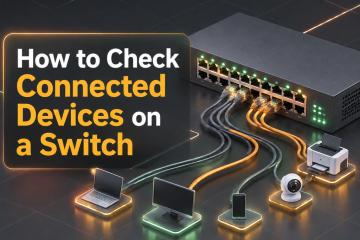
How to Check Connected Devices on Cisco Switch

Whether you are auditing physical ports, tracking down an unauthorized endpoint, or resolving an IP conflict, identifying devices connected to a Cisco switch is a fundamental network administration task. Because enterprise switches forward traffic across Layer 2 and Layer 3 boundaries, no single command reveals every detail about every host. Instead, you must correlate Layer... » read more

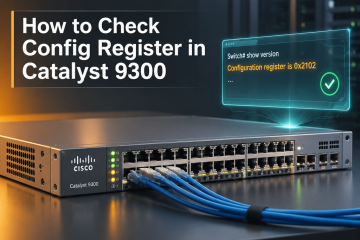
How to Check Config Register in Cisco 9300 Switch

When network administrators transition from legacy Cisco Catalyst platforms—such as the Catalyst 2960X, 3560, or 3750—to the enterprise-grade Cisco Catalyst 9300 Series, one of the first discrepancies they encounter is during routine hardware audits or password recovery workflows. Running the traditional show version command does not yield the expected hexadecimal configuration register at the bottom... » read more

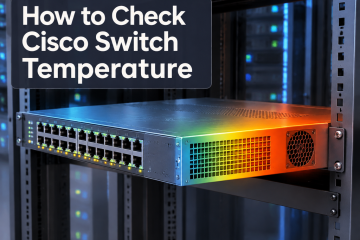
How to Check Cisco Switch Temperature?

Maintaining optimal operating temperatures within enterprise network infrastructure is essential for hardware longevity, uptime, and performance. Excessive heat degrades silicon components, accelerates capacitor failure in power supplies, and triggers automated thermal shutdowns that can take down critical network paths. Cisco switches—ranging from access-layer Catalyst models running Cisco IOS and IOS-XE to high-density data center Nexus... » read more

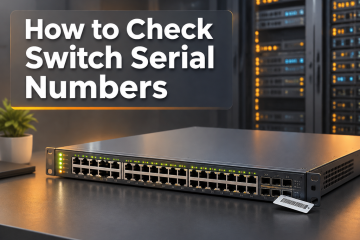
How to Check Cisco Switch Serial Number

Whether you are submitting a service request to Cisco Technical Assistance Center (TAC), processing an RMA, auditing inventory, or renewing support contracts, locating your switch’s serial number is an essential task. Cisco switches use an 11-character alphanumeric identifier—typically beginning with a three-letter manufacturing location code such as FOC, FCW, CAT, JMX, or SAL—that uniquely tracks... » read more

How to Check Cisco Switch MAC Address

When network administrators ask how to check a Cisco switch MAC address, they are usually trying to accomplish one of two distinct tasks: discovering the physical hardware (base) MAC address of the switch chassis itself, or viewing the switch’s forwarding table to see which endpoint MAC addresses reside on which switch ports. Whether you are... » read more

How to Check Cisco Switch IP Address

Determining the IP address of a Cisco switch is one of the most frequent administrative tasks in network engineering, whether you are provisioning a factory-fresh unit, managing an existing deployment, or identifying an unlabeled device in an equipment rack. Because Cisco switches manage Layer 2 forwarding by default, they do not inherently require an IP... » read more