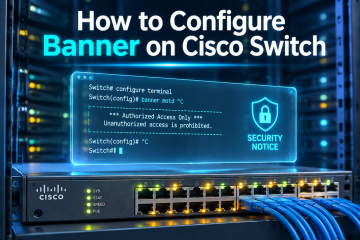
How to Configure Banner on Cisco Switch

Configuring terminal banners on a Cisco switch is a foundational network administration task that serves two critical purposes: establishing legal enforceability against unauthorized access and providing operational context to administrators. While a banner does not replace authentication mechanisms like AAA, TACACS+, or SSH encryption, security compliance frameworks and the Cisco IOS XE Software Hardening Guide... » read more
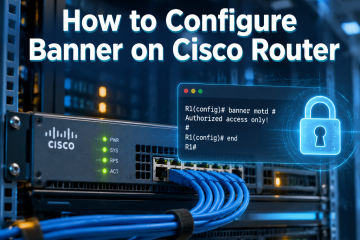
How to Configure Banner on Cisco Router

Configuring a banner on a Cisco router is one of the first administrative tasks performed when hardening network infrastructure. Beyond identifying a device to system administrators, properly configured banners establish legal boundaries against unauthorized access, communicate scheduled maintenance windows, and surface real-time session details such as terminal line numbers and hostnames. Setting up Cisco IOS... » read more

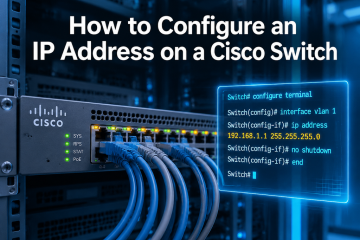
How to Configure an IP Address on a Cisco Switch

Out of the box, a Cisco Catalyst switch operates at Layer 2 of the OSI model, forwarding Ethernet frames based on MAC addresses without needing an IP address at all. However, before you can manage a switch remotely over SSH, monitor it via SNMP, or use a multilayer switch to route traffic between subnets, you... » read more

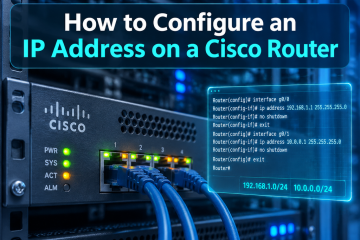
How to Configure an IP Address on a Cisco Router

Assigning an IP address to a Cisco router interface is the foundational step in bringing any network segment online. Whether you are provisioning a branch office WAN link, setting up internal LAN gateways, or configuring virtual interfaces for routing protocols, Cisco IOS provides a consistent Command Line Interface (CLI) hierarchy for managing Layer 3 addressing.... » read more

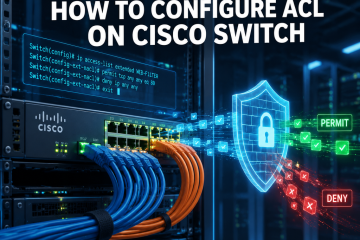
How to Configure ACL on Cisco Switch

Access Control Lists (ACLs) on a Cisco switch provide wire-speed packet filtering directly in hardware, allowing network administrators to restrict unauthorized host access, isolate sensitive VLANs, and lock down management planes without bottlenecking an upstream firewall. Unlike routers that only inspect Layer 3 routed packets, multilayer Cisco switches can enforce ACLs at the physical Layer... » read more

How to Configure ACL on Cisco Router

Access Control Lists (ACLs) are one of the primary security mechanisms in Cisco IOS and IOS XE, functioning as stateless packet filters that control which traffic can enter or exit a router interface. Beyond basic packet filtering, network engineers also rely on ACLs to secure remote management lines, classify traffic for Quality of Service (QoS),... » read more

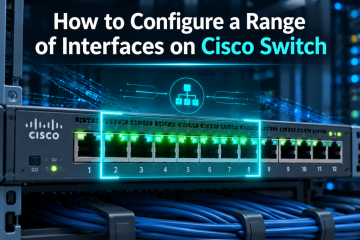
How to Configure a Range of Interfaces on Cisco Switch

Configuring ports individually on a 24- or 48-port switch is tedious and prone to human error. Cisco operating systems solve this through bulk interface configuration, allowing network administrators to select multiple physical ports or virtual interfaces simultaneously and apply a single set of parameters across all of them. Mastering bulk port selection—from basic contiguous blocks... » read more

How to Configure Access List on Cisco Switch

Access Control Lists (ACLs) are the primary packet-filtering mechanism on Cisco Catalyst switches, allowing network administrators to restrict unauthorized traffic between VLANs, lock down physical switchports, and protect the switch’s management plane. Unlike routers—which primarily filter routed packets traversing Layer 3 interfaces—multilayer Cisco switches can enforce ACLs in hardware across Layer 2 access ports, entire... » read more

How to Configure Access List on Cisco Router

Access Control Lists (ACLs) are the primary packet-filtering mechanism on Cisco IOS and IOS XE routers, enabling network administrators to control traffic flow, isolate subnets, and harden management interfaces. Configuring an ACL effectively requires understanding how the router evaluates packet headers, choosing the right ACL category and topology placement, and binding rules to interfaces in... » read more