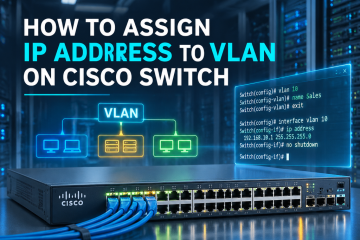
How to Assign IP Address to VLAN in Cisco Switch

In modern enterprise and campus networks, segmenting broadcast domains into Virtual Local Area Networks (VLANs) is standard engineering practice. While VLANs operate at Layer 2 to isolate traffic, network administrators frequently need to interact with these segments at Layer 3—either to provide remote switch management or to route traffic across different subnets. On a Cisco... » read more
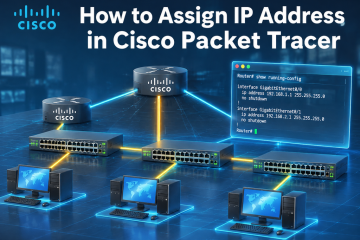
How to Assign IP Address in Cisco Packet Tracer

Assigning IP addresses is the first critical milestone in building any network simulation in Cisco Packet Tracer. Whether you are assembling a basic two-node peer lab or provisioning an enterprise branch topology, devices cannot exchange packets without properly assigned Layer 3 addresses. Because Packet Tracer simulates diverse network components—from graphical end-user workstations to Cisco IOS... » read more

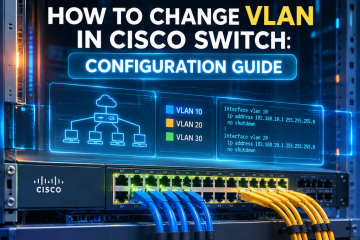
How to Change VLAN in Cisco Switch

VLAN (Virtual Local Area Network) segmentation is foundational to enterprise network design, separating broadcast domains, enforcing security boundaries, and directing traffic flow across Layer 2 environments. Whether reallocating workstation ports during office reconfigurations, altering native tags on inter-switch uplinks, or transitioning switch virtual interfaces (SVIs) away from the default management subnet, network administrators regularly need... » read more

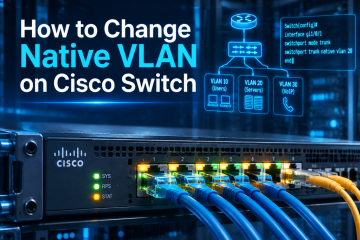
How to Change Native VLAN on Cisco Switch

In an enterprise Cisco switching environment, IEEE 802.1Q trunk links carry traffic across multiple VLANs by appending a four-byte tag to standard Ethernet frames. However, 802.1Q also designates a single native VLAN per trunk link to handle frames that traverse the connection without a VLAN tag. By factory default, Cisco switches assign VLAN 1 as... » read more

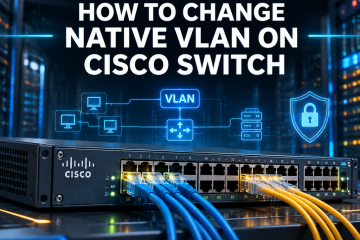
How to Change the Native VLAN on a Cisco Switch

In an IEEE 802.1Q trunking environment, the native VLAN designates which virtual local area network handles untagged traffic passing across an inter-switch link. By default, Cisco Catalyst switches assign VLAN 1 as the native VLAN across all switchports and trunk links. While functional out of the box, leaving this default intact presents substantial security liabilities... » read more

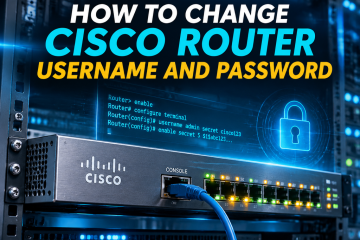
How to Change Password on Cisco Router Username

Maintaining administrative control over network infrastructure begins with disciplined credential management. Whether performing routine security rotations, adjusting access privileges for network engineers, or replacing stale passwords on legacy equipment, updating local credentials in Cisco IOS and IOS-XE is a foundational operational task. While changing a local user’s password on a Cisco router requires only a... » read more

How to Change Password in Cisco AnyConnect

Cisco AnyConnect (now officially branded as Cisco Secure Client) is standard remote-access software for enterprise networks. However, users often encounter a confusing roadblock when their company credentials expire or require an update: there is no obvious “Change Password” button in the client interface. Whether you are facing an unexpected password expiration prompt, logging in through... » read more

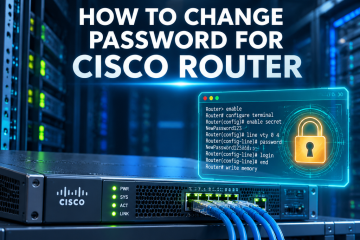
How to Change Password for Cisco Router

Securing administrative access to routing infrastructure is a fundamental requirement of enterprise network defense. On Cisco devices, password management spans multiple operational contexts: routinely rotating administrative credentials, modernizing cryptographic hashing schemes, managing branch hardware via graphical interfaces, or executing low-level disaster recovery when access is completely lost. Whether performing planned maintenance via the Cisco IOS... » read more

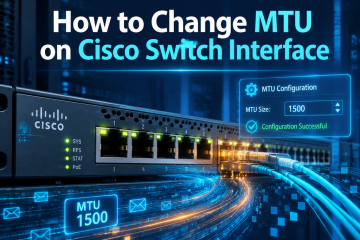
How to Change MTU on Cisco Switch Interface

Maximum Transmission Unit (MTU) defines the maximum size of a packet or frame—measured in bytes—that a network interface can process and forward without fragmenting it. In enterprise and data center networks, adjusting the MTU beyond the standard Ethernet size of 1500 bytes to accommodate jumbo frames (typically up to 9000 or 9216 bytes) is essential... » read more