Why Choose SPOTO?

20+ Years of Online IT Training

SPOTO was founded in 2003. We focus on online IT training for 20+ years and covers Cisco, PMP, CISSP, AWS and other popular IT exams.

Professional Tutors’ Support

We have a huge CCIE Tutors team to support our candidates to prepare and pass the Cisco exam fast and easily. 7/24 CCIE Instructors online support.

Vision And Mission

SPOTO aims to help our candidates to get IT certified and enhance the technical knowledge and skills. Advance their career and boost salary in IT industry.

Real and Valid QAs

SPOTO tutors offer latest and valid IT exam questions and answers from real exam to help you go through the exams fast and easily.

Latest Exam Feedbacks

SPOTO offers the latest Cisco, AWS, PMP, CISSP, CISA or other IT exam feedbacks from our candidates to help you know the exam information.

Secure Shopping Experience

Your purchase with SPOTO is safe and fast.Your information will never be shared by 3rd parties..

Pass Your Next IT Exams in First Try

Are you ready to prepare and pass your Cisco CCNA, CCNP, CCIE Lab, PMP, CISSP, AWS and other IT exams? Join SPOTO team to help you clear the exam fast.

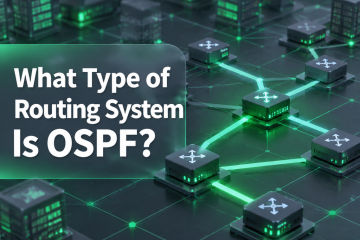
What Type of Routing System Is OSPF Considered to Be?

Open Shortest Path First (OSPF) is considered a dynamic, classless, link-state Interior Gateway Protocol (IGP) designed around an open-standard, hierarchical architecture. Rather than trading periodic routing tables with immediate neighbors, OSPF routers build a complete topological map of their network domain and independently calculate the most efficient loop-free paths. Understanding every layer of this classification... » read more
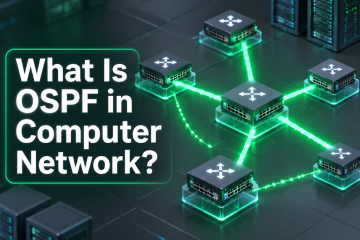
What Is OSPF in Computer Network?

Open Shortest Path First (OSPF) is an open-standard, link-state Interior Gateway Protocol (IGP) used in computer networks to dynamically discover, calculate, and maintain optimal loop-free IP routes within a single Autonomous System (AS). Operating directly over IP (Protocol 89) rather than TCP or UDP, OSPF equips every participating router with a complete topological map of... » read more

What Is Multiprotocol Label Switching MPLS?

Multiprotocol Label Switching (MPLS) is a high-performance packet-forwarding technology that directs data across wide area and service provider networks using short, fixed-length labels rather than complex IP routing table lookups at every hop. Standardized by the Internet Engineering Task Force (IETF) in 2001, MPLS became the foundational backbone protocol for global telecommunications carriers and multi-site... » read more

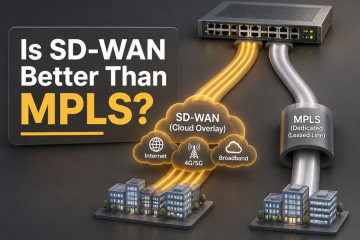
Is SD-WAN Better Than MPLS?

For most distributed, cloud-first enterprises, yes—SD-WAN is better than MPLS as a primary wide-area network architecture. As corporate workloads have shifted out of private data centers into SaaS platforms, hyperscale clouds, and distributed AI services, hauling branch traffic across rigid carrier circuits back to headquarters no longer matches how modern businesses operate. Market adoption reflects... » read more

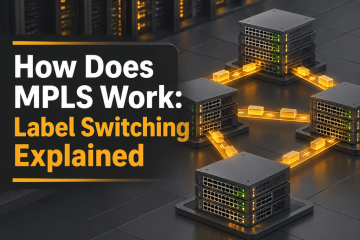
How Does MPLS Work?
How Does MPLS Work?

Multiprotocol Label Switching (MPLS) is a high-performance packet-forwarding technology that directs data across wide area networks (WANs) and service provider backbones using short, fixed-length labels rather than complex network-layer address lookups at every router hop. Introduced in the late 1990s and standardized by the IETF in 2001, MPLS bridged the speed of Layer 2 circuit... » read more

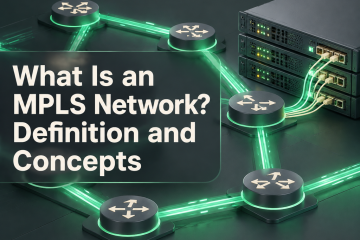
What Is MPLS Network Definition?

In enterprise networking and telecommunications, a Multiprotocol Label Switching (MPLS) network is a deterministic packet-forwarding architecture that directs data across a Wide Area Network (WAN) using short, fixed-length path labels rather than performing complex IP routing table lookups at every router hop. Originally standardized to unite the speed of circuit-switched networks with the flexibility of... » read more

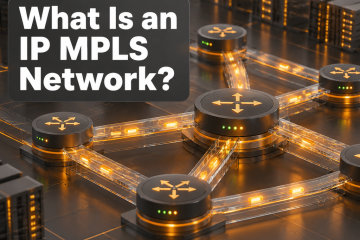
What Is IP MPLS Network?

An IP/MPLS (Internet Protocol / Multiprotocol Label Switching) network is a high-performance packet-switched telecommunications architecture that combines the dynamic routing intelligence of the IP control plane with the deterministic forwarding speed of MPLS label switching. Rather than inspecting full destination IP addresses against massive routing tables at every router hop, an IP/MPLS network classifies packets... » read more

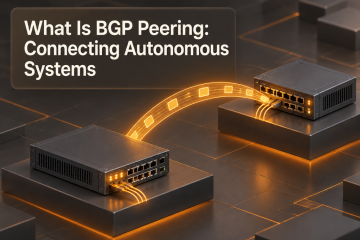
What Is BGP Peering?

Border Gateway Protocol (BGP) peering is a deliberate, bilateral routing relationship configured between two BGP-speaking routers—known as peers or neighbors—to exchange IPv4 and IPv6 network prefixes along with policy-rich path attributes. Because the global internet is not a single unified network, it operates as a federation of tens of thousands of Autonomous Systems (ASes)—independent network... » read more

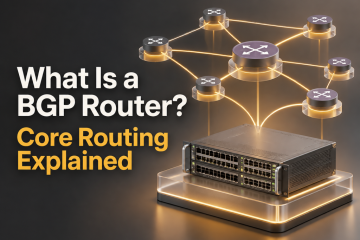
What Is a BGP Router?

A BGP router is a specialized Layer 3 network device configured to run the Border Gateway Protocol (BGP-4), the standardized exterior routing protocol that knits independent networks together into the global internet. While ordinary routers forward packets inside a single home or corporate LAN, a BGP router sits at the administrative edge of an organization—exchanging... » read more