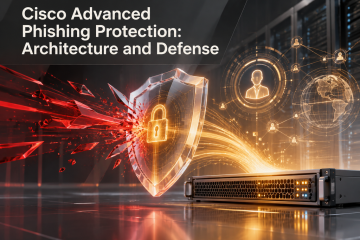
How Does Cisco Advanced Phishing Protection Protect Users?

Modern email threats have shifted away from crude, mass-distributed malware attachments toward sophisticated identity deception. Today’s threat actors rely on Business Email Compromise (BEC), display name impersonation, executive spoofing, and socially engineered credential lures that contain no malicious payloads, suspicious attachments, or blacklisted links. Because these messages appear structurally legitimate, conventional Secure Email Gateways (SEGs)... » read more
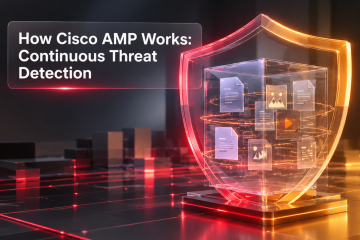
How Does Cisco AMP Work?

Traditional endpoint protection relies heavily on static signature databases, scanning files at the exact moment they touch a storage volume. If a threat is novel, obfuscated, or fileless, legacy antivirus solutions register the binary as clean, grant it execution rights, and permanently look away. Cisco Advanced Malware Protection (AMP)—now integrated into the Cisco Secure portfolio... » read more

How Does Cisco SD-WAN Work?

Traditional enterprise Wide Area Networks (WANs) were built for a different era of computing. In legacy architectures, remote branch offices relied on expensive, static Multiprotocol Label Switching (MPLS) circuits to backhaul all traffic through a centralized corporate data center before it could reach external destinations. As enterprise workloads migrated to public clouds (AWS, Microsoft Azure,... » read more

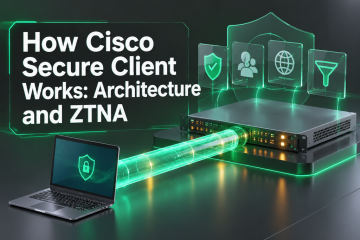
How Does Cisco Secure Client Work?

For over a decade, secure remote access centered almost entirely on establishing a virtual private network (VPN) tunnel back to a corporate firewall. As enterprise infrastructure shifted to distributed multi-cloud environments and remote work became standard, that perimeter-centric model became unsustainable. IT teams found themselves managing an unmanageable sprawl of endpoint agents—one for VPN, another... » read more

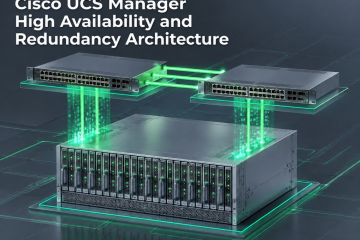
How Does Cisco UCS Manager Achieve Redundancy?

Modern enterprise data centers cannot afford single points of failure. In the Cisco Unified Computing System (UCS) architecture, high availability is not an add-on feature—it is engineered directly into the hardware and software topology. At the center of this ecosystem is Cisco UCS Manager (UCSM), running embedded on paired Cisco UCS Fabric Interconnects (FIs). To... » read more

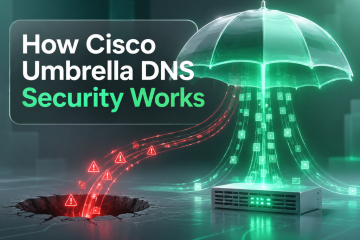
How Does Cisco Umbrella DNS Work?

The Domain Name System (DNS) is traditionally described as the address book of the internet, converting human-readable domain names into machine-routable IP addresses. In enterprise cybersecurity, however, DNS is an early-warning radar system. Nearly all malware variants, phishing campaigns, and command-and-control (C2) communication channels require a DNS lookup before establishing an initial TCP or UDP... » read more

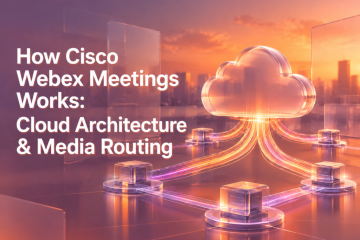
How Does Cisco Webex Meetings Work?

Cisco Webex Meetings is one of the foundational pillars of enterprise video collaboration. Designed to support everything from quick one-on-one check-ins to global town halls with thousands of participants, Webex blends real-time cloud media processing with enterprise-grade network security. While many users interact with Webex simply by clicking a link and turning on their cameras,... » read more

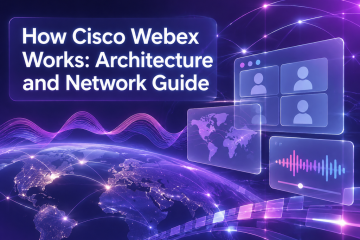
How Does Cisco Webex Work?

Cisco Webex is an enterprise-grade cloud collaboration platform that unifies video conferencing, cloud telephony, team messaging, and virtual events into a single digital workspace. Built upon Cisco’s global networking infrastructure, Webex enables geographically dispersed teams to communicate securely in real time across desktop computers, mobile devices, and dedicated conference room hardware. Understanding how Webex functions—from... » read more

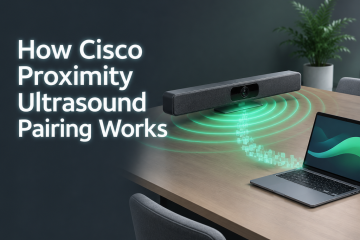
How Does Cisco Proximity Work?

Walking into a conference room, opening a laptop or smartphone, and having it instantly recognize the video conferencing endpoint without typing IP addresses, entering PINs, or fumbling with cables is one of the hallmarks of modern meeting room collaboration. This frictionless connection is powered by Cisco Proximity—a proprietary discovery and integration framework engineered by Cisco... » read more