Can’t Connect to Cisco AnyConnect VPN

Few technical interruptions disrupt a workday faster than being locked out of enterprise resources because Cisco AnyConnect (now branded as Cisco Secure Client) refuses to establish a tunnel. Because AnyConnect relies on a layered stack—spanning local virtual network adapters, operating system services, SSL/TLS certificate chains, and ISP-level routing—failures can manifest at several distinct points. A... » read more
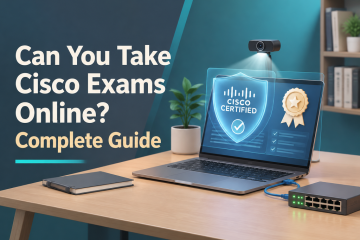
Can You Take Cisco Exams Online?

Yes, you can take almost all Cisco certification exams online from the comfort of your home or office. Through Cisco’s partnership with Pearson VUE and its remote proctoring platform, OnVUE, candidates worldwide can complete written certification exams without traveling to a physical testing facility. While remote testing offers unmatched convenience, it introduces stringent rules regarding... » read more

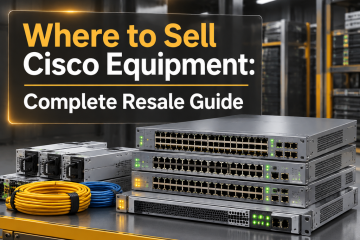
Where to Sell Cisco Equipment

Decommissioning enterprise networking hardware is a routine milestone in any infrastructure lifecycle, but retired Cisco routers, switches, security appliances, and transceivers rarely belong in an e-waste bin. Even after several years in production, secondary market demand for reliable enterprise gear remains strong. Whether your goal is recouping capital to offset a migration, clearing out excess... » read more

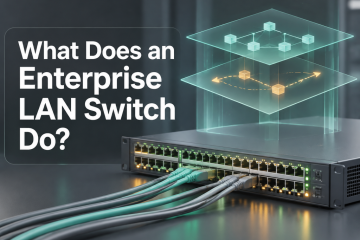
What Will a Cisco LAN Switch Do?

A Cisco Local Area Network (LAN) switch serves as the central interconnectivity hub for modern wired network environments. At its foundation, it connects endpoint devices—such as workstations, wireless access points, IP phones, printers, and servers—within a localized physical facility or campus. Rather than broadcasting data indiscriminately across all connected links, a Cisco switch inspects incoming... » read more

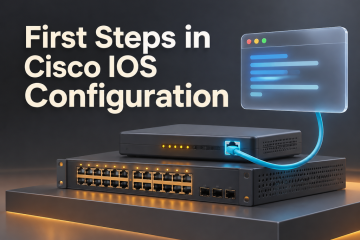
What Is the First Step in Configuring a Cisco IOS?

Configuring a factory-fresh or recently wiped Cisco router or switch begins long before you enter security commands or assign IP addresses. In network engineering, the “first step” has two distinct phases: establishing physical out-of-band management access to the hardware, and navigating the initial command-line interface (CLI) boot sequence. Without completing the physical connection and reaching... » read more

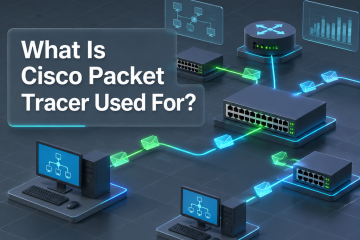
What Is Cisco Packet Tracer Used For?

Cisco Packet Tracer is a cross-platform network simulation tool designed by Cisco Systems to provide an interactive, risk-free environment for designing, configuring, and troubleshooting computer networks. At its core, the software replicates the behavior of physical networking hardware—including routers, switches, wireless access points, firewalls, and end devices—allowing users to practice networking concepts without purchasing thousands... » read more

What Are Cisco Catalyst Switches?

For decades, the Cisco Catalyst family has served as the foundational building block of enterprise Local Area Networks (LANs). Originally introduced to transition corporate environments from shared collision hubs to dedicated switched Ethernet, the Catalyst brand has evolved from classic fixed-configuration workhorses into an intelligent, programmable switching portfolio. Modern Catalyst platforms—anchored by the Catalyst 9000... » read more

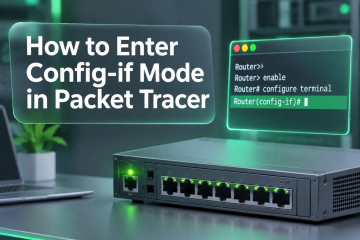
How to Get Config If in Cisco Packet Tracer

When building network topologies in Cisco Packet Tracer, configuring router and switch ports is often the first operational task you must perform. In the Cisco Internetwork Operating System (IOS), port parameters—such as IP addresses, subnet masks, descriptions, and administrative power states—cannot be modified from the base console. Instead, they require accessing a specialized sub-configuration level... » read more

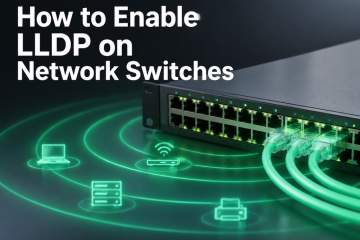
How to Enable LLDP on Cisco Switch

Link Layer Discovery Protocol (LLDP) is an IEEE standard (802.1AB) Layer 2 protocol that allows network devices to advertise identity, capabilities, and configuration details to directly connected peers. While Cisco switches historically rely on the proprietary Cisco Discovery Protocol (CDP), multi-vendor enterprise environments—incorporating devices from vendors such as Arista, Juniper, HP, and third-party VoIP manufacturers—require... » read more